
Railway Station Porters (Coolies): Asymmetric Red-Turban Head-Balancing and Lumbar Facet Joint Wear across Indian Railways
In short
Licensed railway porters balance up to 50-60 kg of traveler baggage on red-turban pads; asymmetric cranial and trunk loading drives severe lumbar facet arthritis and disc degeneration.
In this guide (4 sections)
The Biomechanics and Operational Realities of Railway Station Porters
India's iconic railway porters (licensed sahaks / coolies), recognized by their distinctive red coats and brass armbands, provide vital manual passenger assistance across more than 7,000 railway stations. Porters routinely carry 40 to 65 kg of passenger luggage - frequently comprising stacked hard-shell suitcases balanced on the head, paired with heavy duffel bags slung over the shoulders and handheld trolley cases.
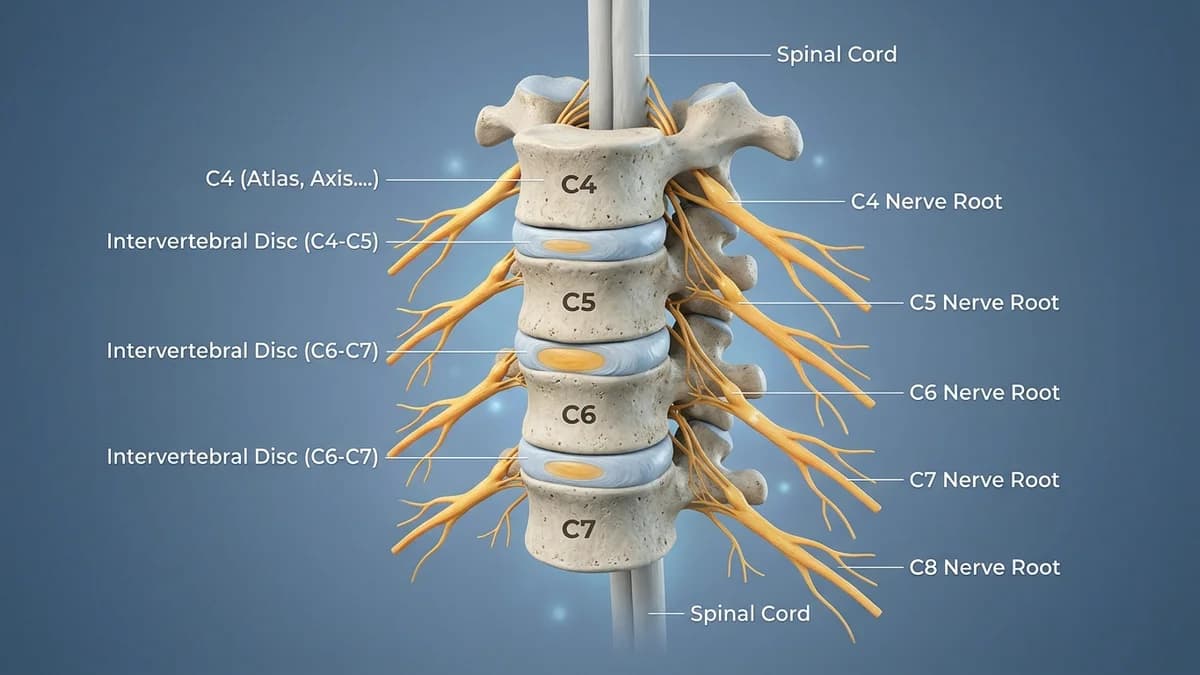
Biomechanically, balancing a 45 kg load upon a coiled red-cloth turban ('pagri' or 'bitho') while navigating pedestrian crowds, boarding steps, and railway overbridges creates severe combined axial compression and lateral rotational shear. To prevent stacked suitcases from sliding off the crown, the porter must maintain the cervical spine in rigid isometric co-contraction while the lumbar spine undergoes asymmetric lateral flexion. Over decades of service, this unyielding load carriage drives advanced cervical spondylosis, lumbar facet joint hypertrophy, and severe knee joint degeneration.
Porter Manual Handling Profile vs Degenerative Spinal Matrix
| Load Carrying Configuration | Total Weight Carried | Primary Biomechanical Stress Vector | Long-Term Musculoskeletal Pathology | |
|---|---|---|---|---|
| Single-Stack Head Balance (Pagri) | 25 to 40 kg balanced on vertex | Pure axial vertical compression across C1-T1 cervical vertebrae | Cervical disc space narrowing, C5-C6 osteophytes, suboccipital nerve neuralgia | |
| Asymmetric Multi-Load (Head + 1 Shoulder) | 45 to 65 kg total combined mass | Axial compression PLUS severe lateral trunk tilt and torsional torque | HIGHEST DAMAGE: Unilateral lumbar facet arthritis, L4-L5 disc protrusion, scoliosis | |
| Manual Two-Wheeled Railway Trolley (Thela) | Up to 150 kg on four wheels | Axial spinal loading eliminated; converts to forward push-pull force | OPTIMAL: Safely handles massive loads; prevents spinal and knee breakdown |
Standardized Clinical Rehabilitation Protocols and Station Ergonomics
- The Reinforced Dual-Layer Pagri Cushioning Upgrade: Upgrade the traditional thin cloth turban with an integrated high-density polyurethane and memory foam inner core; this spreads the point-contact pressure of rigid suitcase corners across a 60% wider cranial surface area, mitigating skull vertex bruising and cervical shear.
- Bilateral Symmetrical Shoulder Load Distribution: Train porters to balance shoulder-slung baggage equally across both shoulders rather than overloading one preferred side; equal bilateral carriage balances lumbar paraspinal muscle activation, preventing unilateral facet jamming.
- Platform Ramp and Overbridge Push Mechanics: When pushing manual luggage trolleys up steep station overbridge ramps, teach porters to push with straight arms, driving forward through the gluteus maximus and quadriceps rather than bending at the waist and pulling with the lower back.
Frequently Asked Questions
How do railway porters balance 50 kg of heavy suitcases on their heads without dropping them?
Porters use a tightly rolled cloth ring called a pagri that creates a flat, non-slip nest on top of their skull. They lock their neck muscles completely rigid, which allows them to balance heavy suitcases. However, this locks their neck bones under immense crushing force, leading to early arthritis.
Why do porters develop severe pain in one hip and one side of the lower back?
Porters almost always carry an extra heavy bag slung over their favorite shoulder while balancing bags on their head. This uneven weight tilts their spine sideways, jamming the tiny joints (facet joints) on one side of their lower back until they become inflamed and arthritic.
Can using luggage trolleys protect porters from permanent spine damage?
Yes! Modern four-wheeled station handcarts take 100% of the crushing weight off the porter's head and spine, putting the load onto wheels where it can be rolled smoothly, saving their necks and backs from lifelong disability.
Related condition guides


Related recovery guides & articles
BookPhysio.in Editorial Team
The BookPhysio.in editorial team writes and maintains this content, checking it against reliable clinical sources. Content follows our medical review policy: general information only, and no page claims a clinical review until a named registered physiotherapist has signed it off.
Read our medical review policy