
Grade 3 and 4 Knee Osteoarthritis: Physiotherapy Exercises to Reduce Pain and Delay Surgery
In short
Even with "bone-on-bone" knee arthritis, targeted physiotherapy unloads joint cartilage, relieves pain, and preserves walking mobility.
In this guide (5 sections)
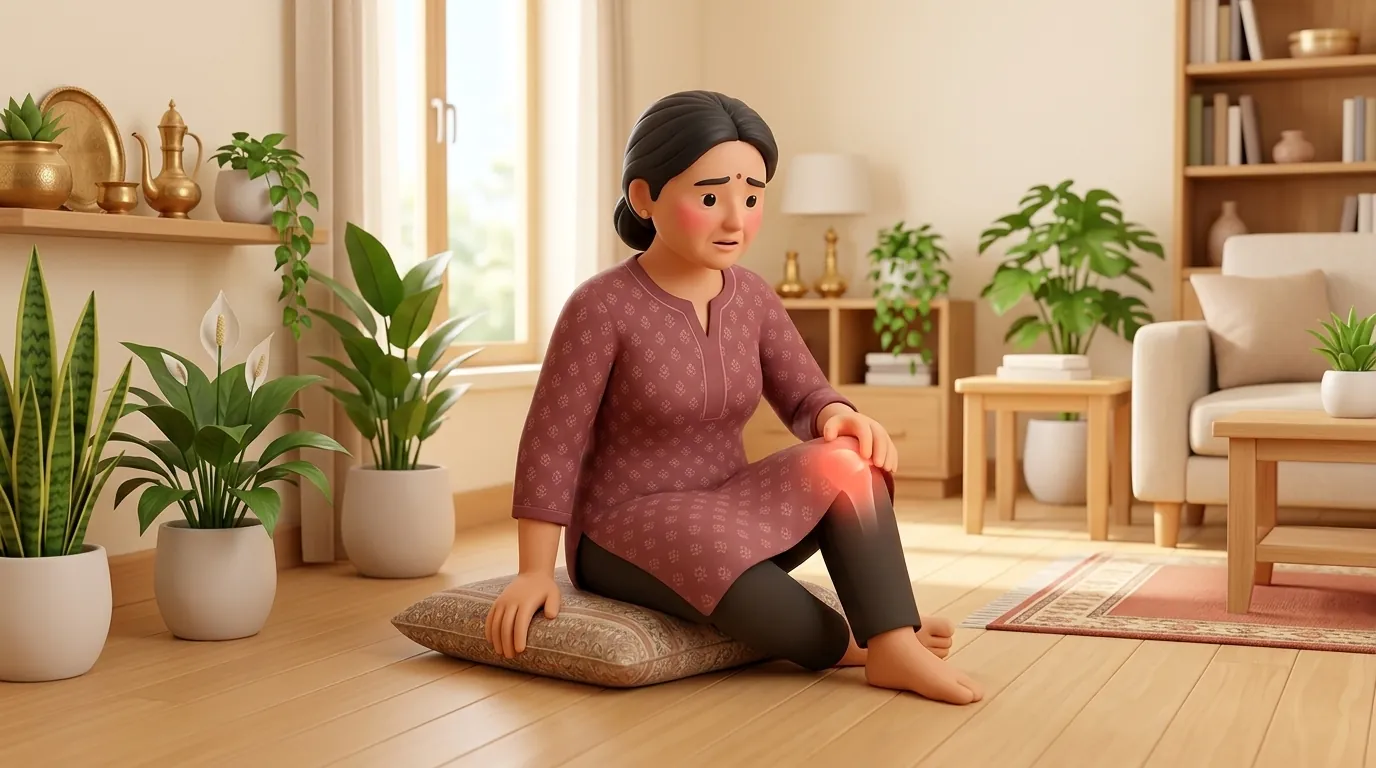
Knee Osteoarthritis (OA) is the single leading cause of chronic musculoskeletal disability among older adults in India, affecting over 30 percent of individuals above the age of 60, with significantly higher prevalence among women. Classified radiographically using the Kellgren-Lawrence (KL) grading system, Grade 3 (moderate) and Grade 4 (severe) osteoarthritis are characterized by marked joint space narrowing, subchondral bone sclerosis, extensive marginal osteophyte formation, and severe cartilage degradation: commonly described to patients as "bone-on-bone" arthritis.
When patients hear the phrase "bone-on-bone," they frequently assume that exercise is impossible or will grind their bones away, leading to a sedentary lifestyle that accelerates muscular wasting. Clinical research consistently disproves this fear: joint cartilage has no nerve endings, meaning radiographic severity does not correlate directly with pain levels. Much of the pain originates from secondary synovitis, periarticular muscle spasm, and arthrogenic quadriceps inhibition. Specialized physiotherapy dramatically unloads the joint, diminishes inflammation, and can delay or avoid joint replacement surgery.
1. Biomechanics: Quadriceps as the Biological Shock Absorber
During normal ambulation, the human knee experiences compressive forces equivalent to 2.5 to 3.5 times body weight. During stair climbing, this force elevates to 4 to 6 times body weight. The quadriceps femoris muscle complex: specifically the vastus medialis oblique (VMO): acts as the primary dynamic shock absorber, dissipating ground reaction forces before they reach articular cartilage.
In severe osteoarthritis, joint pain triggers a spinal reflex inhibition known as Arthrogenic Muscle Inhibition (AMI), shutting down quadriceps motor unit recruitment. As the quadriceps atrophies, the mechanical shock-absorbing capacity drops precipitously, shifting the entire compressive burden directly onto the denuded subchondral bone. Rebuilding quadriceps and hip abductor strength restores shock absorption, reducing tibiofemoral joint contact stress by up to 30 percent.
| KL Grade | Radiographic Characteristics | Joint Space Status | Clinical Physiotherapy Focus |
|---|---|---|---|
| Grade 1 (Doubtful) | Minute osteophytes of doubtful significance | Normal joint space width preserved | Lifestyle pacing, aerobic conditioning, total-body strength maintenance |
| Grade 2 (Minimal) | Definite small osteophytes, possible joint narrowing | Minimal to mild joint space narrowing | VMO strengthening, hamstring flexibility, biomechanical foot alignment |
| Grade 3 (Moderate) | Moderate multiple osteophytes, definite joint space narrowing | Marked joint space narrowing, mild subchondral sclerosis | Non-weight-bearing isometrics, closed-chain mini-squats, unloader bracing |
| Grade 4 (Severe / Bone-on-Bone) | Large osteophytes, severe sclerosis, bony deformity (varus/valgus) | Joint space markedly obliterated, bone-on-bone contact | Pain mitigation, hip abductor compensation, assistive device gait coaching |
2. Cultural and Daily Living Adjustments in Indian Homes
In Indian households, daily activities frequently place extreme flexion demands on arthritic knees. Descending stairs in multi-level family homes, rising from low dining cushions, using traditional squatting pans, and preparing food while sitting on low kitchen stools (patlas) generate peak contact pressures exceeding 15 MPa on exposed bone.
Modifying these activities is essential for symptom management. Patients should sit on firm, raised dining chairs with armrests to assist sit-to-stand transitions, transition to a Western toilet commode fitted with sturdy grab bars, and use an ergonomic walking stick held in the hand opposite the affected knee. Holding a cane on the contralateral side unloads the arthritic knee by over 25 percent during the stance phase of walking.
3. Three-Phase Joint Unloading and Strengthening Protocol
Rehabilitation emphasizes low-impact, non-compressive strengthening that rebuilds muscle power without irritating inflamed synovial linings.
Three-Phase Severe Knee Osteoarthritis Management Protocol
Objective: Overcome arthrogenic quadriceps inhibition, strengthen hip abductors to reduce knee adduction moments, and restore pain-free walking.
- 1Phase 1 (Non-Compressive Isometric Activation): Lie on your back or sit upright with your back supported. Roll a small hand towel and place it beneath your knee. Gently push the back of your knee down into the towel by tightening your front thigh muscle. Hold for 6 seconds without holding your breath. Relax for 5 seconds. Perform 10 repetitions, 3 times daily. Pair with seated long-arc leg extensions: sit on a firm chair, slowly straighten the knee until horizontal, hold for 3 seconds, and lower slowly.
- 2Phase 2 (Hip Abductor and Gluteal Kinetic Chain Strengthening): Weak hip abductors allow the pelvis to drop during walking, drastically increasing the knee adduction moment (which worsens medial compartment bone-on-bone grinding). Lie on your unaffected side with a pillow between knees. Slowly lift your top leg toward the ceiling keeping the knee straight and toes pointed forward. Hold for 3 seconds. Repeat 10 times per leg. Add supine double-leg gluteal bridges.
- 3Phase 3 (Closed-Chain Functional Mini-Squats and Low-Impact Conditioning): Stand with feet shoulder-width apart, holding firmly onto a sturdy dining table or kitchen counter. Slowly bend your knees only 30 to 45 degrees (as if beginning to sit on a tall barstool), ensuring your knees stay aligned over your second toes and do not cave inward. Hold for 3 seconds, then push through your heels to stand upright. Perform 10 repetitions, 2 sets daily. Add 15 minutes of low-resistance stationary cycling with the saddle set high to minimize deep knee bending.
- 4Safety Cue: Never push through sharp, stabbing joint pain. A mild, warm muscular fatigue is normal and expected; sharp joint pinching indicates the exercise angle must be modified.
4. Red Flags and Safe Medical Gatekeeping
While osteoarthritis is a chronic, non-emergency condition, acute red flag symptoms demand prompt medical evaluation by an orthopaedic surgeon. Seek immediate evaluation if your knee suddenly locks at a fixed angle and physically cannot be straightened (indicating a displaced meniscal flap tear or loose cartilaginous body), or if the knee becomes acutely hot, intensely red, severely swollen, and accompanied by fever or chills (which indicates acute septic arthritis or gout requiring urgent joint aspiration).
Frequently Asked Questions
Can physiotherapy really help if my X-ray already shows "bone-on-bone" arthritis?
Yes, absolutely. Extensive clinical trials prove that muscle strengthening and joint unloading produce substantial pain relief even in advanced Grade 4 "bone-on-bone" arthritis. Strengthening the surrounding quadriceps, hamstrings, and hip stabilizers absorbs shock that the depleted cartilage can no longer cushion, restoring comfortable walking.
Should I apply heat or ice to my arthritic knees at home?
Both heat and cold have distinct clinical roles. Apply warm moist heat (such as a warm hot water bag or heated towel) for 10 to 15 minutes in the morning to relax stiff periarticular muscles and lubricate joint fluid before exercise. Apply a cold pack (wrapped in a thin cloth) for 15 minutes in the evening or after long walks if the knee feels hot, inflamed, or swollen.
Will walking daily wear out my remaining knee cartilage faster?
No. Cartilage is an avascular tissue that relies on cyclical joint compression and decompression during walking to pump nutrient-rich synovial fluid into its cells. Total inactivity starves cartilage and accelerates joint degradation. Short, frequent bouts of walking on flat, even surfaces (10 to 15 minutes twice daily) are protective and beneficial.
Can knee braces or knee caps help relieve severe osteoarthritis pain?
Yes. While simple elastic knee sleeves provide mild compression and comforting warmth, specialized Unloader Knee Braces (OA braces) are clinically superior for medial compartment arthritis. An unloader brace applies a corrective valgus force across the knee, mechanically widening the narrowed medial joint space and relieving bone-on-bone pressure during walking.
How do I book experienced orthopaedic physiotherapists via BookPhysio.in?
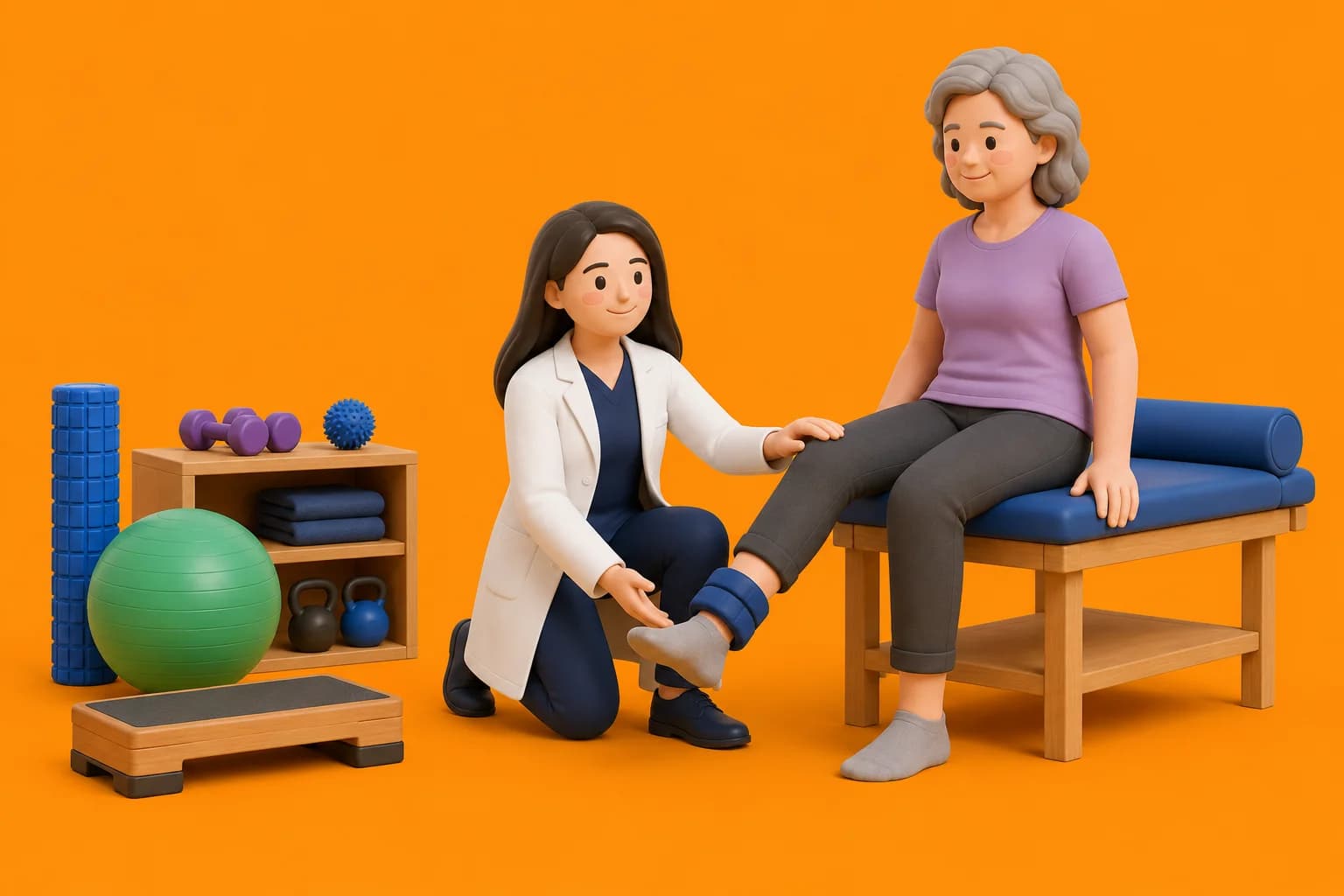
BookPhysio.in connects individuals across Indian cities with verified physiotherapists specializing in geriatric and orthopaedic knee care. Sessions are available in clinic (₹400 to ₹1,500) or via home visits (₹600 to ₹2,000) for seniors struggling with staircases. Patients pay their clinician directly at each session with zero booking fees.
Related condition guides


BookPhysio.in Editorial Team
The BookPhysio.in editorial team writes and maintains this content, checking it against reliable clinical sources. Content follows our medical review policy: general information only, and no page claims a clinical review until a named registered physiotherapist has signed it off.
Read our medical review policy