
Shifting Indian Patients from Passive Modalities to Active Rehabilitation: Clinical Communication Roadmap
In short
Indian physiotherapy OPDs frequently struggle with patients demanding 45 minutes of heat, IFT, and ultrasound while resisting active exercises. Here is an evidence-based communication and de-escalation framework to transition patients into active, empowering rehabilitation.

In this guide (6 sections)
A universal challenge encountered by physiotherapists running outpatient departments (OPDs) across Indian cities is patient addiction to passive electrotherapy modalities. Patients frequently arrive with fixed expectations of receiving moist heat packs, interferential therapy (IFT), ultrasound, or mechanical traction for 45 minutes, viewing active movement with deep scepticism or outright resistance. When asked to perform therapeutic exercises, common responses include: "Doctor, I came here for machine treatment; exercises I can do at home for free."
This deeply rooted cultural expectation stems from decades of legacy clinic marketing that promoted electrotherapy machines as high-tech cures, combined with pervasive kinesiophobia (fear of movement) reinforced by well-meaning family elders who advise absolute bed rest for back and knee pain. However, modern pain science and international clinical guidelines consistently confirm that passive modalities provide only transient, short-term neuromodulatory analgesia lasting 30 to 90 minutes. They do not increase tendon tensile strength, stimulate cartilage proteoglycan synthesis, reverse muscle atrophy, or restore neuromuscular motor control.
1. The Biomechanical and Neurophysiological Reality of Modalities
To effectively de-escalate passive modalities without alienating patients, clinicians must understand both the physiological value and the clear limitations of electrotherapy. Interferential Therapy (IFT) and Transcutaneous Electrical Nerve Stimulation (TENS) operate primarily through the Melzack-Wall Gate Control Theory of Pain. By stimulating large-diameter, myelinated A-beta sensory nerve fibres, electrical currents inhibit nociceptive transmission at the dorsal horn of the spinal cord, temporarily blocking pain signals from reaching the cerebral cortex.
Similarly, superficial moist heat packs (hydrocollator therapy) induce local cutaneous vasodilation, increasing superficial blood flow and reducing protective muscle spasm through thermal sensory gating. While these effects are undeniably comforting, they represent symptom modulation, not tissue adaptation. Degenerative rotator cuff tendinopathy, knee osteoarthritis, and chronic non-specific low back pain require mechanotransduction: the cellular process by which physical mechanical load is converted into biochemical signals that stimulate collagen synthesis and bone mineral density.
When a patient remains passive on a treatment plinth for weeks, their underlying tissue capacity continues to decline. Sarcopenic muscle weakness worsens, joint stiffness solidifies, and psychological reliance on external relief deepens. The clinician role is not to villainize modalities, but to reposition them as a brief "analgesic bridge" designed solely to open a temporary window of pain relief so that therapeutic loading can occur.
Clinical Core Rule: Electrotherapy is an analgesic bridge, never the destination. Use passive modalities for a maximum of 8 to 10 minutes strictly to create a temporary analgesic window for active progressive exercise.
2. The 4-Step Clinical Communication De-Escalation Framework
Directly confronting a patient by saying "machines do not work" triggers defensive resistance, invalidates their past experiences, and damages therapeutic rapport. Instead, adopt a structured four-step de-escalation communication protocol grounded in motivational interviewing and pain neuroscience education.
- Step 1: Validate their lived experience and symptom severity: Acknowledge their pain genuinely: "I understand how severe your knee pain is, and I completely agree that the heat and tingling currents give you genuine, comforting relief right now."
- Step 2: Differentiate pain relief from tissue recovery: Introduce the analogy of an engine warning light: "Think of IFT like turning off the check-engine light on your car dashboard. It stops the buzzing noise, but it does not add oil to the engine. The machine calms the irritated nerves, but only targeted muscle loading can strengthen the joint so the warning light stays off permanently."
- Step 3: Define the Analgesic Window: Reframe the purpose of the machine: "We will use 8 minutes of IFT today specifically to numb the sharp edge of your pain. Once the joint is calmed down, that is our golden window of opportunity to perform the exact 3 exercises that rebuild your knee cartilage support."
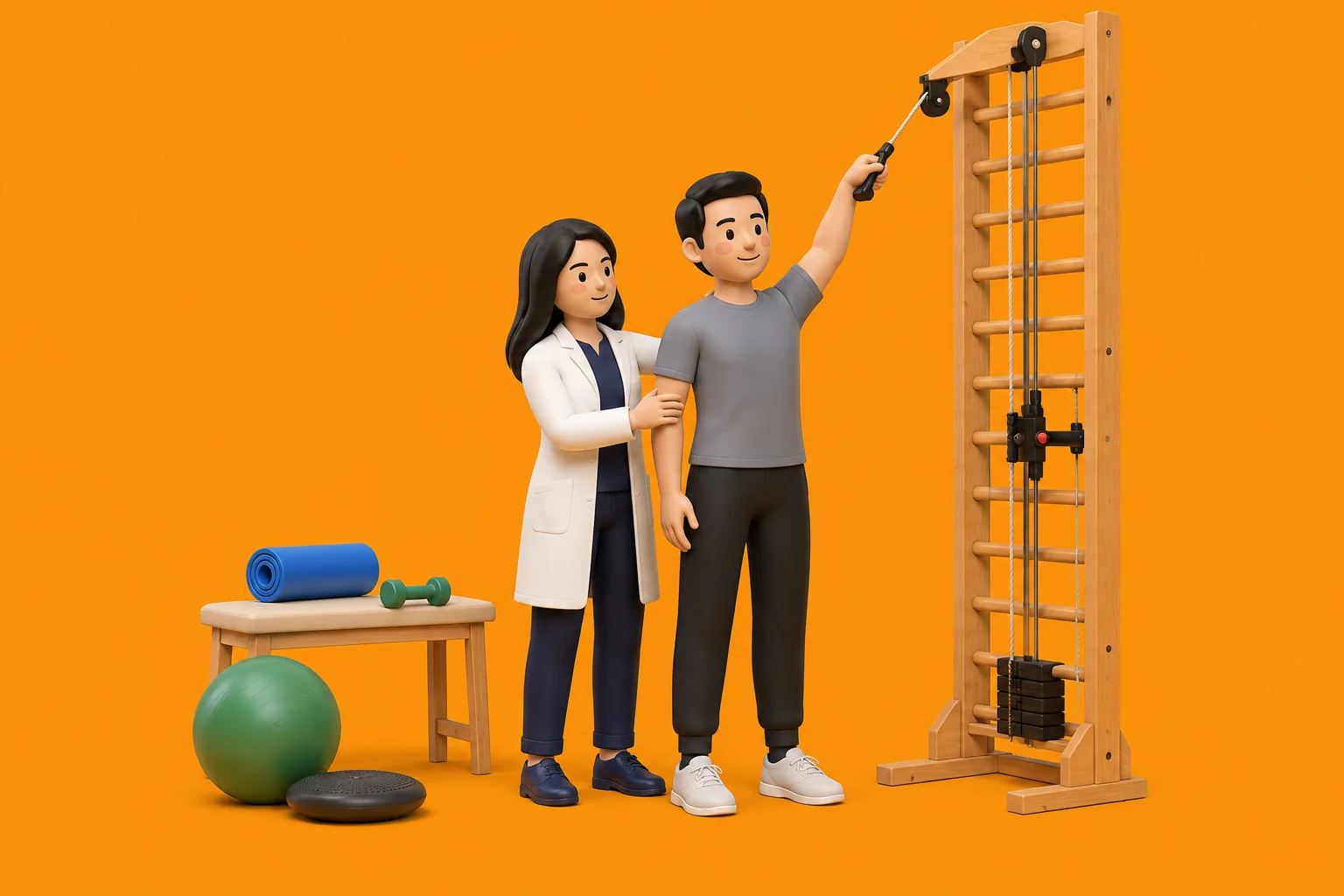
- Step 4: Demonstrate immediate within-session active wins: Assess a painful functional movement (such as sit-to-stand or stair ascent), apply a targeted active loading drill (such as isometric terminal knee extensions with a resistance band), and immediately re-test the movement. Experiencing immediate pain-free movement creates cognitive dissonance that shatters the belief that only machines relieve pain.
3. Comparative Breakdown: Passive Modalities vs Active Loading
| Clinical Parameter | Passive Electrotherapy (IFT / Heat / US) | Active Progressive Exercise | Patient Communication Script |
|---|---|---|---|
| Mechanism of Action | Dorsal horn sensory gating (A-beta stimulation) and superficial thermal vasodilation | Mechanotransduction, tendon collagen remodeling, corticospinal neuroplasticity, muscular hypertrophy | "Machines quiet the noisy alarms; exercises rebuild the walls so they do not rattle again." |
| Duration of Analgesia | 30 to 90 minutes post-session; pain returns upon resuming weight-bearing activities | Cumulative, progressive long-term reduction in baseline pain scores (NPRS) over 6 to 12 weeks | "Machines give you hours of relief; strengthening gives you years of independence." |
| Tissue Capacity Impact | Zero change in muscle cross-sectional area, tendon stiffness, or aerobic capacity | Proven 15% to 35% increase in isometric strength, tendon load tolerance, and joint stability | "Resting on machines allows muscles to weaken further; loading makes your joints shock-absorbers." |
| Psychological Self-Efficacy | Promotes external locus of control, medical dependency, and fear-avoidance behaviour | Builds internal locus of control, movement confidence, and self-management autonomy | "Our goal is not for you to visit my clinic forever, but for you to master your own recovery at home." |
| Cost-Effectiveness for Patient | Requires indefinite daily clinic visits; high cumulative financial and travel burden | Transition to structured home exercise within 4 to 8 supervised sessions; highly cost-effective | "On BookPhysio.in, you pay transparently per visit (₹400 to ₹1,500) and graduate quickly to self-care." |
4. Three-Phase Clinical Transition Protocol: From Bed to Gym
Gradual, structured weaning prevents patient dropout while ensuring tissue safety. The following 3-phase transition protocol has been validated across outpatient orthopaedic clinics in Indian urban centres.
Three-Phase Modality Weaning and Active Loading Protocol
Objective: Systematically de-escalate electrotherapy reliance while building progressive movement tolerance over 6 weeks.
- 1Phase 1 (Week 1, Acute Analgesic Bridge): Deliver 10 minutes of targeted IFT / moist heat, followed immediately by 20 minutes of pain-free submaximal isometric contractions (e.g. wall sits, quad sets, isometric cervical presses with 10-second holds, 5 repetitions).
- 2Phase 2 (Weeks 2-3, Active Restorative Loading): Reduce passive modalities to 5 minutes or replace with an active 5-minute dynamic warm-up. Introduce slow eccentric loading drills (e.g. 3-second lowering tempo step-downs, eccentric calf lowers, resisted band rows, 3 sets of 8 repetitions).
- 3Phase 3 (Weeks 4-6, Functional Return & Discharge): Eliminate passive electrotherapy entirely. Focus on multi-joint functional loading mimicking daily Indian activities (floor-to-stand transitions, weighted grocery bag farmer carries, deep hip hinge lifting).
- 4Provide clear self-management criteria: patient is discharged to home maintenance once they demonstrate 80% symmetric strength and confidence in self-managing minor flare-ups.
5. OPD Business and Operational Economics of Active Rehab
Many private clinic owners resist reducing passive modalities because electrotherapy allows multi-bed concurrency: a single physiotherapist can place 4 patients on 4 different machines simultaneously and collect multiple fees. However, this volume-based passive model creates long-term commercial vulnerabilities: poor clinical outcomes, high patient churn, zero word-of-mouth clinical referrals, and severe price competition from low-cost technicians.
In contrast, transitioning to an active, evidence-based model allows clinicians to charge premium per-session rates (₹600 to ₹1,500) for dedicated 40-minute one-on-one biomechanical consultations. Patients experience rapid functional improvements, refer family members, and leave glowing organic reviews. Transparent per-session pricing aligns clinician incentives with rapid patient recovery.
Frequently Asked Questions
Why do Indian patients believe machine therapy is superior to exercise therapy?
In India, patients are culturally conditioned to associate medical technology with healing authority. Decades of private clinics operating as "machine parlours" reinforced the misconception that electrical stimulation melts away arthritis or disc bulges. Furthermore, intense kinesiophobia (fear that movement will cause permanent damage) leads patients to prefer passive treatments. Clinicians can dismantle this belief by educating patients on mechanotransduction, explaining that cartilage, tendons, and muscles cannot absorb nutrients or heal without mechanical loading.
How should a physiotherapist respond when an elderly patient demands 45 minutes of IFT?
Never dismiss their request bluntly. Validate their pain: "I know that IFT provides comforting relief for your knees, and we will use 8 minutes of it today to settle your joint irritation." Then explain the biological boundary: "Scientific research shows that after 8 to 10 minutes, nerve receptors become habituated and absorb no further benefit. Spending 30 minutes under electrical currents actually weakens your quad muscles by delaying the active strengthening needed to support your body weight when you stand up."
Can passive modalities ever cause harm or delay recovery in chronic pain?
While electrotherapy rarely causes direct physical tissue damage when applied correctly, it causes significant indirect harm by fostering an external locus of control and psychological dependence. Patients come to believe that their body is fragile and defective, requiring external electrical machinery to function. This delay in active progressive rehabilitation leads to disuse muscle atrophy, progressive osteopenia, weight gain, and worsening central sensitization over time.
Is it ethical to completely eliminate electrotherapy machines from a modern physiotherapy clinic?
Yes. Many world-class musculoskeletal and sports rehabilitation facilities operate entirely without passive electrotherapy units, relying exclusively on comprehensive clinical assessment, skilled manual therapy for joint mobilization, progressive resistance training, and patient education. However, in private Indian OPD practice, keeping one or two modality units as an acute analgesic bridge for severe flare-ups is clinically practical, provided they are never utilized as a standalone substitute for active rehabilitation.
How does BookPhysio.in support clinicians who prioritize active rehabilitation?
BookPhysio.in is built specifically around clinician autonomy and transparent patient outcomes. Unlike directory aggregator platforms that commodify healthcare into discounted package deals or penalize therapists who discharge patients quickly, BookPhysio.in connects clinicians directly with patients who pay transparent per-session fees (₹400 to ₹1,500 in clinic, ₹600 to ₹2,000 for home visits). Therapists retain 100% of their earnings with zero commission deductions, empowering them to deliver high-value, active rehabilitation without commercial pressure to overtreat.
Related condition guides

BookPhysio.in Editorial Team
The BookPhysio.in editorial team writes and maintains this content, checking it against reliable clinical sources. Content follows our medical review policy: general information only, and no page claims a clinical review until a named registered physiotherapist has signed it off.
Read our medical review policy