
Tennis Elbow (Lateral Epicondylitis): Exercises, Braces and Physio Recovery
Joint and Limb PainIn short
Tennis elbow (lateral epicondylalgia) causes outer elbow pain from repetitive wrist extension. Learn why complete rest alone rarely cures tendon pain, and how progressive loading and braces support lasting recovery.
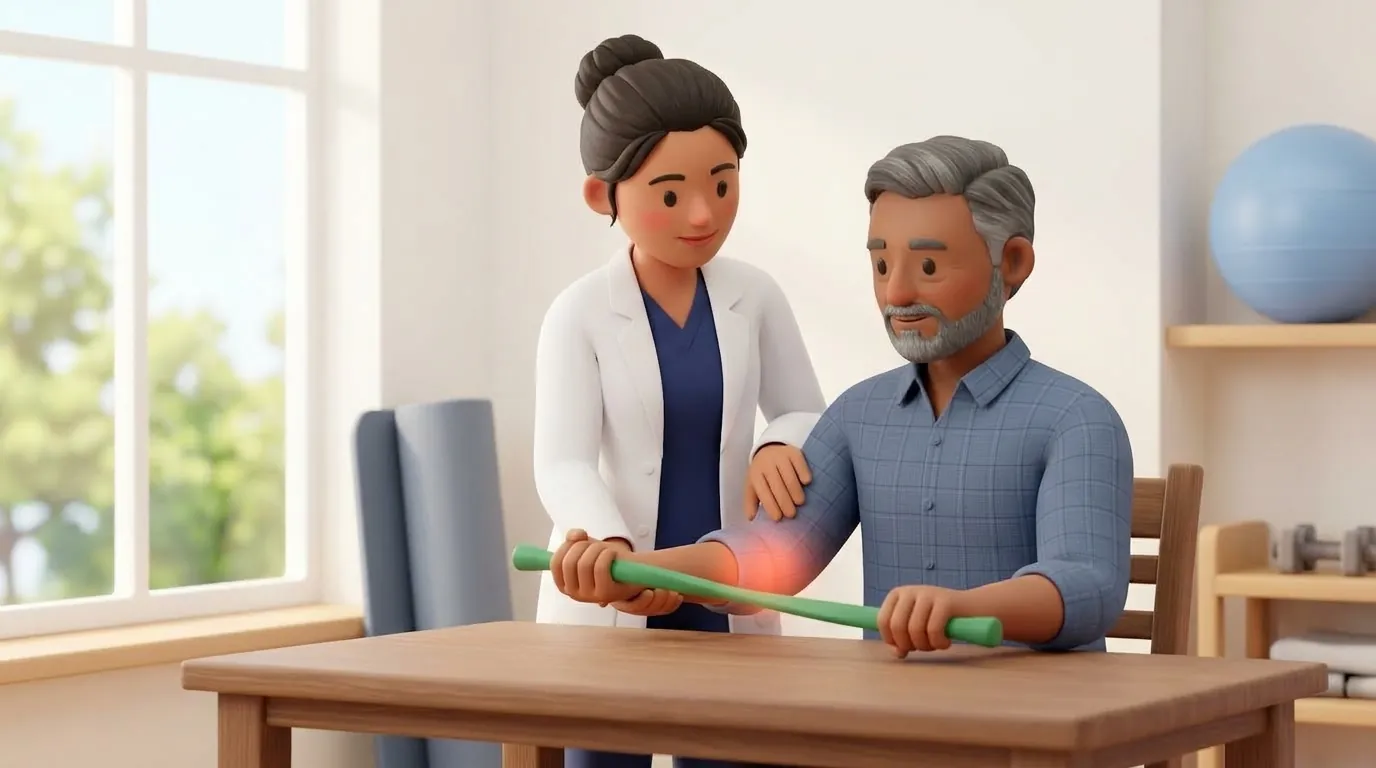
Tennis elbow, clinically termed lateral epicondylalgia or extensor tendinopathy, is an overuse condition causing sharp pain and tenderness over the bony bump on the outer side of the elbow. Despite the athletic name, over 90% of cases occur in non-tennis players.
What causes tennis elbow in athletes and desk workers?
The condition stems from cumulative micro-trauma at the common extensor origin, predominantly affecting the extensor carpi radialis brevis (ECRB) tendon. In India, common triggers include repetitive computer mouse gripping without forearm support, intense badminton or cricket strokeplay, manual handling of heavy utensils in kitchen tasks, and manual trades involving screwdriver twisting.
Clinical tests used to assess outer elbow pain
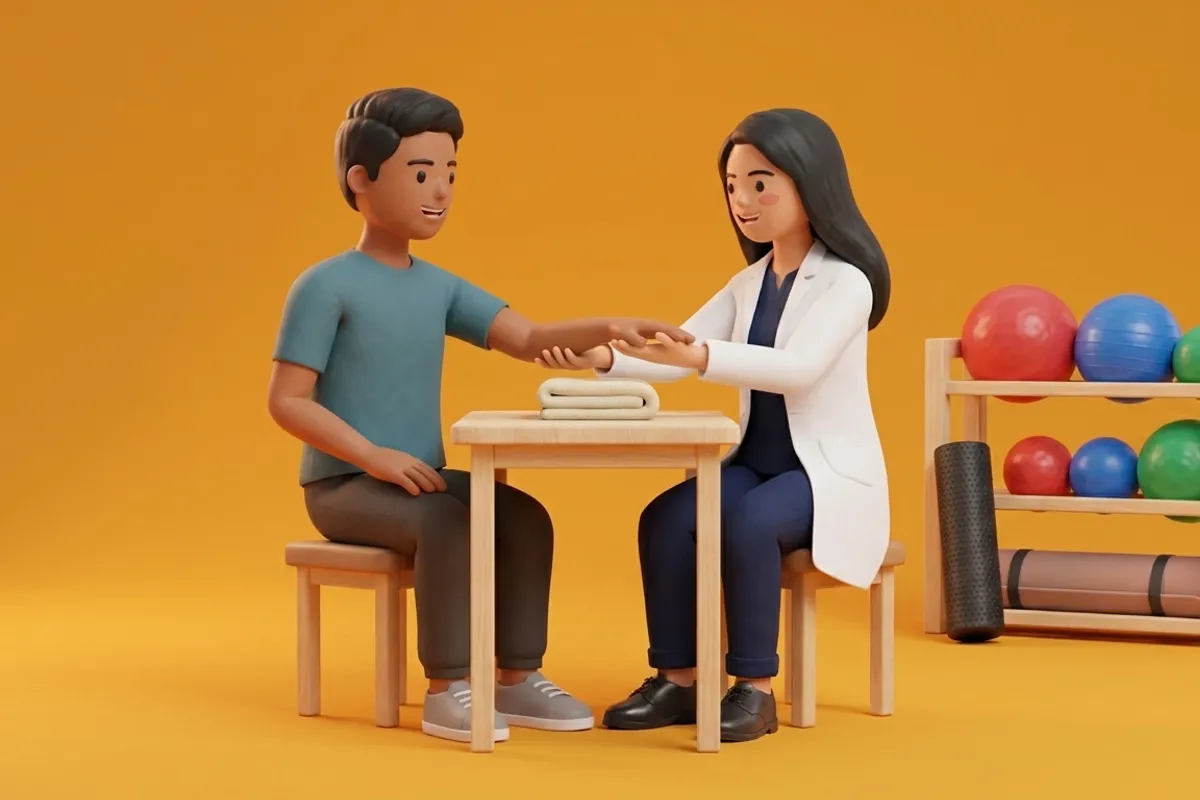
A physiotherapist evaluates elbow pain using proven physical examination manoeuvres before prescribing exercises:
- Cozen's Test: You make a fist, pronate your forearm, and extend your wrist against the physiotherapist's downward resistance. Sudden pain at the lateral epicondyle indicates a positive test.
- Mill's Test: The clinician passively flexes your wrist and fingers while extending the elbow. Tendon stretching reproduces familiar outer elbow tenderness.
- Resisted Middle Finger Test (Maudsley's): Extending your middle finger against resistance stresses the ECRB tendon slip, pinpointing tendon involvement.
Phase-based rehabilitation: why rest alone fails
Tendons require mechanical loading to heal and remodel collagen fibres. Complete rest weakens tendon tensile capacity, leading to immediate recurrence once regular activities resume. Evidence-based physiotherapy follows progressive loading phases:
- Phase 1: Isometric Tendon Loading: Static wrist extension holds against gentle resistance for 30 to 45 seconds. Promotes pain relief (tendon neuroplastic modulation) without irritating the insertion.
- Phase 2: Eccentric & Isotonic Strengthening: Controlled eccentric lowering of a light dumbbell or flexible resistance bar (the Tyler Twist exercise). Gradually stimulates robust collagen realignment.
- Phase 3: Grip & Kinetic Chain Conditioning: Strengthening rotator cuff stabilisers, scapular retractors, and grip endurance to reduce compensatory forearm overload during sports and work.
| Support Tool | Purpose & Mechanism | Correct Application |
|---|---|---|
| Counterforce Elbow Strap | Compresses forearm muscle belly to reduce peak tensile stress at the bony insertion | Positioned 2 to 3 cm below the lateral epicondyle during gripping or computer work |
| Cock-up Wrist Splint | Maintains wrist in 20° extension during nocturnal rest to prevent morning stiffness | Worn overnight during acute flare-ups; avoid wearing all day to prevent muscle atrophy |
| Ergonomic Vertical Mouse | Neutralises forearm pronation, reducing chronic tension on wrist extensor tendons | Used at desktop workstations with elbow supported on armrest at 90° |
Why corticosteroid injections are no longer first-line
While corticosteroid injections can offer dramatic short-term pain relief for 4 to 6 weeks, high-quality clinical trials consistently show higher recurrence rates and poorer tendon cellular structure at 6 and 12 months compared to progressive exercise therapy. Physiotherapy addresses the mechanical root cause rather than temporarily silencing symptoms.
Managing elbow or repetitive strain symptoms? View our complete clinical guide on lateral epicondyle care.
Tennis elbow condition page →Frequently asked questions
How long does tennis elbow take to heal with physiotherapy?
Most patients experience meaningful pain reduction and functional improvement within 6 to 12 weeks of structured progressive loading. Chronic cases may take 3 to 6 months for complete remodelling.
Where exactly should I place my tennis elbow brace?
Place the padded strap around the thickest part of your upper forearm, roughly two fingers (2.5 to 3 cm) below the painful elbow bone. It should be snug enough to dissipate force without causing hand tingling.
Can I continue working on my laptop while recovering?
Yes, provided you optimise ergonomics. Keep your wrist in a neutral position, avoid resting your wrist on sharp desk edges, and consider switching to a vertical mouse to minimise extensor tension.
Evidence reviewed 5 September 2026. General information only. BookPhysio.in is a booking platform, not a clinic.
Sources reviewed
Cochrane Systematic Review on Physiotherapy Interventions for Lateral Epicondylalgia; British Journal of Sports Medicine (BJSM) Tendinopathy Guidelines.
Ready to see a physiotherapist?
Find verified physiotherapists in your city for clinic visits and home visits. Compare fees and real availability, then pay directly at your session.
Top cities for home visits & clinic care:
Related condition guides
BookPhysio.in Editorial Team
Editorial Team
The BookPhysio.in editorial team writes and maintains this content, checking it against reliable clinical sources. Content follows our medical review policy: general information only, and no page claims a clinical review until a named registered physiotherapist has signed it off.
Read our medical review policy