
Asymmetric Core Stabilization Drills for Convex-Concave Muscle Balance
In short
Master asymmetric core stabilization for scoliosis, targeting quadratus lumborum, multifidus, and obliques to correct muscular imbalances.
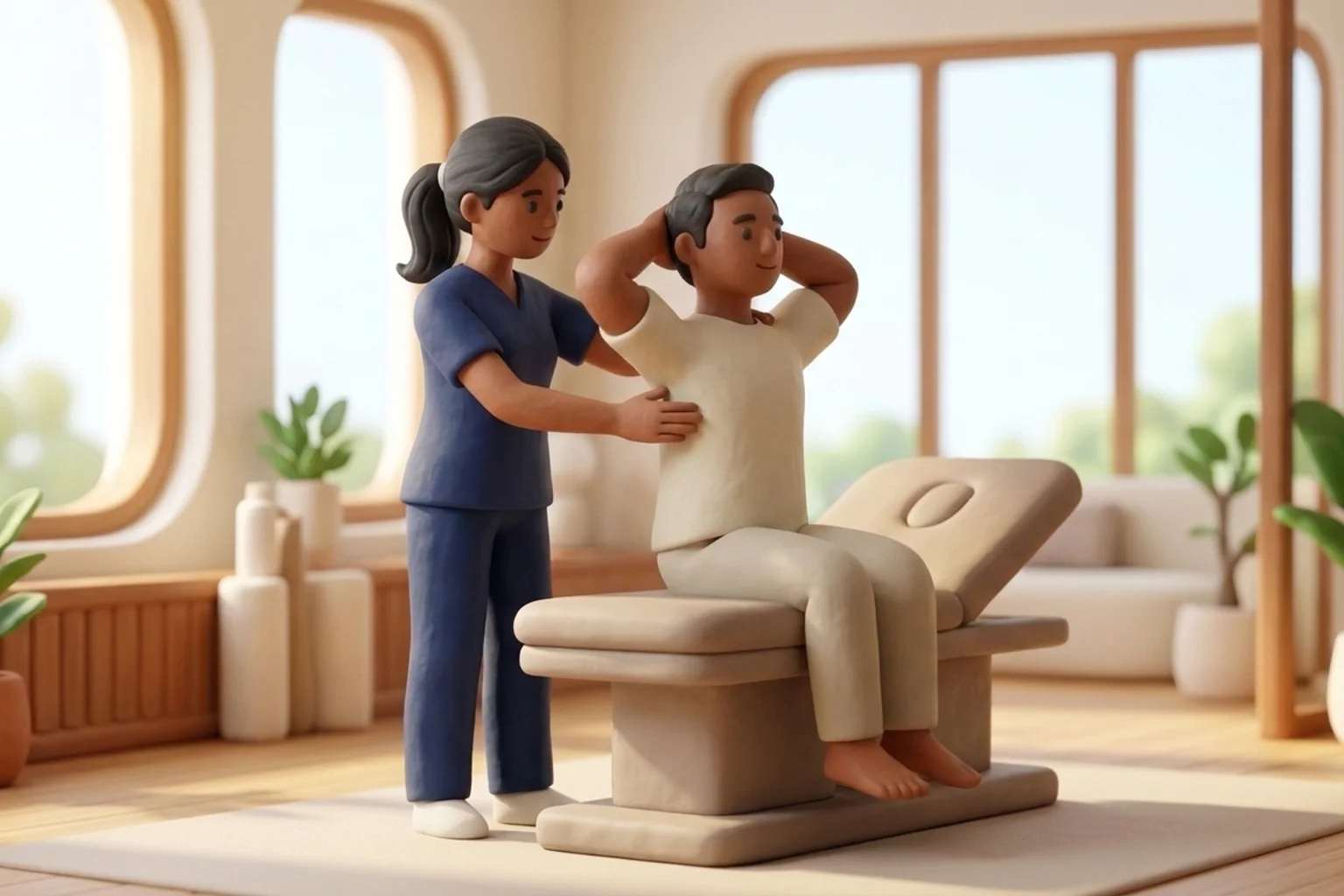
In this guide (4 sections)
In standard fitness and conditioning programs, core exercises are almost universally performed symmetrically, utilizing bilateral planks, crunches, and Roman chair extensions. However, in an individual with structural scoliosis, symmetrical exercises are biomechanically contraindicated because they reinforce existing muscular distortions. In scoliosis, the paraspinal and abdominal musculature develops profound structural and functional asymmetry: muscles on the curve convexity are overstretched, lengthened, and chronically strained, while those on the concavity become shortened, fibrotic, and contracted. Applying equal resistance across both sides inevitably causes the dominant, shortened concave muscles to contract further while leaving overstretched convex fibers weak. Asymmetric core stabilization specifically trains each muscle group according to its unique functional deficit, restoring dynamic trunk balance.
Gym Crunches, YouTube Fitness Pitfalls, and Yoga Twists in India
Across India, the growing popularity of commercial gyms, wellness centers, and online fitness videos has led many adolescents and young adults with undetected or mild scoliosis to adopt harmful workout routines. Performing heavy abdominal crunches, bilateral leg raises, or machine torso rotations without curve-specific modifications accelerates spinal decompensation and provokes acute facet pain. Furthermore, in traditional yoga sessions, performing aggressive rotational postures like Ardha Matsyendrasana (half spinal twist) equally in both directions can severely twist an already rotated scoliotic curve further into its pathological groove. Physiotherapists work closely with Indian fitness enthusiasts to replace generic gym workouts with tailored asymmetric core drills that stabilize the spine safely without triggering rotational shear.
Myofascial Asymmetry, Paraspinal Fiber Type Shifts, and Torque Imbalance
Histological and electromyographic studies of scoliotic paraspinal musculature reveal striking differences between the convex and concave sides of the curve apex. Biopsies of the deep multifidus and longissimus muscles demonstrate an increased proportion of Type I (slow-twitch) endurance fibers and localized fibrous contracture on the concave side, reflecting chronic shortening. Conversely, the convex side exhibits muscle fiber atrophy, fatty infiltration, and mechanical overstretching, resulting in diminished force-generating capacity and chronic fatigue. Furthermore, asymmetry extends to the quadratus lumborum, psoas major, and abdominal obliques, creating an unbalanced rotational torque across the lumbar vertebrae. Re-establishing spinal equilibrium requires eccentric lengthening and myofascial release of concave fibers paired with intensive isometric and concentric endurance training of the overstretched convex stabilizers.
Unilateral Side Planks, Asymmetric Bird-Dog Variations, and Pallof Press Drills
Asymmetric core rehabilitation employs specific exercise modifications tailored to the patient curve pattern. For a left lumbar curve, the primary stabilizing drill is a modified side plank performed exclusively on the convex (left) side, which heavily engages the weakened left quadratus lumborum and lateral abdominal wall while gravity helps de-rotate the lumbar curve. In quadruped positions, asymmetric bird-dog variations lift only the limb combination that activates the lengthened paraspinal fibers without arching the lower back. Clinicians also incorporate anti-rotation drills, such as the cable or resistance band Pallof press, positioned so that the resistance opposes the pathological vertebral rotation. These exercises progressively rebuild muscular stamina and prevent trunk decompensation during daily standing activities.
Modified Unilateral Side Bridge on Curve Convexity
Objective: Strengthen overstretched convex paraspinal muscles and quadratus lumborum using gravity
- 1Lie on your side on a firm mat, ensuring your curve convexity (the bulging side) is facing downward toward the floor.
- 2Bend your knees to 90 degrees, stacking your thighs directly on top of each other, and prop your upper body on your lower forearm.
- 3Ensure your elbow is aligned directly beneath your shoulder and your neck is straight in line with your spine.
- 4Engage your abdominal wall and lift your hips off the floor until your torso and thighs form a straight diagonal line.
- 5Hold this elevated side bridge for 10 to 15 seconds while breathing steadily, then lower your hips slowly to the mat.
| Myofascial Structure | Convex Side Functional Status & Goal | Concave Side Functional Status & Goal |
|---|---|---|
| Quadratus Lumborum | Lengthened, mechanically weak; requires concentric and isometric strengthening via convex side bridges | Shortened, hypertonic, fibrotic; requires passive myofascial release, dry needling, and lateral stretching |
| Multifidus and Erector Spinae | Overstretched, fatty infiltration; requires low-load high-repetition isometric endurance training | Contracted, elevated tone; requires rotational angular breathing expansion and gentle manual mobilization |
| Internal and External Obliques | Inhibited rotational control; requires targeted anti-rotation Pallof presses resisting curve torsion | Rigid anterior rib pull; requires diaphragmatic breathing cues and manual intercostal expansion |
If performing an asymmetric side bridge or anti-rotation exercise provokes sharp radiating pain into the gluteal fold, groin, or lower leg, immediately cease the exercise and undergo clinical re-evaluation for foraminal encroachment or facet joint inflammation.
Frequently Asked Questions
Should I ever perform side planks on the concave side of my scoliosis curve?
Generally, no. Performing side planks on the concave side further strengthens and shortens muscles that are already tight and contracted, pulling the curve deeper into its deformity. Side planks should be performed selectively on the convex side under the guidance of a trained physiotherapist.
Do I need a doctor referral to see a scoliosis physiotherapist on BookPhysio.in?
BookPhysio.in does not require a doctor referral. Under the National Commission for Allied and Healthcare Professions (NCAHP) Act 2021, patients across India enjoy direct access to autonomous registered physiotherapists. Through BookPhysio.in, you connect directly with verified clinicians and pay per session with transparent fees, completely free from advance package commitments, commission markups, or platform subscription charges.
Related condition guides


Related recovery guides & articles
BookPhysio.in Editorial Team
The BookPhysio.in editorial team writes and maintains this content, checking it against reliable clinical sources. Content follows our medical review policy: general information only, and no page claims a clinical review until a named registered physiotherapist has signed it off.
Read our medical review policy