
ICU Delirium: The CAM-ICU Assessment, Sensory Stimulation, and Early Mobility Interventions
In short
Routine CAM-ICU screening paired with early physical mobilization cuts ICU delirium duration in half, lowering 6-month mortality and long-term cognitive impairment.
In this guide (4 sections)
Neurobiology and Clinical Burden of ICU Delirium
ICU Delirium is an acute, fluctuating disturbance in attention, awareness, and cognitive baseline affecting up to 80% of mechanically ventilated critically ill patients. Characterized by neuroinflammation, blood-brain barrier disruption, and imbalances in acetylcholine and dopamine neurotransmission, delirium is independently linked to prolonged mechanical ventilation, increased hospital mortality, and permanent cognitive decline akin to moderate traumatic brain injury.
Delirium presents in three motoric subtypes: hyperactive (agitation, hallucinations, pulling lines), hypoactive (lethargy, withdrawal, quiet unresponsiveness), and mixed. Hypoactive delirium represents over 60% of cases but is frequently missed without routine objective screening, leading to poor clinical outcomes.
The CAM-ICU Diagnostic Flowsheet and Scoring Criteria
| Diagnostic Feature | Assessment Technique / Test | Positive Finding Criteria | Clinical Interpretation | |
|---|---|---|---|---|
| Step 1: Sedation Depth | Richmond Agitation-Sedation Scale (RASS) | RASS -4 or -5 (deeply sedated / unarousable) | Stop; patient is in coma (cannot evaluate delirium) | |
| Feature 1: Acute Change / Fluctuating Course | Review 24-hr mental status history or baseline RASS changes | Acute onset of mental status change or fluctuating attention | Prerequisite feature for CAM-ICU positivity | |
| Feature 2: Inattention | Squeeze my hand on the letter 'A': S-A-V-E-A-H-A-A-R-T | > 2 errors (fails to squeeze on 'A' or squeezes on other letters) | Inattention is present; proceed to Feature 3 and 4 | |
| Feature 3: Altered Level of Consciousness | Current RASS assessment score at bedside | Current RASS is anything other than 0 (Alert and calm) | If present (+ Feature 1 and 2), patient is DELIRIUM POSITIVE | |
| Feature 4: Disorganized Thinking | 4 logic questions (e.g., Will a stone float on water?) + 2-step command | > 1 error across 4 questions or unable to follow command | If present (+ Feature 1 and 2), patient is DELIRIUM POSITIVE |
The ABCDEF Bundle: Non-Pharmacological Mobility Protocols
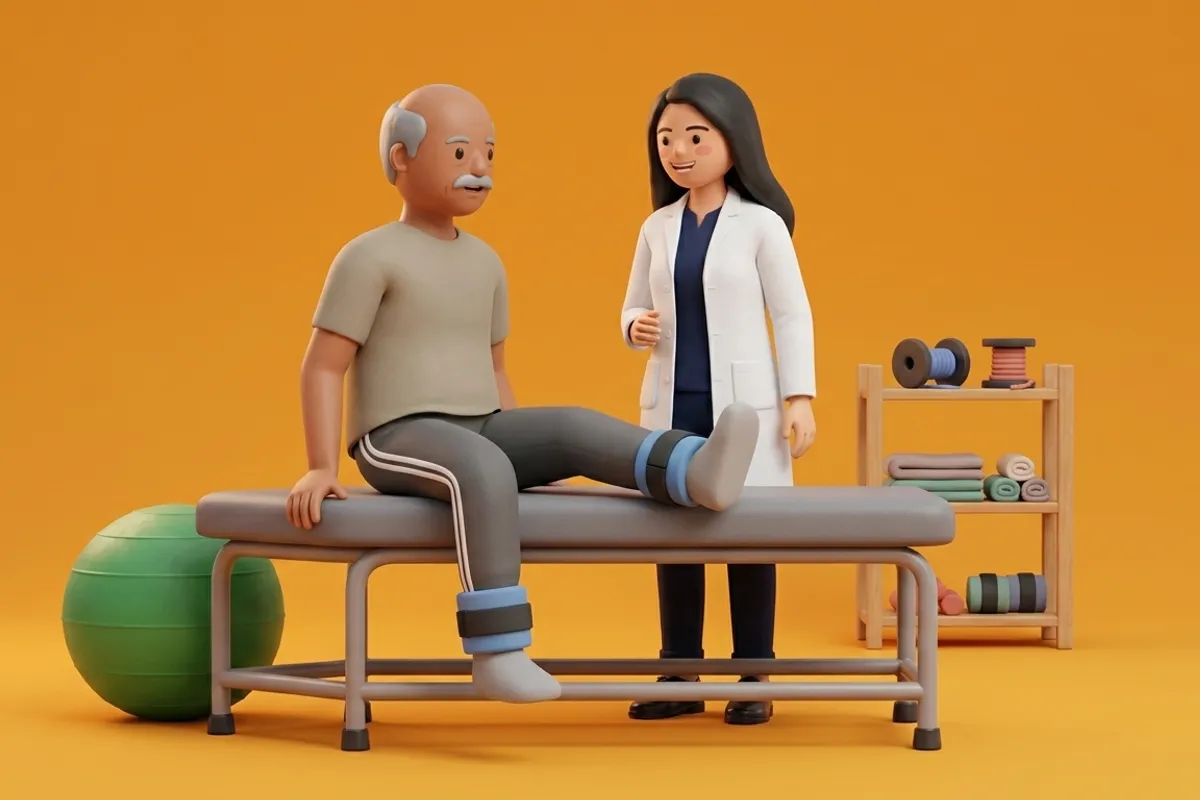
- The 'Awake and Walking' Daily Awakening Schedule: Coordinate early physiotherapy immediately following the daily Spontaneous Awakening Trial (SAT); transitioning patients from bed to an upright chair within 30 minutes of waking re-establishes normal circadian reticular activating system inputs.
- Sensory and Environmental Reorientation: Ensure the patient wears their eyeglasses and hearing aids during all physiotherapy sessions; open window blinds during daylight hours and maintain a strict sleep hygiene protocol (dim lights, white noise) at night.
- Active Motor Tasks Over Sedative Medications: Never treat hypoactive delirium with antipsychotics or benzodiazepines; active motor tasks (seated reaching, pedal ergometry, standing) stimulate central cholinergic pathways, rapidly clearing metabolic delirium.
Frequently Asked Questions
Why do patients in the ICU become confused, see things, or not recognize family?
This sudden confusion is called ICU delirium. It happens because of severe physical illness, strong sedative medications, continuous beeping alarms, lack of natural daylight, and disrupted sleep. It is very common and usually temporary.
How do nurses test for delirium if the patient has a breathing tube and cannot talk?
They use a test called the CAM-ICU. The nurse asks the patient to squeeze their hand every time they hear the letter 'A' in a spoken word list, and tests whether their alertness drifts during the day.
Does getting out of bed help cure ICU delirium?
Yes! Early physiotherapy and sitting upright by a window are the most effective treatments for delirium. Movement resets the brain's natural day-night clock and wakes up sluggish brain pathways without needing extra sedative drugs.
Related condition guides


Related recovery guides & articles
BookPhysio.in Editorial Team
The BookPhysio.in editorial team writes and maintains this content, checking it against reliable clinical sources. Content follows our medical review policy: general information only, and no page claims a clinical review until a named registered physiotherapist has signed it off.
Read our medical review policy