
End-of-Life Cancer Dyspnea: Handheld Fan Therapy, Postural Pacing, and Airway Comfort
In short
Non-pharmacological breathlessness therapy in palliative oncology combines handheld facial fan stimulation, forward-lean posture, and pursed-lip exhalation.

In this guide (4 sections)
The Neurobiology of Breathlessness and the Dyspnea-Anxiety Spiral
Dyspnea (breathlessness) is one of the most frightening, refractory, and prevalent symptoms in advanced palliative oncology, affecting over 70% of patients with lung cancer, pleural mesothelioma, and end-stage metastatic disease. Cancer-induced breathlessness arises from a neuro-chemical mismatch between central respiratory motor drive generated in the medulla and mechanical feedback returned from pulmonary vagal stretch receptors and chest wall mechanoreceptors (neuromechanical dissociation).
The subjective sensation of air hunger instantly triggers sympathetic hyperarousal in the amygdala, generating panic and terror. This anxiety accelerates breathing rate, resulting in shallow, tachypneic breathing that increases dead-space ventilation and hyperinflates the lungs. This vicious cycle - the dyspnea-anxiety spiral - escalates rapidly. While opioids (low-dose morphine) are the pharmacological gold standard, non-pharmacological physiotherapy interventions act synergistically to immediately break this terror cycle.
Standardized Clinical Outcome Measures and Breathlessness Assessment
| Assessment Tool / Scale | Measurement Protocol | Clinical Score Interpretation | Palliative Physiotherapy Action Plan | |
|---|---|---|---|---|
| Numeric Rating Scale for Breathlessness (NRS) | 11-point visual/numerical scale: 'How breathless are you right now?' (0-10) | Score 1-3 (mild), 4-6 (moderate), 7-10 (severe air hunger crisis) | Score >= 4 triggers immediate non-pharmacological positioning and fan | |
| Modified Medical Research Council (mMRC) | 5-grade functional mobility breathlessness scale | Grade 4: Too breathless to leave house or breathless dressing | Focus on energy conservation, bedside pacing, and fan therapy | |
| Respiratory Rate & Pattern | Count breaths per minute without patient awareness | Normal 12-18 bpm; tachypnea > 24 bpm with accessory neck muscle use | Initiate pursed-lip exhalation to slow respiratory cadence | |
| Pulse Oximetry (SpO2) | Continuous transcutaneous pulse oximeter on finger or earlobe | Differentiates true hypoxemia (SpO2 < 90%) from non-hypoxemic air hunger | Oxygen therapy indicated for SpO2 < 90%; Fan therapy equally effective if SpO2 normal | |
| The Breathing Space Concept | 3-step crisis management: Positioning, Fan, Breathing slow-down | Patient-family action plan for acute episodes of panic breathlessness | Provides guiding physical tools to manage sudden air hunger at home |
Standardized Clinical Rehabilitation Protocols and Trigeminal Stimulation
- Handheld Fan Therapy Directed Across the Trigeminal (V2/V3) Nerve: Hold a simple battery-powered handheld fan 15 cm from the patient's face, sweeping the cool airflow across the upper lip, nostrils, and cheeks for 3 to 5 minutes; stimulating mechanoreceptors and cold-sensitive TRPM8 receptors of the trigeminal nerve sends afferent inhibitory signals to the respiratory center in the brainstem, immediately reducing the sensation of breathlessness.
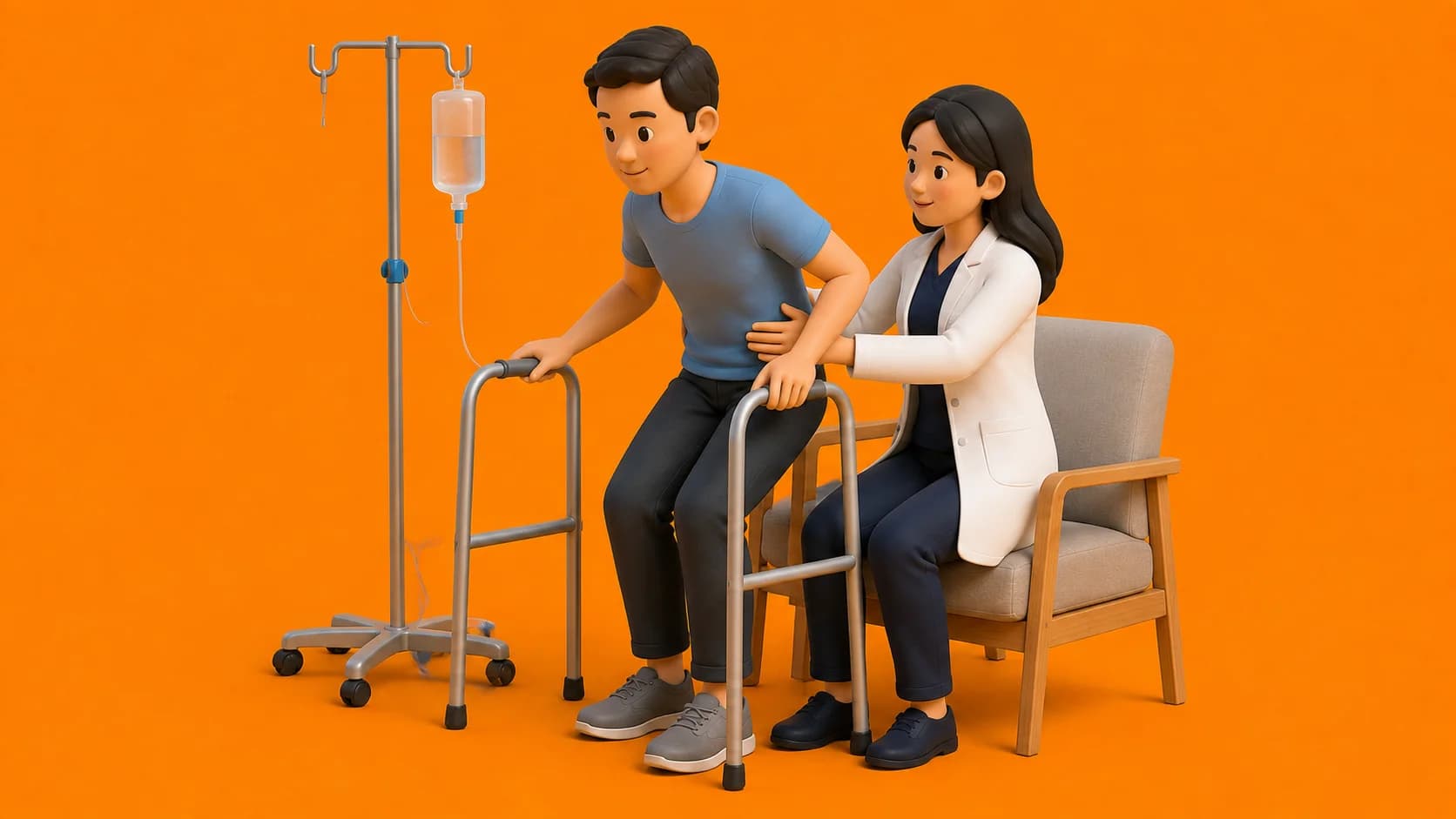
- The Forward-Lean Tripod Posture for Diaphragmatic Mechanical Advantage: Position the patient leaning forward seated on a chair with elbows resting on a pillow-topped table (tripod position); leaning forward allows abdominal contents to push the diaphragm upward into a domed position, improving diaphragmatic length-tension force generation while accessory neck muscles help expand the chest.
- Gentle Pursed-Lip Breathing and Extended Exhalation: Coach the patient to breathe in gently through the nose and blow out slowly through relaxed, pursed lips (like blowing out a candle across a room); extended exhalation creates positive back-pressure inside airways, preventing early bronchiolar collapse and emptying trapped air.
Frequently Asked Questions
How can a simple handheld battery fan stop severe breathlessness?
When cool air from a fan blows across your nose, upper lip, and cheeks, it stimulates cold-sensitive nerves in your face (the trigeminal nerve). These nerves send a soothing reflex message straight to the breathing center in your brain, tricking your brain into feeling that plenty of fresh air is rushing into your lungs.
Why does leaning forward on a table make it easier to catch my breath?
When you lean forward with your elbows resting on a table (the tripod posture), your arms brace your shoulder girdle. This allows your neck and shoulder muscles to pull your ribcage open like a pump while letting your diaphragm work with much less effort.
Is an oxygen tank always better than a fan for cancer breathlessness?
Clinical trials show that if your oxygen levels are already normal on a finger monitor, an oxygen mask works no better than cool air from a fan! The breeze from a small handheld fan is just as powerful, lighter to carry, and does not require loud oxygen machines.
Related condition guides

Related recovery guides & articles
BookPhysio.in Editorial Team
The BookPhysio.in editorial team writes and maintains this content, checking it against reliable clinical sources. Content follows our medical review policy: general information only, and no page claims a clinical review until a named registered physiotherapist has signed it off.
Read our medical review policy