
How to find and book a verified female physiotherapist for home visits in India
In short
Cultural privacy, personal dignity, and specialized women's health needs make booking a female physiotherapist the preferred choice for many Indian families. Learn how to verify credentials and arrange home care.
In this guide (6 sections)
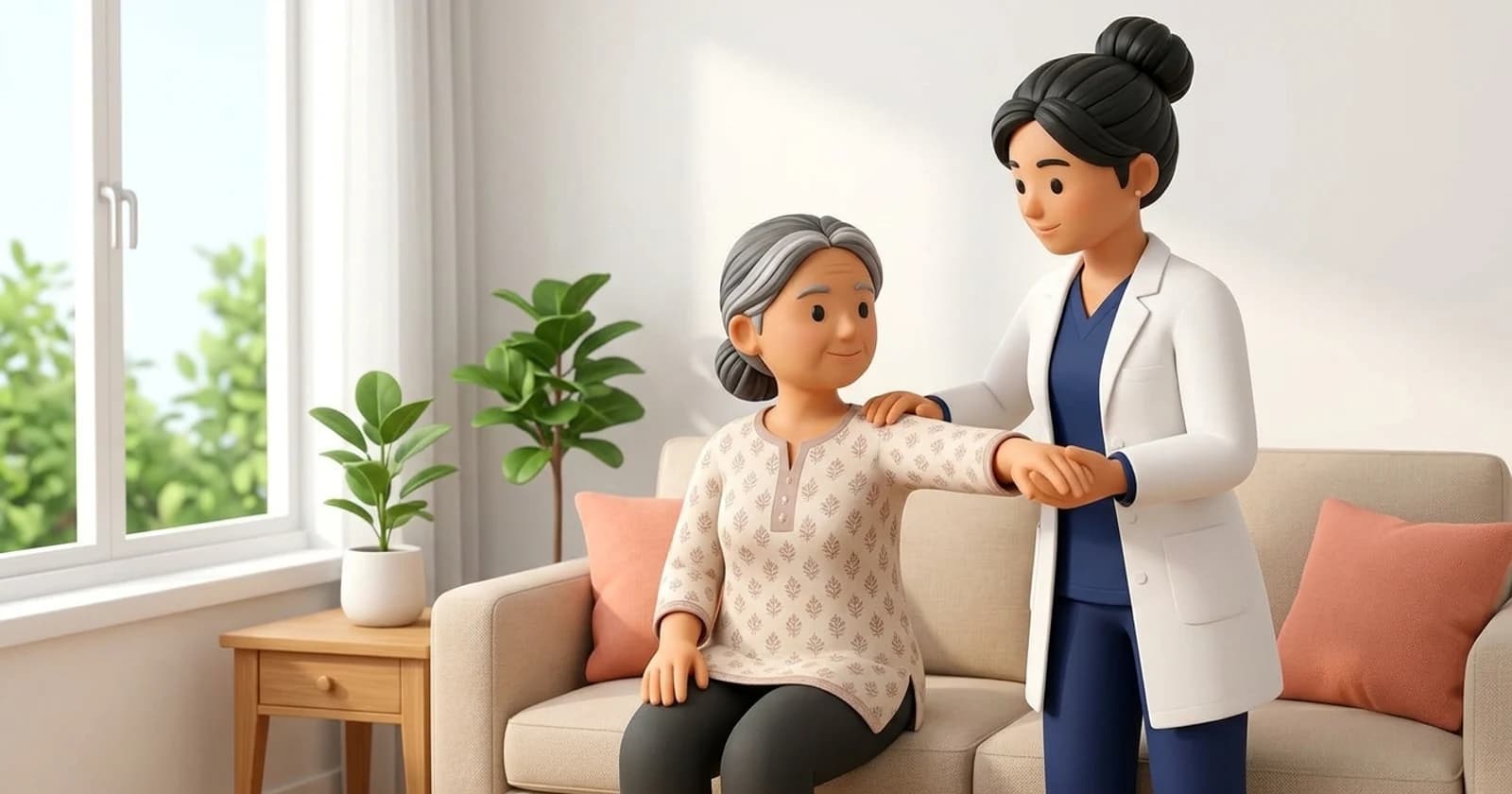
Across Indian households, privacy, personal modesty, and cultural comfort are foundational priorities when seeking healthcare. For millions of women: whether an elderly grandmother recovering from a hip fracture in a joint family, a young mother navigating postpartum core weakness and diastasis recti, or a woman dealing with sensitive pelvic floor issues: having a qualified female physiotherapist provide treatment in the privacy of her own home makes an immense clinical and psychological difference.
However, navigating the Indian healthcare marketplace to find verified, competent female clinicians has historically been fraught with uncertainty. Families frequently rely on informal word-of-mouth recommendations, unverified local classifieds, or commercial aggregator portals that fail to authenticate university qualifications and state council licensing. Understanding how to systematically verify credentials, assess clinical specialization, and establish safe home care boundaries ensures optimal recovery and total peace of mind.
1. Key Clinical Scenarios Where a Female Clinician is Preferred
While clinical competence is not defined by gender, specific healthcare scenarios and cultural dynamics make female practitioners the ideal choice for many Indian families:
- Postnatal and Post-Caesarean Rehabilitation: New mothers recovering from vaginal delivery or C-section require specialized assessments of diastasis recti (abdominal separation), pelvic girdle pain, scar tissue mobility, and pelvic floor tone in a private, unhurried home environment.
- Pelvic Health and Incontinence Management: Conditions such as stress urinary incontinence, pelvic organ prolapse, and chronic pelvic pain require delicate, empathetic clinical discussions and internal/external pelvic floor muscle training that many women feel comfortable discussing only with a female clinician.
- Geriatric Care for Elderly Female Relatives: Elderly grandmothers (Dadis and Nanis) recovering from stroke, knee replacement, or parkinsonism often feel deeply self-conscious about physical touch or disrobing for joint assessment in the presence of male practitioners.
- Orthopaedic Rehab in Conservative Joint Family Households: In multi-generational households where joint family elders reside, booking a female clinician respects traditional familial expectations of modesty while delivering modern evidence-based rehabilitation.
| Clinical Focus Area | General Orthopaedic Physio | Specialized Women's Health Physio | Key In-Home Interventions | |
|---|---|---|---|---|
| Postnatal Core & Abdominal Wall | General abdominal crunches and generic back stretches | Ultrasound / palpation of inter-recti distance, transverse abdominis activation | Diastasis recti progressive approximation, safe lifting mechanics with infant | |
| Urinary Incontinence & Bladder Leakage | Often not evaluated or treated | Comprehensive pelvic floor motor control assessment, bladder diary analysis | Kegel biofeedback coaching, urge suppression techniques, intra-abdominal pressure management | |
| Post-Mastectomy / Breast Cancer Care | Basic shoulder passive range of motion exercises | Complete manual lymphatic drainage (MLD), cording release, compression garment advice | Axillary web syndrome manual release, gradual aerobic conditioning, lymphoedema surveillance |
2. How to Authenticate Statutory Credentials in India
The most critical step in booking home healthcare is verifying that your visiting practitioner is legally qualified to practice. In India, legitimate physiotherapists must hold a recognized university degree (a 4.5-year BPT or 2-year MPT) from a recognized university and be registered with a statutory body:
Verify State Council Registration: In states with statutory councils (such as the Delhi Council DCPTOT, Maharashtra MSCOTPT, or Gujarat State Council), the clinician must provide an active council registration number. Under the central National Commission for Allied and Healthcare Professions (NCAHP) Act 2021, all healthcare professionals are progressively registered under state and central registries. Beware of individuals presenting membership certificates from non-statutory private associations as substitutes for genuine government licensing. On BookPhysio.in, every listed female practitioner has their registration credentials verified.
3. Cultural Nuances and Multilingual Care in Indian Households
India is a mosaic of rich linguistic, regional, and dietary traditions. When receiving domiciliary care, elderly patients in particular communicate symptoms with far greater nuance and clinical accuracy in their mother tongue: whether Hindi, Tamil, Telugu, Kannada, Marathi, Bengali, Malayalam, or Gujarati. A visiting female physiotherapist who understands local cultural practices, respectful greeting traditions (such as addressing elders with appropriate familial honorifics), and domestic routines integrates seamlessly into the household ecosystem, fostering mutual trust and reducing clinical anxiety.
Furthermore, home visits provide an invaluable opportunity to adapt rehabilitation to the physical realities of Indian living spaces. Rather than prescribing exercises on clinical apparatus that cannot be replicated at home, the physiotherapist guides the patient using sturdy domestic furniture: utilizing a dining chair for sit-to-stand quad training, a corridor wall for shoulder ladder stretches, and a bed edge for pelvic tilts. This domestic contextualization dramatically enhances daily home exercise compliance.
4. Home Environment Preparation and Safety Standards
Home Checklist for In-Home Women's Physiotherapy Visits
Objective: Ensure physical comfort, privacy, and clinical efficacy during domiciliary sessions.
- 1Select a Well-Lit, Private Room: Choose a bedroom or quiet living area where doors can be closed to provide complete visual privacy from domestic helpers and household visitors.
- 2Firm Bed or Exercise Mat: A firm mattress or an exercise yoga mat spread over the floor provides the ideal surface for pelvic alignment and hip mobility testing. Overly soft mattresses hinder movement.
- 3Have Medical Documents Ready: Keep discharge summaries, operative notes, radiological reports, and current medication lists accessible on a side table for the initial clinical review.
- 4Presence of a Chaperone / Family Member: For the comfort and security of both the patient and the visiting female practitioner, having a family member present in the home during visits is welcomed and standard clinical best practice.
5. Fair Fees and Direct Transparent Payments
Home visit physiotherapy fees in Indian cities typically range between ₹600 and ₹2,000 per session depending on the clinician's postgraduate qualifications (MPT in Women's Health or Neurological Rehab), travel distance, and treatment complexity. High-end commercial agencies frequently inflate these rates to ₹2,500 to ₹3,500 by charging hefty middleman commissions. On BookPhysio.in, patients connect directly with independent, licensed female physiotherapists and pay them directly at the end of each session with zero platform fees.
6. Frequently Asked Questions
Can a female physiotherapist conduct pelvic floor assessment safely at home?
Yes, certified pelvic floor and women's health physiotherapists routinely conduct assessments in home settings. The clinician conducts a detailed clinical history, assesses posture and abdominal breathing, and evaluates external perineal movement. If an internal vaginal examination is clinically indicated and agreed upon, the clinician uses sterile medical gloves, clinical draping, and maintains strict hygiene protocols in a private bedroom with a chaperone present.
How soon after a normal delivery or C-section can my wife begin home physiotherapy?
Gentle breathing exercises, pelvic floor awareness, and circulatory foot-ankle pumps can begin within 24 to 48 hours after delivery. Formal postnatal musculoskeletal rehabilitation: addressing diastasis recti, back pain, and pelvic girdle stability: typically begins between 2 and 6 weeks postpartum once the obstetrician provides medical clearance and the surgical incision has healed.
How do I ensure the female physiotherapist visiting my mother is legitimate?
Always ask to view their statutory state council registration card or degree certificate (BPT/MPT). On BookPhysio.in, this verification is handled proactively: practitioner profiles display verified registration details and clinical qualifications, ensuring that your loved ones receive care only from authentic, licensed medical professionals.
Is home physiotherapy as effective as going to a specialized hospital or clinic?
For women's health, postnatal care, and geriatric rehabilitation, home visits are often significantly more effective than hospital visits. In the home, the physiotherapist evaluates the patient in her real living environment: assessing real bed heights, bathroom commode transfers, infant nursing posture, and kitchen ergonomics. Furthermore, avoiding stressful metro traffic preserves energy for active recovery.
Can family members be present in the room during the home physiotherapy session?
Yes, family members are actively welcomed to be present. Having a daughter, daughter-in-law, or spouse observe the session helps family members learn how to assist with prescribed home exercises, understand safe transfer techniques, and provide emotional support throughout the recovery journey.
Related condition guides


Related recovery guides & articles
BookPhysio.in Editorial Team
The BookPhysio.in editorial team writes and maintains this content, checking it against reliable clinical sources. Content follows our medical review policy: general information only, and no page claims a clinical review until a named registered physiotherapist has signed it off.
Read our medical review policy