
Guillain-Barré Syndrome (GBS): Hughes Disability Scale, Overwork Weakness and Submaximal Rehab
In short
Guillain-Barré Syndrome causes rapid ascending symmetrical paralysis. Learn the Hughes disability grading, why over-exercising causes nerve damage, and safe submaximal protocols.

In this guide (5 sections)
Pathophysiology and the Ascending Course of GBS
Guillain-Barré Syndrome (GBS) is an acute, post-infectious autoimmune polyradiculoneuropathy, most frequently triggered by Campylobacter jejuni gastroenteritis, cytomegalovirus, or respiratory infections.
Molecular mimicry between microbial lipooligosaccharides and human peripheral nerve gangliosides triggers autoimmune attack against Schwann cell membranes (Acute Inflammatory Demyelinating Polyneuropathy, AIDP) or axonal membranes (Acute Motor Axonal Neuropathy, AMAN).
GBS presents with rapid, symmetrical, ascending flaccid paralysis: starting with distal lower limb weakness and paresthesias, ascending over hours to days to involve the trunk, upper limbs, cranial nerves (facial diplegia), and phrenic nerve respiratory muscles, requiring mechanical ventilation in 25 percent of patients.
The Hughes Functional Disability Scale
The Hughes scale is the universal clinical benchmark used to monitor GBS disease trajectory and guide physiotherapy milestones.
| Hughes Grade | Clinical Presentation | Mobility Status | Physiotherapy Rehabilitation Focus | |
|---|---|---|---|---|
| Grade 0 | Healthy and normal | Fully independent | Full community conditioning and athletic return. | |
| Grade 1 | Minor symptoms and signs | Capable of running | Endurance building, eccentric loading, speed drills. | |
| Grade 2 | Able to walk 10 meters across open space | Walks without assistance | Gait re-education, balance, stepping over obstacles. | |
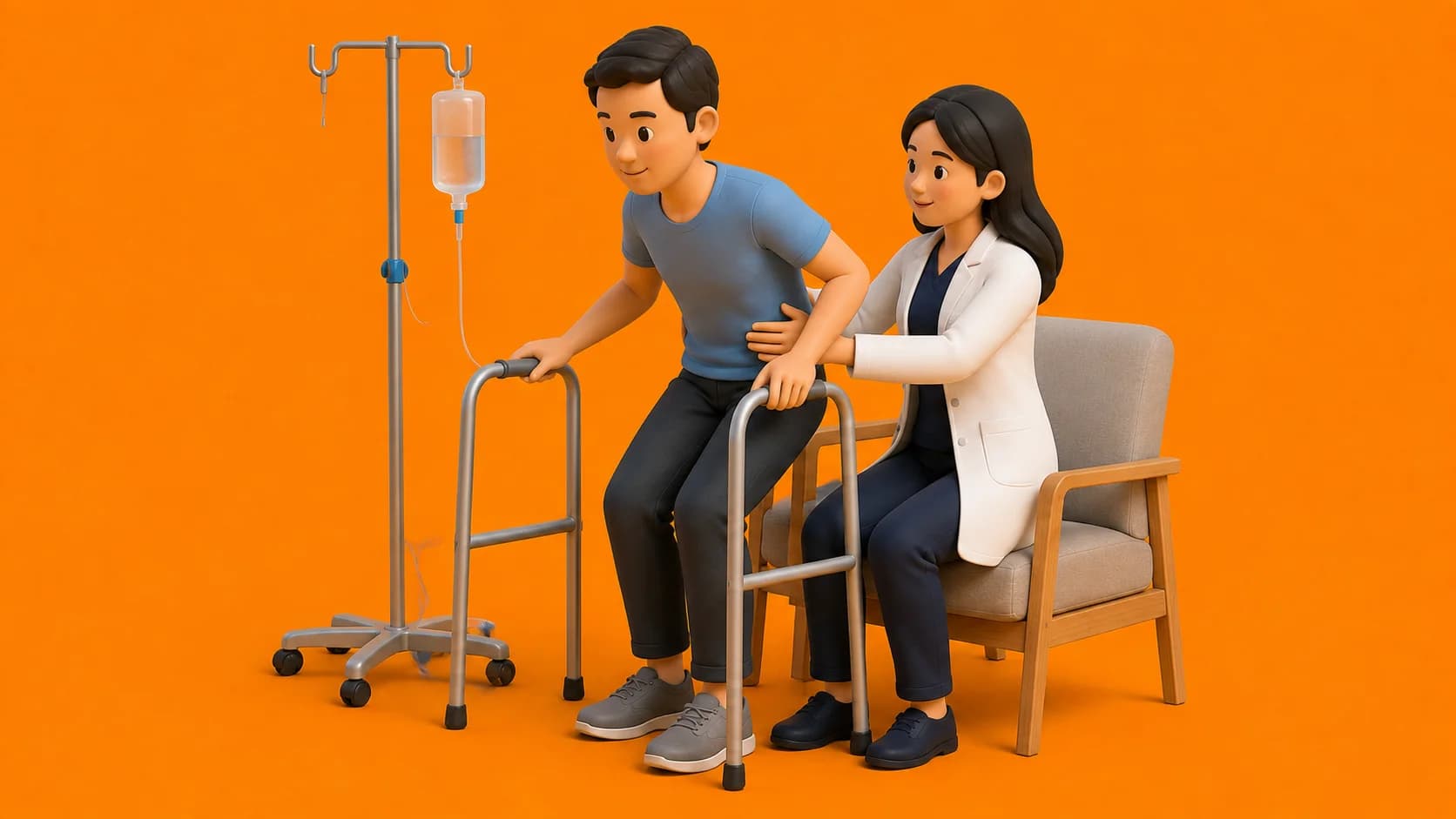
| Grade 3 | Able to walk 10 meters with assistance | Requires stick, frame, or person | Assisted walker ambulation, AFO bracing, sit-to-stand. | |
| Grade 4 | Chairbound or bedridden | Unable to walk 10 meters | Passive range, tilt table, assisted bed mobility. | |
| Grade 5 | Requires mechanical ventilation | ICU intubation / tracheostomy | Chest clearance, ventilator weaning, contracture prevention. | |
| Grade 6 | Deceased | Fatal outcome | N/A |
The Danger of Overwork Weakness and Submaximal Rules
In recovering GBS, regenerating peripheral nerve axons and reinnervating motor units are metabolically fragile. If a patient is subjected to aggressive, high-resistance exercise or exhaustive repetitions, overwork weakness (paradoxical profound muscle weakness lasting days or weeks) ensues, causing secondary axonal damage.
Rehabilitation must strictly adhere to submaximal, non-fatiguing resistance training principles.
- Low-Load, Low-Repetition Dosing: Prescribe 1 to 2 sets of 8 to 10 repetitions at an intensity below fatigue, stopping immediately if the patient reports muscle burning or soreness.
- The 24-Hour Muscle Soreness Rule: If muscle soreness, cramping, or fatigue persists into the following day, the exercise intensity was too high and must be reduced by 50 percent.
- Avoid High-Velocity Eccentric Loads: Strictly avoid high-load downhill walking or heavy eccentric lowering exercises, which induce severe mechanical strain on regenerating motor units.
- Night Ankle Splinting: Apply neutral ankle-foot resting splints at night to prevent Achilles tendon contractures (equinus deformity) while anterior tibialis muscles are paralyzed.
Autonomic Instability Monitoring
Up to 60 percent of GBS patients experience profound autonomic nervous system dysregulation (dysautonomia): labile blood pressure swings, paroxysmal tachycardia, orthostatic hypotension, and cardiac arrhythmias.
Physiotherapists monitor resting and postural vitals closely before executing bedside sit-to-stand transfers.
Frequently Asked Questions
How long does complete recovery from Guillain-Barré Syndrome take?
Approximately 80 percent of GBS patients regain independent ambulation within 6 to 12 months. However, 15 to 20 percent experience residual minor motor deficits, fatigue, or foot drop requiring permanent orthotic support.
Why does pushing too hard set GBS patients backward?
Immature, regenerating motor axons lack thick protective myelin sheaths. Pushing muscles to exhaustion depletes motor unit ATP reserves and causes biochemical damage to fragile nerve sprouts, setting recovery back by weeks.
What is the difference between AIDP and AMAN variants of GBS?
AIDP is the demyelinating form with good prognosis and faster recovery once remyelination occurs. AMAN is the axonal variant common in Asia, involving direct axonal damage with longer recovery timelines and higher residual weakness.
Related condition guides

Related recovery guides & articles
BookPhysio.in Editorial Team
The BookPhysio.in editorial team writes and maintains this content, checking it against reliable clinical sources. Content follows our medical review policy: general information only, and no page claims a clinical review until a named registered physiotherapist has signed it off.
Read our medical review policy