
Persistent Postural-Perceptual Dizziness (PPPD): Visual Vertigo, Supermarket Syndrome and Pacing
In short
PPPD causes chronic non-spinning dizziness exacerbated by complex visual environments and upright posture; treatment requires habituation, desensitisation, and paced activity.
In this guide (8 sections)
Neurobiology of Persistent Postural-Perceptual Dizziness
Persistent Postural-Perceptual Dizziness (PPPD) is a chronic functional neuro-otological disorder recognised by the World Health Organization and the Bárány Society. It is characterised by non-spinning dizziness, subjective unsteadiness, or a rocking/swaying sensation lasting for more than three months. Symptoms are present on most days, worsening during upright stance, active or passive locomotion, and exposure to complex, moving visual environments (visual vertigo / space and motion discomfort).
PPPD typically develops after an acute vestibular, neurological, or medical event (such as BPPV, vestibular neuritis, vestibular migraine, or panic attack). While the initial structural trigger resolves, the brain's central postural control system fails to return to normal baseline. Instead, it remains locked in a high-threat, hyper-vigilant predictive control mode, over-relying on visual inputs and visual motion processing in the parieto-insular vestibular cortex while clamping down on normal automatic postural adjustments.
Domestic Context: The Sensory Overload of Indian Bazaars
In India, patients with PPPD encounter severe sensory triggers in everyday life. Modern air-conditioned supermarkets (such as D-Mart, Reliance Fresh, or large mall atriums) with long fluorescent-lit aisles, repetitive merchandise shelving, and moving crowds provoke immediate unsteadiness, a phenomenon known clinically as 'supermarket syndrome'.
Similarly, traditional open-air sabzi mandis (vegetable markets), bustling railway stations with overhead departures screens, and scrolling on high-refresh-rate smartphone screens provoke sensory overwhelm. Patients frequently develop avoidant behaviours, isolating themselves inside dimly lit bedrooms out of fear that venturing out will trigger a catastrophic fall or public collapse.
Clinical Testing and Diagnostic Criteria
PPPD is diagnosed through rigorous clinical criteria rather than abnormal laboratory scans.
- Bárány Society Diagnostic Criteria: Persistent non-spinning dizziness or unsteadiness for at least 3 months, present >15 days per month, provoked by upright posture, motion, and visual complexity.
- Precipitating Event Identification: Detailed clinical history confirming an acute initiating trigger (e.g. resolved BPPV, viral vestibulopathy, syncopal event, or panic reaction).
- Normal Standard Vestibular Testing: Routine vHIT, caloric, and MRI testing typically demonstrate compensated peripheral function or normal central pathways, confirming functional network disruption.
- Dizziness Handicap Inventory (DHI): Elevated scores reflecting substantial physical, emotional, and functional limitations in daily life.
Stage-by-Stage Functional Rehabilitation Protocol
- Stage 1: Clinical Psychoeducation and Pacing: Reassure the patient that the inner ear hardware is intact, but the brain's sensory software is miscalibrated; introduce structured energy and activity pacing.
- Stage 2: Graded Visual Desensitisation (Optokinetics): Introduce controlled, short exposures to moving striped patterns, shopping video recordings, and dynamic visual displays to recalibrate visual motion tolerance.
- Stage 3: Real-World In-Situ Community Exposure: Accompany the patient into low-stimulus local shops during off-peak hours, gradually advancing to busy grocery markets and transit hubs.
Clinical Exercise Protocol: Graded Visual Habituation Drill
Graded Optokinetic Pattern Habituation
Objective: Desensitises hyper-reactive visual motion pathways and restores normal automatic postural equilibrium.
- 1Sit comfortably in a chair 1 metre in front of a computer monitor or tablet displaying a moving striped pattern or recorded grocery aisle video.
- 2Watch the moving visual display for exactly 45 to 60 seconds while taking slow, controlled diaphragmatic breaths.
- 3If dizziness scores rise above 3 out of 10, pause the video, look at a plain distant wall, and ground your feet firmly into the floor until sensations settle.
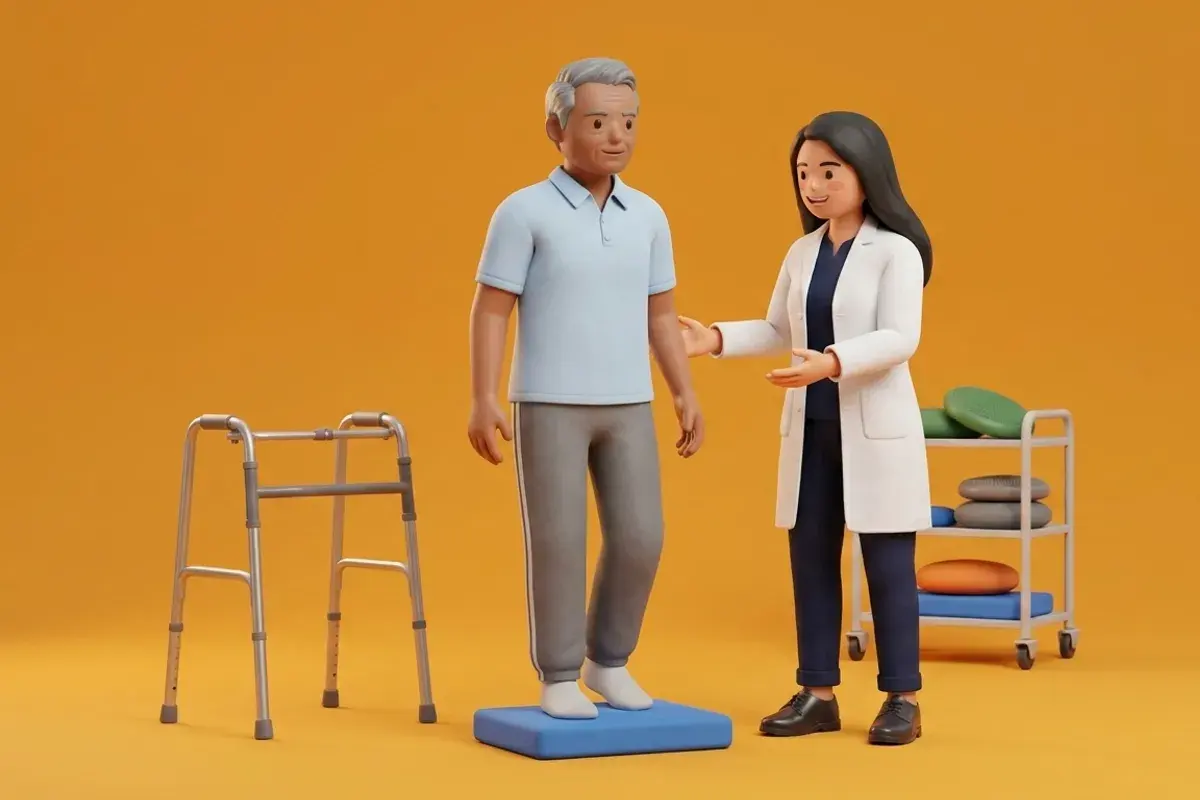
- 4Progress gradually over two weeks from seated viewing to standing with feet together, and finally standing on a compliant foam cushion.
Clinical Comparison: PPPD vs Vestibular Migraine vs BPPV
| Clinical Parameter | PPPD | Vestibular Migraine | BPPV |
|---|---|---|---|
| Nature of Sensation | Non-spinning floating, swaying, or disequilibrium | Episodic true vertigo, rocking, or motion intolerance | Violent paroxysmal rotational spinning |
| Temporal Pattern | Chronic, continuous (>3 months, present daily) | Episodic attacks lasting hours to days with normal intervals | Brief episodic attacks lasting under 60 seconds |
| Primary Aggravating Factor | Upright posture, walking, complex visual patterns | Fasting, sleep loss, weather shifts, bright lights | Specific positional head turns in bed |
| Treatment Pillar | Habituation, pacing, CBT, low-dose SSRIs | Prophylactic migraine pharmacotherapy, diet | Mechanical canalith repositioning manoeuvres |
| Diagnostic Hallmarks | Functional mismatch, intact peripheral tests | Migraine history, photophobia, normal interictal exam | Characteristic nystagmus on Dix-Hallpike testing |
Red Flags and Neurological Screening
While PPPD is a functional neuro-otological condition, clinicians must remain vigilant for emerging structural disease. True spontaneous or gaze-evoked nystagmus, progressive asymmetrical sensorineural hearing loss, muscle spasticity, pathological reflexes (positive Babinski sign), or Parkinsonian features (resting tremor, cogwheel rigidity) are red flags that exclude uncomplicated PPPD and mandate urgent neurological evaluation.
Frequently Asked Questions
Is PPPD just psychological anxiety or a real physical condition?
PPPD is a recognised physical disorder of brain network calibration. While anxiety often co-occurs due to chronic disequilibrium, functional neuro-imaging proves abnormal processing in vestibular and visual brain regions.
Why do SSRI or SNRI medications help patients with PPPD who are not depressed?
Serotonin and norepinephrine act as neuromodulators within vestibular nuclei pathways; low-dose medications alter neural gain and facilitate central adaptation to vestibular inputs independently of their mood effects.
Related condition guides


Related recovery guides & articles
BookPhysio.in Editorial Team
The BookPhysio.in editorial team writes and maintains this content, checking it against reliable clinical sources. Content follows our medical review policy: general information only, and no page claims a clinical review until a named registered physiotherapist has signed it off.
Read our medical review policy