
Post-Laminectomy Syndrome: Epidural Fibrosis, Failed Back Surgery, and Neural Mobilization
In short
Post-laminectomy syndrome often stems from perineural epidural fibrosis, requiring gentle neural mobilization and graded functional movement over repeated re-operations.
In this guide (4 sections)
Etiology of Failed Back Surgery Syndrome (FBSS) and Perineural Scarring
Failed Back Surgery Syndrome (FBSS), more accurately termed Post-Laminectomy Syndrome, is defined as persistent or recurrent lower back pain and radiculopathy following one or more spinal surgical procedures. Affecting between 10% and 40% of patients following open lumbar discectomy or laminectomy, FBSS is a major clinical challenge driven by multiple biomechanical and neuropathic mechanisms.
A leading structural culprit is Perineural Epidural Fibrosis. Following surgical invasion of the epidural space, surgical hematoma reorganizes into dense, fibrous scar tissue that tethers the dura mater and traversing nerve roots to the posterior vertebral wall. As a result, the normal physiological excursion of the nerve root (which slides 5 to 10 mm within its foramen during leg movement) is completely abolished, converting normal walking into painful neural traction.
Diagnostic Differential: Epidural Fibrosis vs Recurrent Disc Herniation
| Clinical / MRI Feature | Recurrent Disc Herniation | Perineural Epidural Fibrosis (Scar) | Clinical Consequence | |
|---|---|---|---|---|
| Gadolinium Contrast MRI | Avascular; non-enhancing on early T1 scans | Vascularized; demonstrates rapid, diffuse early enhancement | Definitive gold standard to differentiate tissue types | |
| Onset of Symptoms | Pain-free honeymoon period (> 6 months), then acute pop | Insidious return of dull, burning pain within 6 to 12 weeks | Scar tissue reorganizes and contracts over 3 months | |
| Mass Effect on Nerve Root | Focal displacement and posterior compression of root | Encasement and tethering of root without discrete mass | Scar tissue wraps around nerve rather than pushing it | |
| Response to Re-Operation | Good (70% success with repeat revision discectomy) | Poor (< 30% success; revision surgery produces MORE scar) | Re-operation for isolated epidural fibrosis is contraindicated | |
| Neuropathic Pain Characteristics | Sharp, electric shock, dermatomal shooting pain | Burning, ache, hyperalgesia, allodynia, cold sensation | Requires neuropathic agents (pregabalin) and nerve flossing |
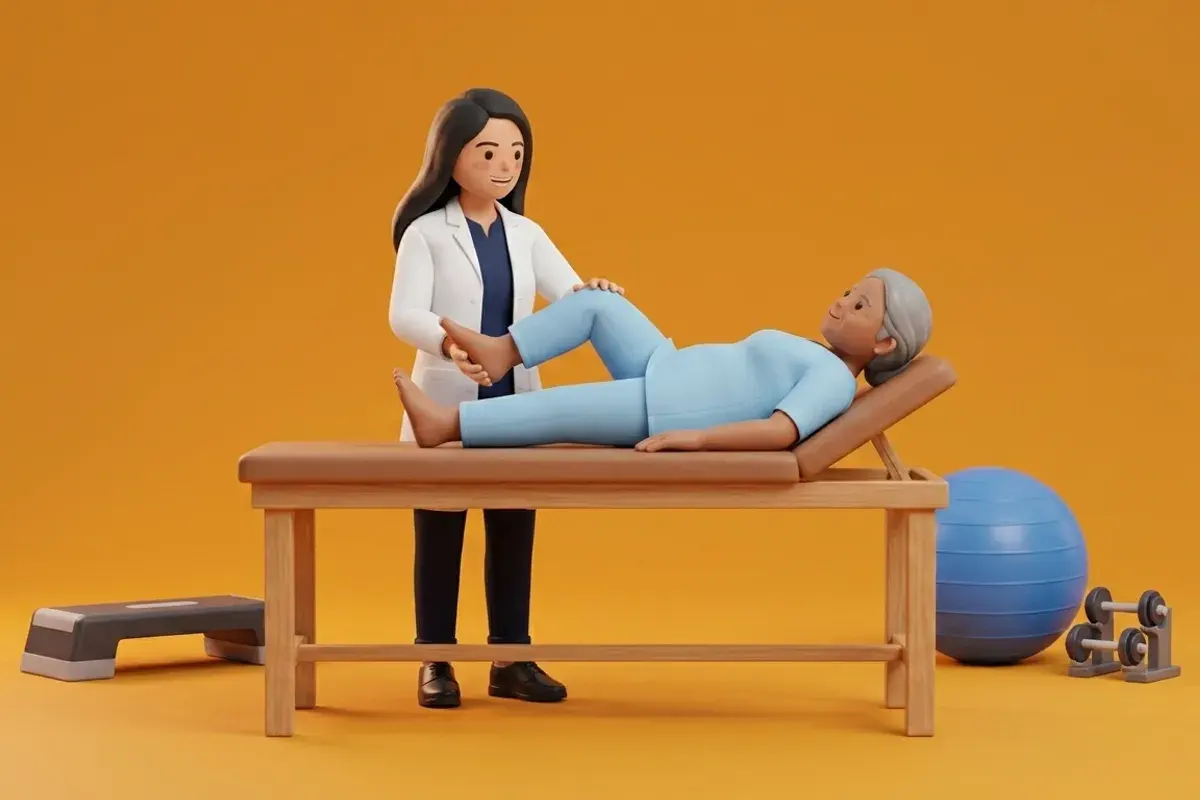
Physiotherapy and Neural Gliding Mobilization Protocols
- Gentle Sciatic and Femoral Nerve Slider Techniques: Prescribe neural sliding (flossing) rather than high-tension stretching; coordinate knee extension with neck extension (sliding the cord caudad without elongation); gentle sliding releases light fibrous adhesions without provoking ischemic nerve flare-ups.
- Graded Functional Movement and Fear-Avoidance Deconditioning: Address kinesiophobia through graded exposure walking; reassure the patient that persistent scar-mediated aching does not equal ongoing spinal damage; gradually advance walking endurance aiming for 5,000 to 7,500 daily steps.
- Core Multifidus and Transverse Abdominis Motor Control: Incorporate non-flexion core stabilization (supine bridges, wall isometric presses, bird-dogs); strengthening deep stabilizing muscles unloads the surgical segment and minimizes micro-instability.
Frequently Asked Questions
Why does a patient still have back and leg pain after a successful spine surgery?
This is called Post-Laminectomy Syndrome. After surgery, normal healing tissue turns into thick scar tissue (epidural fibrosis) around the spinal nerves. If the nerve gets glued down by scar tissue, it cannot slide smoothly when you walk, causing nagging burning and aching.
Can repeat surgery clean out the scar tissue around the nerve?
Surgeons generally avoid operating just to cut out scar tissue, because cutting it out creates fresh bleeding that forms even thicker scar tissue. Instead, specialized nerve-gliding exercises and physiotherapy help the nerve break free gently.
What is nerve flossing for leg pain after back surgery?
Nerve flossing is a gentle exercise where you move your neck and your leg at the same time to pull the nerve back and forth through its narrow tunnel, like dental floss between teeth. This restores smooth nerve sliding without causing painful stretching.
Related condition guides


Related recovery guides & articles
BookPhysio.in Editorial Team
The BookPhysio.in editorial team writes and maintains this content, checking it against reliable clinical sources. Content follows our medical review policy: general information only, and no page claims a clinical review until a named registered physiotherapist has signed it off.
Read our medical review policy