
The Schroth Method: 3D Postural Restoration and Rotational Angular Breathing Protocols
In short
The Schroth method treats scoliosis in all three anatomical planes using 3D auto-elongation and targeted rotational angular breathing to derotate the rib cage.
In this guide (4 sections)
Principles of Katharina Schroth's 3D Scoliosis Restoration
Developed in Germany by Katharina Schroth and advanced by Christa Lehnert-Schroth, the Schroth Method is the global gold-standard Physiotherapeutic Scoliosis-Specific Exercise (PSSE) system. Unlike generic symmetrical back exercises (which inadvertently load the spinal concavity), Schroth recognizes scoliosis as a complex 3D torsion involving lateral deviation in the frontal plane, lordotic flattening in the sagittal plane, and vertebral axial rotation in the transverse plane.
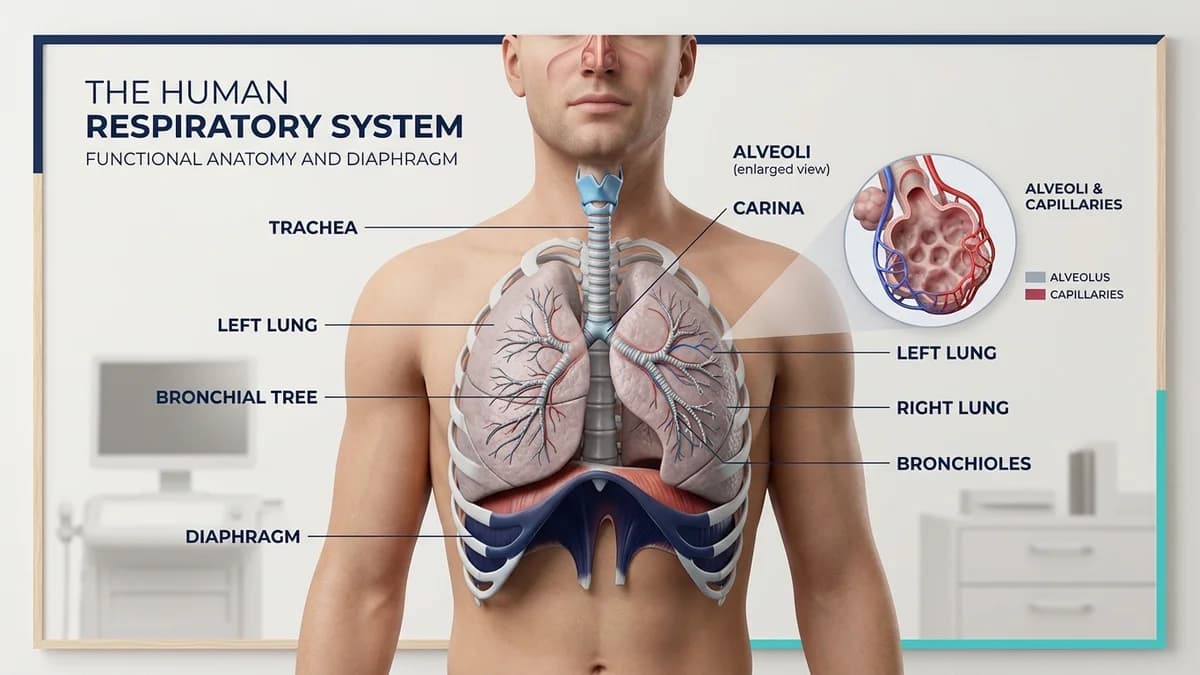
The cornerstone of the Schroth methodology is Rotational Angular Breathing (RAB). By consciously directing inspired air into the collapsed, concave areas of the rib cage while maintaining isometric stabilization on the convex 'hump' side, patients use internal transpulmonary pneumatic pressure to derotate the spine and rib cage from the inside out.
The 5 Stepwise Principles of Schroth 3D Correction
| Schroth Step | Biomechanical Maneuver | Anatomical Target | Patient Proprioceptive Cue | |
|---|---|---|---|---|
| 1. Auto-Elongation (Detorsion) | Active axial cranio-caudal lengthening | Decompresses intervertebral discs; reduces curve stiffness | 'Reach the crown of your head to the ceiling; lengthen your spine' | |
| 2. Deflexion (Frontal Correction) | Active lateral shifting of displaced trunk blocks | Re-centers the thoracic and lumbar blocks over the sacrum | 'Shift your rib cage sideways toward your midline' | |
| 3. Derotation (Transverse Correction) | Rotational counter-torque applied across trunk blocks | Derotates posteriorly rotated ribs and transverse processes | 'Bring the prominent rib hump forward while opening the flat side' | |
| 4. Rotational Angular Breathing (RAB) | Targeted deep inspiration into concave chest wall hollows | Pneumatic internal expansion pops open sunken ribs | 'Breathe deeply into the sunken pocket under your shoulder blade' | |
| 5. Isometric Stabilization Tension | Submaximal isometric co-contraction in corrected alignment | Re-educates postural motor engrams in corrected posture | 'Maintain this tall, untwisted shape as you breathe out' |
Standardized Clinical Prescription and Biofeedback Protocols
- Dual-Mirror Proprioceptive Biofeedback Setup: Conduct all Schroth exercises between opposing front and side full-length mirrors; visual biofeedback is mandatory to override the patient's pathological neuro-sensory perception of their crooked posture feeling 'straight'.
- Wall-Bar Traction and Rice Bag Cushion Offloading: Position specialized wedge-shaped firm rice bags under the convex thoracic rib hump and lumbar prominence in side-lying and supine setups; the external bolster acts as a physical pivot block during rotational breathing.
- Daily Practice Frequency and Home Compliance: Prescribe 30 to 45 minutes of daily home practice, completing 5 repetitions of 5 deep rotational breaths per posture; consistency is essential to overwrite spinal postural reflex loops in the cerebellum.
Frequently Asked Questions
How is the Schroth method different from regular gym back exercises?
Regular back exercises treat both sides of the body equally, which can actually make scoliosis worse by strengthening muscles in a twisted position. Schroth exercises are completely custom: you strengthen the weak, collapsed side of your back while stretching and untwisting the tight, bulging side.
What is rotational angular breathing in scoliosis therapy?
Rotational breathing is a specialized technique where you learn to direct your breath into the sunken, collapsed pockets of your ribs. It is like blowing air into an uneven balloon: the air pressure gently pushes the sunken ribs outward from the inside, straightening the twist.
How many months of Schroth therapy does it take to see results?
Most teenagers notice improved posture, less back fatigue, and better body balance within 6 to 12 weeks of daily practice. X-rays taken at 6 and 12 months track whether the curve has successfully stabilized.
Related condition guides


Related recovery guides & articles
BookPhysio.in Editorial Team
The BookPhysio.in editorial team writes and maintains this content, checking it against reliable clinical sources. Content follows our medical review policy: general information only, and no page claims a clinical review until a named registered physiotherapist has signed it off.
Read our medical review policy