
Superior Vena Cava (SVC) Syndrome: Upper Body Elevation, Airway Patency, and Exercise Limits
In short
SVC syndrome is an oncological emergency requiring strict 45-degree upper body elevation, avoiding bending forward, and immediate stenting or chemoradiation.

In this guide (4 sections)
Mediastinal Anatomy and Pathophysiology of SVC Obstruction
Superior Vena Cava (SVC) Syndrome is an acute or subacute oncological complication caused by partial or complete extrinsic compression or intrinsic thrombosis of the superior vena cava. Over 90% of cases stem from intrathoracic malignancies: Non-Small Cell Lung Cancer (NSCLC), Small Cell Lung Cancer (SCLC), Non-Hodgkin Lymphoma, thymomas, or extensive mediastinal nodal metastases. The superior vena cava is a thin-walled, low-pressure venous vessel located in the rigid middle mediastinum, surrounded by the sternum, trachea, right bronchus, and lymph node chains.
Compression of the SVC obstructs venous return from the head, neck, upper extremities, and upper thorax back into the right atrium. Hydrostatic venous pressure in the upper body surges from a normal baseline of 2 to 8 mmHg up to 20 to 40 mmHg. This massive venous hypertension causes characteristic physical manifestations: striking non-pitting edema of the face, neck, and upper chest, bilateral conjunctival injection, periorbital puffiness, prominent distended collateral chest wall veins, and life-threatening laryngeal edema with stridor, dyspnea, and cerebral venous congestion.
Standardized Clinical Outcome Measures and Emergency Staging
| Kishi SVC Severity Grade | Clinical Presentation / Diagnostic Features | Physiological Risk Category | Rehabilitation & Nursing Action Mandate | |
|---|---|---|---|---|
| Grade 1 (Mild SVC Obstruction) | Mild facial / neck fullness; distended neck and collateral veins | Hemodynamically compensated via azygous/internal mammary veins | Elevate head of bed >= 30-45 degrees; avoid heavy arm exertion | |
| Grade 2 (Moderate Obstruction) | Visible facial edema; headache, dizziness; visual disturbance | Compromised upper body venous return; cerebral venous congestion | Strict 45-degree elevation; avoid bending; urgent CT venography | |
| Grade 3 (Severe Airway Obstruction) | Mild/moderate laryngeal edema; stridor, hoarseness, dysphagia | IMMINENT AIRWAY COLLAPSE; urgent medical intervention required | Halt all physiotherapy; STAT emergency endovascular stenting / radiation | |
| Grade 4 (Life-Threatening) | Severe laryngeal edema; cerebral edema with confusion, coma | Fatal asphyxiation or brain herniation risk | Emergency ICU intubation and stat emergent SVC recanalization | |
| Pemberton's Sign Test | Patient elevates both arms above head for 60 seconds | Rapid facial flushing, cyanosis, and inspiratory stridor | POSITIVE PEMBERTON SIGN: Confirms critical thoracic inlet obstruction |
Standardized Clinical Rehabilitation Protocols and Elevation Rules
- The Mandatory 45-Degree Upper Body Elevation Rule: Position the patient with the head of the bed continuously elevated at 45 degrees or higher; gravity naturally facilitates venous drainage from the congested cerebral and facial veins into collateral channels; never allow the patient to lie completely flat in bed.
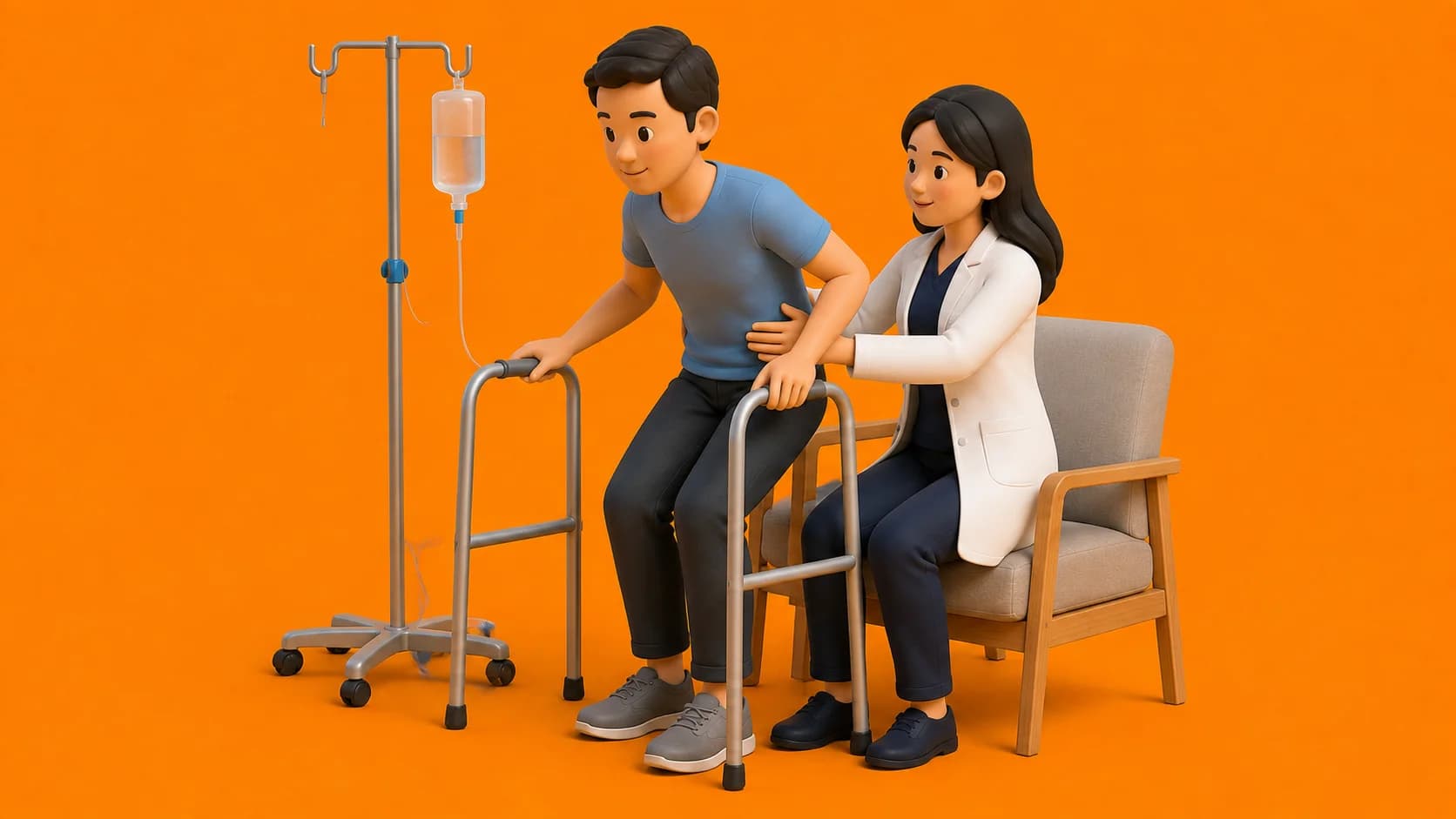
- Strict Avoidance of Forward Bending and Valsalva Straining: Prohibit bending forward at the waist (such as tying shoelaces or picking items off the floor) and eliminate breath-holding straining; bending forward spikes upper body hydrostatic venous pressure, precipitating acute airway laryngeal edema and sudden syncope.
- Lower Extremity Conditioning While Protecting Upper Body: Maintain gentle seated lower extremity active movements (ankle pumps, seated knee extensions, gentle marching) strictly with upper body elevated; maintaining lower limb circulation prevents deep vein thrombosis without straining the obstructed superior mediastinum.
Frequently Asked Questions
Why does my face and neck look swollen when I wake up in the morning?
When cancer presses on the main large vein returning blood from your head to your heart (the superior vena cava), blood has a hard time draining. Lying flat all night causes fluid to pool in your face, eyelids, and neck. Elevating your head with pillows helps fluid drain down naturally.
Why shouldn't I bend forward to pick things up from the floor?
Bending over at your waist sends an immediate rush of blood into your already congested head and throat. This pressure spike can cause sudden dizziness, a bursting headache, or swelling in your vocal cords that makes breathing difficult. Always squat or use a reacher tool instead.
How quickly do treatments improve the facial swelling of SVC syndrome?
Very quickly. Placing an endovascular metal stent inside the squeezed vein opens blood flow within minutes, and most patients see their facial swelling and breathing improve dramatically within 24 to 48 hours.
Related condition guides

Related recovery guides & articles
BookPhysio.in Editorial Team
The BookPhysio.in editorial team writes and maintains this content, checking it against reliable clinical sources. Content follows our medical review policy: general information only, and no page claims a clinical review until a named registered physiotherapist has signed it off.
Read our medical review policy