
Vestibular Rehab for PPPD: Graded Visual Exposure & Habituation
In short
Vestibular rehabilitation for PPPD uses calibrated visual exposure to retrain maladaptive brain balance circuits. Review the step-by-step clinical protocol.
In this guide (6 sections)
Vestibular Rehabilitation Therapy (VRT) for Persistent Postural-Perceptual Dizziness (PPPD) differs fundamentally from traditional compensation protocols used in acute inner ear injuries. While acute vestibular neuritis demands rapid, vigorous adaptation drills to force cerebellar compensation, applying aggressive exercises to a patient with PPPD will immediately overwhelm an already sensitized nervous system, provoking symptom crashes and therapy abandonment. Successful rehabilitation for PPPD relies on graded visual exposure, somatic desensitization, and autonomic dampening, carefully calibrated to retrain maladaptive neural networks without triggering defensive alarm states.
Indian Household Re-Entry and Community Navigation
In Indian communities, functional recovery from PPPD means regaining the confidence to navigate high-stimulation public environments: taking the Delhi or Mumbai Metro during peak rush hours, walking through bustling weekly vegetable markets, attending loud temple aartis, or riding an auto-rickshaw through chaotic traffic. Physiotherapists structure home and clinic programs around these specific domestic milestones, using simulated visual exposures before stepping into real-world environments.
Desensitization Neurobiology and Habituation Mechanisms
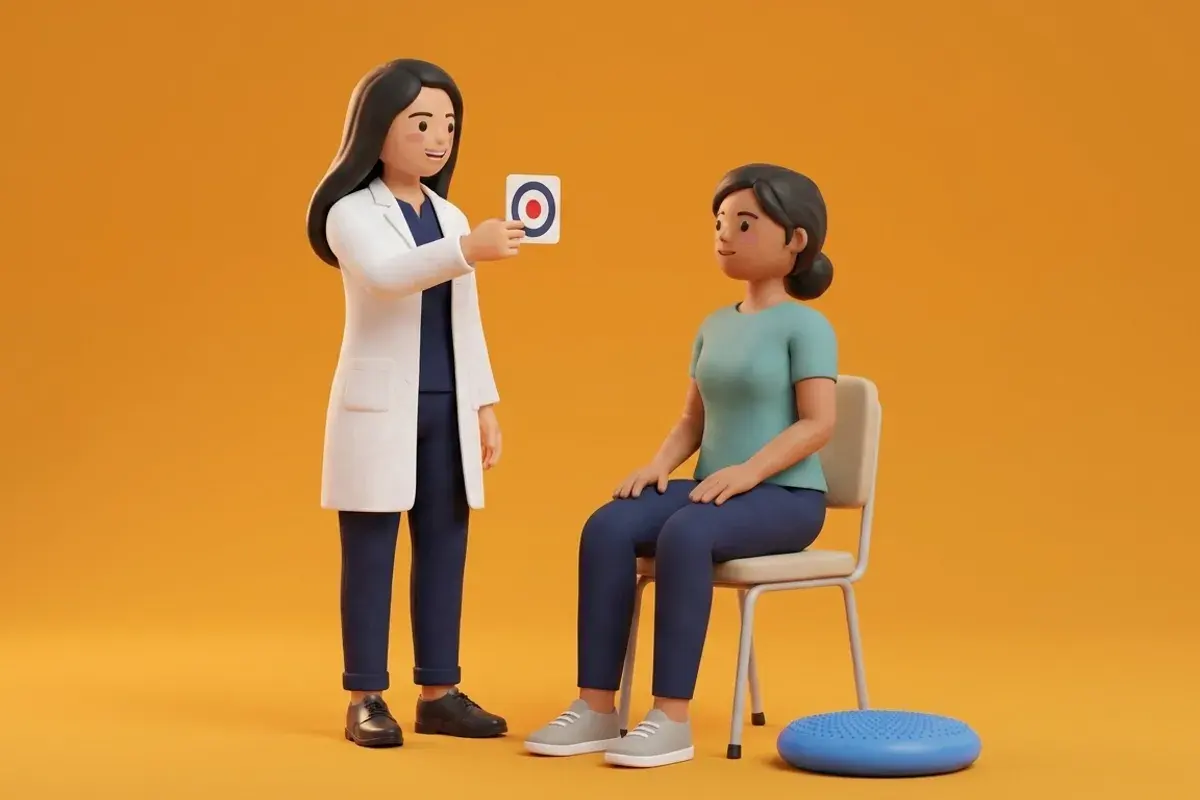
The neurobiological mechanism of graded visual exposure is habituation: the progressive reduction in physiological and emotional response following repeated, predictable exposure to a non-damaging stimulus. By pairing low-level visual motion (such as patterned scrolling) with relaxed diaphragmatic breathing and somatic grounding, the clinician activates the parasympathetic nervous system. Over time, the prefrontal cortex exerts inhibitory control over the amygdala, uncoupling visual motion from panic and restoring normal sensory re-weighting.
During visual exposure drills, symptom provocation must never exceed 2 points on a 10-point scale above baseline. If baseline unsteadiness is 3/10, the exercise must not push symptoms beyond 5/10, and sensations must return to baseline within 10 minutes of stopping.
Structured Phase-Based PPPD Rehabilitation Protocol
Rehabilitation proceeds through three structured phases. Phase 1 focuses on grounding, diaphragmatic breathing, and relaxed postural sway. Phase 2 introduces low-grade visual motion, such as tracking targets against patterned tapestries or watching slow videos. Phase 3 incorporates dynamic dual-tasking, such as walking while tossing a ball or navigating crowded real-world corridors.
Tandem Stance Grounding with Slow Visual Scanning
Objective: Build postural resilience and suppress hyper-vigilance during complex sensory input
- 1Stand adjacent to a sturdy kitchen counter or heavy table for light touch safety.
- 2Place your right foot directly in front of your left foot in heel-to-toe tandem alignment.
- 3Distribute your weight equally between both feet, keeping your knees relaxed and shoulders dropped.
- 4Slowly sweep your eyes horizontally from left to right across the room over 3 seconds without moving your head.
- 5Maintain relaxed belly breathing for 20 seconds, then step feet side-by-side, rest, and repeat with the left foot forward.
PPPD Three-Phase Rehabilitation Hierarchy
| Rehab Phase | Therapeutic Objective | Exercise Examples | Target Duration | Exit Milestone |
|---|---|---|---|---|
| Phase 1: Somatic Grounding | Extinguish muscular co-contraction and panic | Diaphragmatic breathing, ankle sway, seated pelvic tilts | 2 to 3 weeks | Patient relaxes body during mild dizziness |
| Phase 2: Graded Visual Exposure | Desensitize visual motion hypersensitivity | Optokinetic videos, target tracking on patterned backgrounds | 4 to 6 weeks | Tolerates 2 minutes of complex visual motion |
| Phase 3: Dynamic Dual-Tasking | Restore real-world functional independence | Walking with head turns, ball tossing, community outings | 6 to 8 weeks | Independent navigation of public markets and transport |
Red Flags Demanding Immediate Medical Evaluation
Immediate medical escalation is required if a patient with PPPD experiences sudden unilateral hearing drop, new motor clumsiness, unexplained falls without warning, or persistent double vision.
Frequently Asked Questions
How long does it take to recover from PPPD with vestibular physiotherapy?
Recovery from PPPD is a gradual neuroplastic process typically requiring 3 to 6 months of consistent, paced rehabilitation. Most patients observe meaningful improvements in balance confidence and reductions in motion sensitivity within the first 4 to 8 weeks.
Can I book a specialized PPPD physiotherapist directly through BookPhysio.in?
Yes. BookPhysio.in connects you directly with verified vestibular and neurological physiotherapists across India. Under the NCAHP Act 2021, you consult directly without requiring a doctor referral, paying transparently per session.
Related condition guides


Related recovery guides & articles
BookPhysio.in Editorial Team
The BookPhysio.in editorial team writes and maintains this content, checking it against reliable clinical sources. Content follows our medical review policy: general information only, and no page claims a clinical review until a named registered physiotherapist has signed it off.
Read our medical review policy