
Physiotherapy for Amputee and Prosthetic Rehabilitation
Quick answer
Physiotherapy provides comprehensive rehabilitation following lower or upper limb amputation. An orthopaedic physiotherapist manages residual limb oedema, shapes the stump with figure-of-eight bandaging, prevents joint contractures, strengthens core and prosthetic-bearing muscle groups, and conducts rigorous gait training for smooth, confident community walking with a prosthesis.
- Rehab begins immediately following amputation
- Stump shaping ensures comfortable socket fit
- Mirror therapy eases phantom limb sensations
- Contracture prevention preserves walking
- Gait training restores confident mobility
What is amputee rehabilitation?
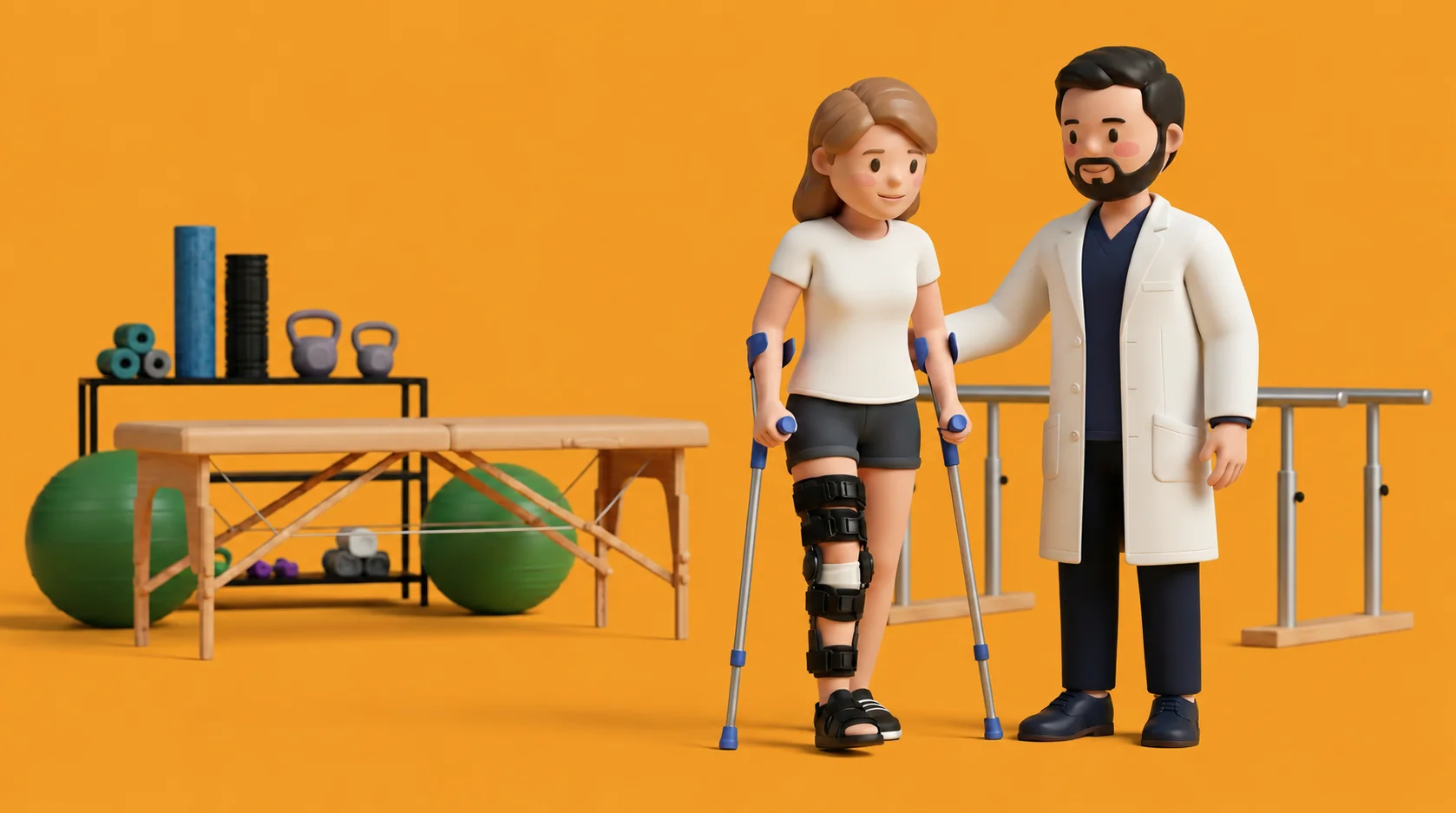
Limb amputation resulting from peripheral vascular disease, diabetic foot complications, trauma, or oncological resections requires compassionate, specialised physiotherapy from day one. In the pre-prosthetic phase, physiotherapy focuses on wound healing, desensitisation of hypersensitive scar tissue, phantom limb mirror therapy, and preventing flexion contractures (especially hip and knee flexion contractures). Once fitted with a prosthesis, the physiotherapist guides prosthetic donning, static weight-shifting, dynamic balance on varied terrain, and energy-efficient gait training to return individuals across India to employment, independence, and active community participation.
Orthopaedic Physiotherapy
Amputee and Prosthetic Rehabilitation is assessed and treated under Orthopaedic physiotherapy (bones & joints). Bones, joints, muscles, and ligaments. Back pain, fractures, and post-surgery recovery.
How physiotherapy helps
- Residual limb compression and stump shaping
- Hip and knee extension contracture prevention
- Core and pelvic stability muscle loading
- Mirror therapy for phantom limb sensations
- Prosthetic balance and community gait drills
Common signs
- Oedema, hypersensitivity, and shape irregularities of the residual limb affecting socket comfort
- Phantom limb pain or tingling sensations felt in the missing part of the limb
- Tightness in the hip or knee that prevents straightening the residual limb fully
- Fatigue, loss of balance, and asymmetrical walking patterns when using a prosthetic device
- Skin redness, friction blisters, or pressure breakdown at weight-bearing points on the stump
In-clinic vs home visit physiotherapy
| What to compare | In-clinic | Home visit |
|---|---|---|
| Typical fee | ₹300 to ₹1,500 a session. It depends on your city. | ₹400 to ₹2,000 a session. It depends on your city. |
| Exact fee | Set by each physiotherapist and shown on their profile | Set separately for home visits and shown on their profile |
| Best for | Equipment-based rehab and first assessments | Limited mobility, post-surgery, and elderly care |
| Equipment | Full clinic setup | Portable equipment the physiotherapist brings |
| Travel | You travel to the clinic | The physiotherapist comes to you |
| Booking | Pick a clinic slot on search | Filter by home visit on search |
Clinical rehabilitation framework
Evidence-informed clinical progression and starter exercise targets for amputee rehabilitation.
Clinical progression criteria & key observations
- Mirror therapy has evidence for reducing phantom limb pain and is a reasonable early adjunct
- Contracture prevention through positioning starts before the prosthesis is even fitted; once established, hip or knee flexion contractures are difficult to reverse
Starter exercise targets & evidence-based dosage
When to seek urgent care
Physiotherapy is safe for most people. See a doctor urgently if you have any of these.
- Open residual limb wound breakdown, dark necrotic skin edges, or spreading cellulitis
- Severe arterial insufficiency in the contralateral sound limb with rest pain
- Uncontrolled, unremitting stump pain suggestive of an irritated terminal neuroma
- Recurrent falls during early prosthetic ambulation requiring immediate safety reassessment
Seek urgent medical care first. Physiotherapy comes after, when it is safe.
Frequently asked questions
How does physiotherapy help with phantom limb pain after amputation?
Can I get physiotherapy for amputee rehabilitation at home?
Why is preventing hip or knee flexion contractures so important?
How much does physiotherapy for amputee rehabilitation cost in India?
Related conditions & care




Clinical guides & articles for amputee rehabilitation
Evidence-informed articles, recovery timelines, and home care advice from our clinical library.
Mirror Therapy in Stroke and Phantom Limb Pain: Mirror Neurons, Cortical Remapping and Protocols
Looking at the mirror reflection of a healthy moving arm tricks the brain into activating damaged motor networks. Learn mirror neuron science, stroke protocols, and phantom limb relief.
Transtibial Rigid Removable Dressing (RRD): Residual Limb Edema & Early Weight-Bearing
Soft elastic bandages slip and create bulbous swelling. Discover why the Rigid Removable Dressing (RRD) is the clinical gold standard for residual limb protection and rapid healing.
Figure-of-Eight Elastic Bandaging: Transtibial Residual Limb Conical Shaping
Improper wrapping creates a bulbous, dog-eared residual limb that cannot fit into an artificial leg. Master the clinical figure-of-eight wrapping technique for optimal conical shaping.
Phantom Limb Pain: Mirror Therapy, Sensory Discrimination & Cortical Remapping
Burning, stabbing pain in a foot that is no longer there is a devastating neurological reality. Learn how mirror therapy and cortical remapping rewire the brain to extinguish phantom pain.
Find physiotherapists for amputee rehabilitation by city
Verified physiotherapists treat amputee rehabilitation in these cities. Home visit and in-clinic options vary by physiotherapist.
Find a physiotherapist for amputee rehabilitation
Compare physiotherapists by fee, experience, and availability. Clinic visits and home visits across India.
This page is for general education and booking guidance. It does not diagnose your condition or replace medical care.
If your symptoms are severe, sudden, or getting worse, seek urgent medical care first. The same applies with fever, chest pain, breathlessness, fainting, new weakness, loss of bladder or bowel control, or unexplained bleeding.
Always consult a qualified physiotherapist or doctor about your condition.