
Physiotherapy for Flexor Tendon Repair Rehabilitation

Quick answer
Physiotherapy is critical after flexor tendon repair to allow tendon gliding while protecting delicate surgical sutures. A certified hand physiotherapist fits a dorsal blocking splint, implements early protected active or passive motion protocols (such as Duran or modified Belfast), prevents dense adhesions, and guides progressive recovery of finger flexion.
- Early protected motion prevents dense scars
- Dorsal blocking splint prevents tendon rupture
- Precise protocols protect surgical tendon loops
- Tendon gliding restores individual finger bend
- Restores functional grip for everyday tasks
What is a flexor tendon repair?
Lacerations to the deep flexor tendons of the hand (FDS and FDP) often occur from glass cuts, kitchen knife accidents, or industrial machinery across India. Zone II ("no man's land") injuries are notoriously challenging due to the narrow fibro-osseous tunnel. Complete immobilisation leads to catastrophic scarring that freezes the finger, whereas premature loading causes tendon rupture. Early controlled mobilisation by an experienced hand physiotherapist glides the repair within its sheath, nourishing the tendon via synovial diffusion and minimizing adhesions without risking suture rupture.
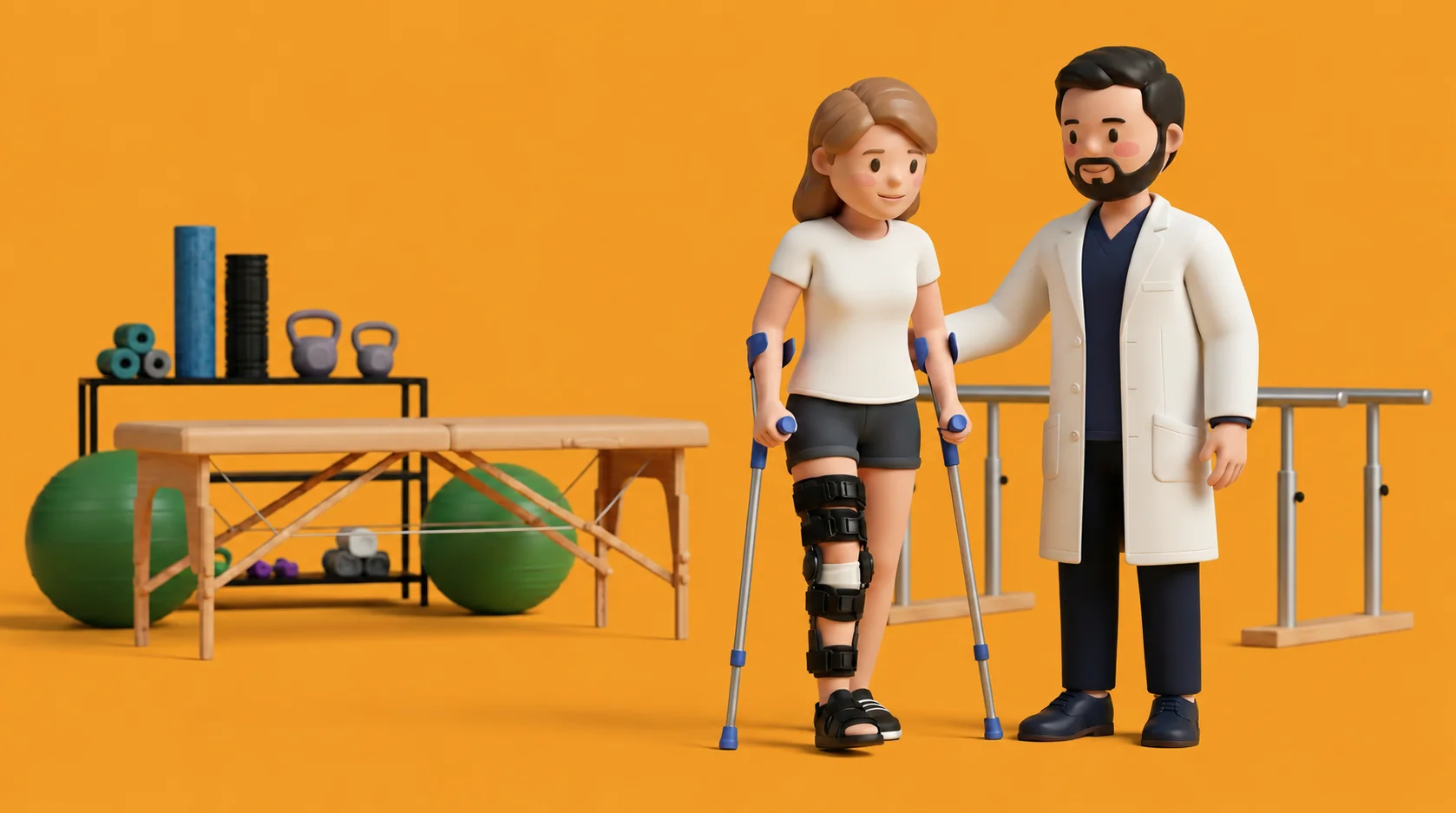
Orthopaedic Physiotherapy
Flexor Tendon Repair is assessed and treated under Orthopaedic physiotherapy (bones & joints). Bones, joints, muscles, and ligaments. Back pain, fractures, and post-surgery recovery.
How physiotherapy helps
- Custom dorsal blocking splint fabrication
- Passive flexion and active extension drills
- Early active motion within protected ranges
- Tendon glide differentials between FDS and FDP
- Oedema control and gentle scar massage
Common signs
- Inability to bend the fingertip or middle knuckle following a cut to the hand or wrist
- Surgical incision site pain and tightness along the volar aspect of the digit
- Post-operative finger swelling and stiffness requiring controlled movement within a splint
- Adhesion sensation where the finger moves as a single block rather than curling smoothly
- Loss of fine pinch and grasp coordination during functional hand activities
In-clinic vs home visit physiotherapy
| What to compare | In-clinic | Home visit |
|---|---|---|
| Typical fee | ₹300 to ₹1,500 a session. It depends on your city. | ₹400 to ₹2,000 a session. It depends on your city. |
| Exact fee | Set by each physiotherapist and shown on their profile | Set separately for home visits and shown on their profile |
| Best for | Equipment-based rehab and first assessments | Limited mobility, post-surgery, and elderly care |
| Equipment | Full clinic setup | Portable equipment the physiotherapist brings |
| Travel | You travel to the clinic | The physiotherapist comes to you |
| Booking | Pick a clinic slot on search | Filter by home visit on search |
Clinical rehabilitation framework
Evidence-informed clinical progression and starter exercise targets for a flexor tendon repair.
Clinical progression criteria & key observations
- Zone 2 flexor tendon injuries carry the highest adhesion risk and demand the most protocol-precise early motion
- Any deviation from the prescribed splint or motion schedule should be checked with the surgical team before continuing
Starter exercise targets & evidence-based dosage
When to seek urgent care
Physiotherapy is safe for most people. See a doctor urgently if you have any of these.
- Sudden snap or loss of active flexion during exercise indicating tendon repair rupture
- Surgical wound redness, foul-smelling drainage, and spreading fever indicating infection
- Severe digital blanching or loss of sensation indicating digital artery or nerve injury
- Disproportionate burning pain, allodynia, and trophic skin changes indicative of CRPS
Seek urgent medical care first. Physiotherapy comes after, when it is safe.
Frequently asked questions
What is the purpose of a dorsal blocking splint after flexor tendon repair?
Can I get physiotherapy for flexor tendon repair at home?
When can I start gripping objects after flexor tendon surgery?
How much does physiotherapy for flexor tendon repair cost in India?
Related conditions & care




Clinical guides & articles for a flexor tendon repair
Evidence-informed articles, recovery timelines, and home care advice from our clinical library.
Flexor Tendon Repair in Zone 2: Kleinert vs Duran Protocols and Early Active Motion
Zone 2 flexor tendon repairs balance rupture prevention against disabling peritendinous adhesions; selecting validated early active motion protocols restores digital excursion.
Extensor Tendon Injury Across Zones 1 to 8: Mallet Finger, Boutonniere, and Relative Motion Splinting
Unlike flexors, extensor tendons are flat, superficial, and easily adhere to periosteum; anatomically zoned immobilization and relative motion splints prevent joint deformity.
Mallet Finger: Bony vs Tendinous Terminal Avulsion, Stack Splint Discipline, and DIP Extension
Terminal extensor tendon avulsion drops the distal phalanx; strict uninterrupted Stack splinting for 6 to 8 weeks heals the delicate tendon without extensor lag.
Rheumatoid Wrist Extensor Tendon Rupture Prevention: Caput Ulnae Syndrome and Splinting
Chronic rheumatoid synovitis at the distal radioulnar joint triggers caput ulnae syndrome, risking devastating extensor tendon attrition ruptures. Master preventive splinting, forearm biomechanics, and tendon protection rules.
Find physiotherapists for a flexor tendon repair by city
Verified physiotherapists treat a flexor tendon repair in these cities. Home visit and in-clinic options vary by physiotherapist.
Find a physiotherapist for a flexor tendon repair
Compare physiotherapists by fee, experience, and availability. Clinic visits and home visits across India.
This page is for general education and booking guidance. It does not diagnose your condition or replace medical care.
If your symptoms are severe, sudden, or getting worse, seek urgent medical care first. The same applies with fever, chest pain, breathlessness, fainting, new weakness, loss of bladder or bowel control, or unexplained bleeding.
Always consult a qualified physiotherapist or doctor about your condition.