
Physiotherapy for Hallux Valgus (Bunion)
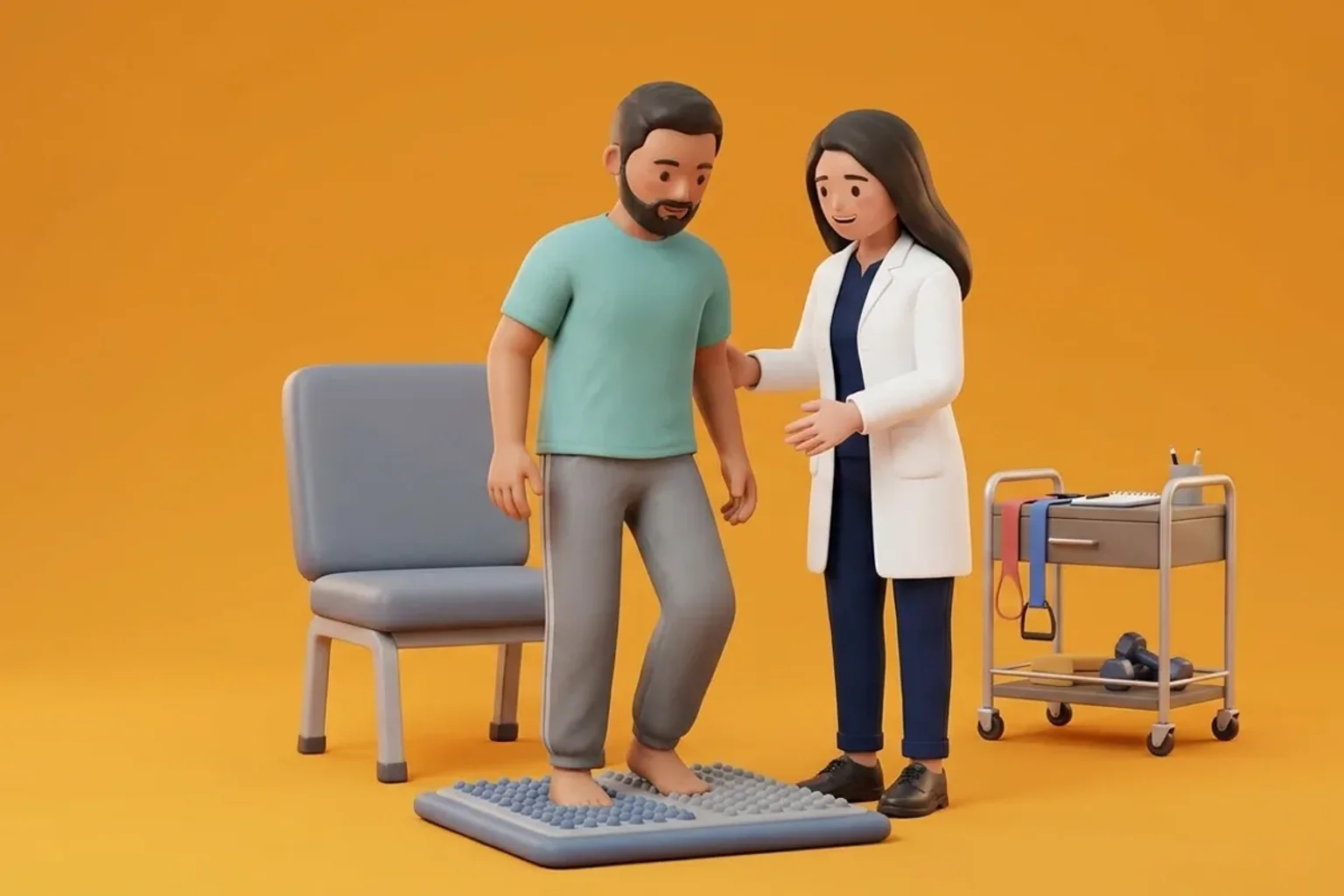
Quick answer
Physiotherapy relieves bunion pain and prevents progression by strengthening intrinsic foot muscles (abductor hallucis), restoring big toe mobility, improving gait mechanics, and guiding footwear modifications and offloading orthotics to reduce pressure over the first metatarsophalangeal joint.
- Lateral deviation of the big toe at first MTP
- Bunion bump pain worsened by narrow footwear
- Often linked with flat arches and pronation
- Strengthening foot muscles eases joint load
- Toe spacers and wide toe boxes relieve pain
What is hallux valgus (bunion)?
Hallux valgus (commonly known as a bunion) is a progressive forefoot deformity where the big toe drifts towards the second toe, causing a painful prominence over the first metatarsophalangeal (MTP) joint. Narrow footwear, high heels, genetic foot shape, and flat arches (overpronation) accelerate the deformity and often trigger secondary transfer metatarsalgia under the ball of the foot. Conservative physiotherapy focuses on intrinsic foot strengthening (short foot exercises, toe yoga), abductor hallucis activation, first MTP joint mobilisations, and custom offloading pads to manage pain and keep you active without unnecessary surgery.
Orthopaedic Physiotherapy
Hallux Valgus (Bunion) is assessed and treated under Orthopaedic physiotherapy (bones & joints). Bones, joints, muscles, and ligaments. Back pain, fractures, and post-surgery recovery.
How physiotherapy helps
- Short foot exercises for foot arch support
- Abductor hallucis toe spreading muscle drills
- First MTP joint gentle traction and mobility
- Gait retraining to reduce forefoot impact
- Footwear advice and custom offloading pads
Common signs
- A visible bony bump or prominence on the inner base of the big toe joint (first MTP joint)
- Pain, redness, tenderness, and calluses over the medial eminence aggravated by narrow footwear or prolonged walking
- Stiffness and difficulty bending the big toe upwards during walking or stairs
- Transfer pain and burning calluses under the second and third metatarsal heads (transfer metatarsalgia)
- Overlapping of the big toe above or beneath the second toe in advanced stages
In-clinic vs home visit physiotherapy
| What to compare | In-clinic | Home visit |
|---|---|---|
| Typical fee | ₹300 to ₹1,500 a session. It depends on your city. | ₹400 to ₹2,000 a session. It depends on your city. |
| Exact fee | Set by each physiotherapist and shown on their profile | Set separately for home visits and shown on their profile |
| Best for | Equipment-based rehab and first assessments | Limited mobility, post-surgery, and elderly care |
| Equipment | Full clinic setup | Portable equipment the physiotherapist brings |
| Travel | You travel to the clinic | The physiotherapist comes to you |
| Booking | Pick a clinic slot on search | Filter by home visit on search |
Clinical rehabilitation framework
Evidence-informed clinical progression and starter exercise targets for hallux valgus (bunion).
Clinical progression criteria & key observations
- Distinguish deviation-dominant (classic bunion) from stiffness-dominant (hallux rigidus) presentations on first MTP passive range: the management emphasis differs (mobility/offloading vs joint-friendly loading)
- Set expectations clearly: conservative care manages symptoms, it does not correct the structural deformity; that distinction avoids disappointment down the line
Starter exercise targets & evidence-based dosage
When to seek urgent care
Physiotherapy is safe for most people. See a doctor urgently if you have any of these.
- Skin breakdown, ulceration, or signs of infection over the bunion prominence, particularly in individuals with diabetes
- Acute, agonizing pain with extreme redness and swelling of the first MTP joint requiring exclusion of acute gout or septic arthritis
- Sudden inability to bear weight on the forefoot after a misstep or fall, suggesting a stress fracture
- Loss of sensation, tingling, or skin color changes across the forefoot indicating peripheral neuropathy or vascular compromise
Seek urgent medical care first. Physiotherapy comes after, when it is safe.
Frequently asked questions
Can physiotherapy reverse a bunion deformity completely?
Can I get physiotherapy for hallux valgus at home?
What exercises help relieve bunion pain at home?
How much does physiotherapy for hallux valgus cost in India?
Related conditions & care



Clinical guides & articles for hallux valgus (bunion)
Evidence-informed articles, recovery timelines, and home care advice from our clinical library.
High Heels, Kolhapuris, and Hallux Valgus (Bunions): Foot Biomechanics and Physio in India
Pointed heels and rigid Kolhapuri chappals displace the big toe into painful bunions. Discover evidence-based toe-spacing exercises and foot physiotherapy.
Diabetic Peripheral Neuropathy: Foot Offloading, Sensory Loss and Balance Care
Diabetic peripheral neuropathy causes sensory loss and high fall risk. Learn 10g Semmes-Weinstein testing, foot offloading, and sensory-substitution balance training.
Fifth Metatarsal Fractures in Athletes: Jones Fracture vs Avulsion and Rehab
True Jones fractures (Zone 2) occur in a vascular watershed area prone to non-union; percutaneous intramedullary screw fixation accelerates safe return in competitive soccer.
Jones Fifth Metatarsal Base Fracture Rehabilitation: Runner Loading and Fixation
A Jones fracture involves the watershed junction of the fifth metatarsal, posing high non-union risks for runners. Discover conservative versus intramedullary screw protocols and return-to-sport milestones.
Find physiotherapists for hallux valgus (bunion) by city
Verified physiotherapists treat hallux valgus (bunion) in these cities. Home visit and in-clinic options vary by physiotherapist.
Find a physiotherapist for hallux valgus (bunion)
Compare physiotherapists by fee, experience, and availability. Clinic visits and home visits across India.
This page is for general education and booking guidance. It does not diagnose your condition or replace medical care.
If your symptoms are severe, sudden, or getting worse, seek urgent medical care first. The same applies with fever, chest pain, breathlessness, fainting, new weakness, loss of bladder or bowel control, or unexplained bleeding.
Always consult a qualified physiotherapist or doctor about your condition.