
Physiotherapy for Patellar Tendinopathy
Quick answer
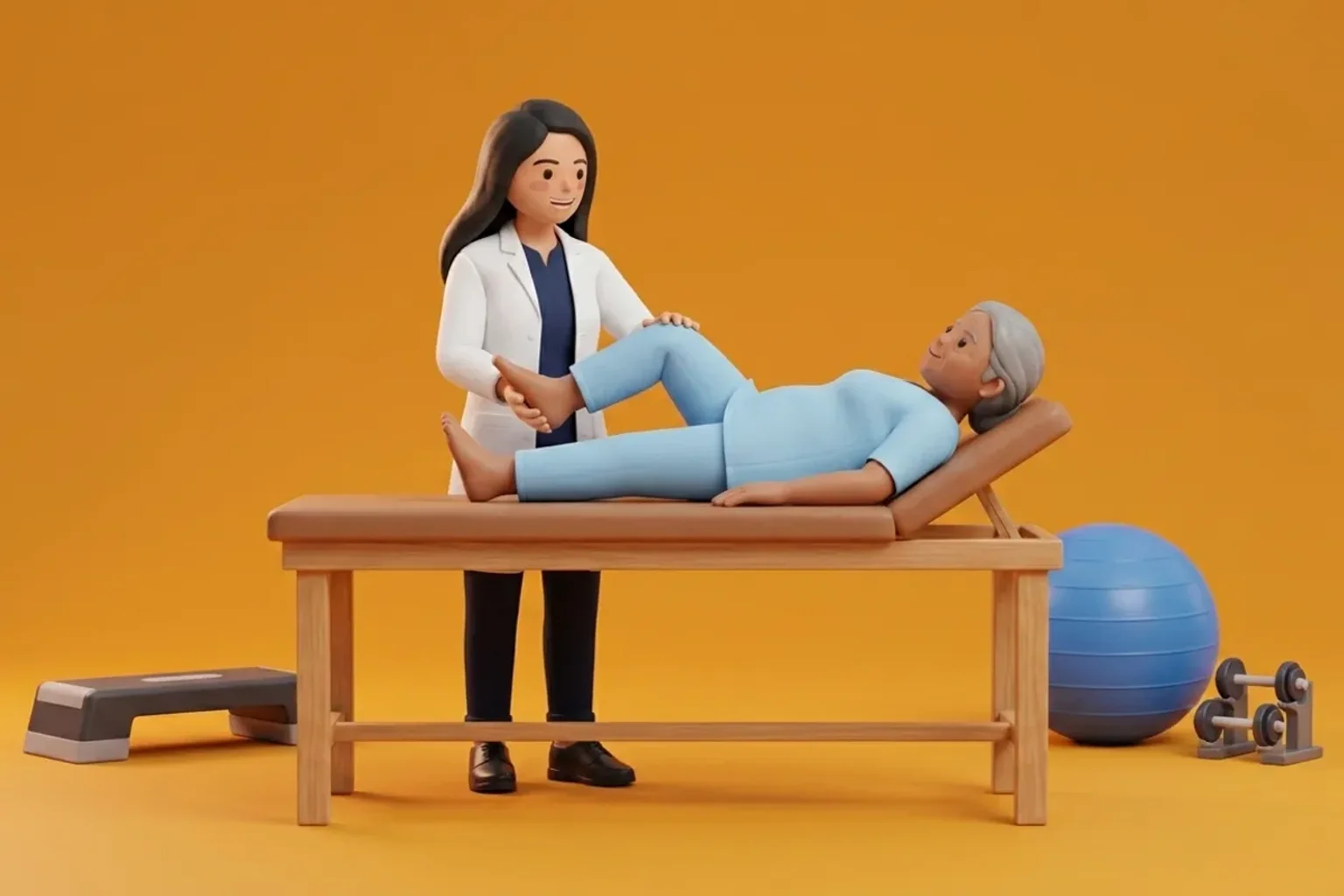
Physiotherapy is the primary, evidence-based treatment for patellar tendinopathy (jumper’s knee). A sports physiotherapist evaluates quadriceps loading, jumping biomechanics, and ankle mobility, using progressive tendon loading (isometric holds, heavy slow resistance, and decline squats) to rebuild tendon capacity and pain-free deceleration.
- Focal pain at the lower tip of the kneecap
- Overuse tendon injury from jumping or lunging
- Decline squats build patellar tendon capacity
- Isometric holds provide pain relief analgesia
- Rest alone weakens extensor tendon capacity
What is patellar tendinopathy?
Patellar tendinopathy (commonly termed jumper’s knee) is an overuse injury causing focal pain at the inferior pole of the patella (kneecap) where the patellar tendon attaches. In badminton, basketball, volleyball, and cricket players across India, repetitive high-velocity jumping, landing, and explosive court lunges place extreme tensile load on the extensor mechanism. Complete rest is counter-productive because it decreases the tendon load capacity further. Contemporary clinical guidelines recommend an evidence-based staged loading progression: Spanish squats or isometric knee extensions for immediate tendon analgesia, progressing to heavy slow resistance (such as 25-degree decline squats), energy-storage plyometrics, and sport-specific jumping drills.

Sports Physiotherapy
Patellar Tendinopathy is assessed and treated under Sports physiotherapy (athletic injuries). Injury prevention, athletic rehabilitation, and return-to-play programmes.
How physiotherapy helps
- Isometric knee extensions for pain reduction
- Twenty-five degree decline board squats
- Quadriceps and hip abductor heavy loading
- Landing mechanics and court footwork drills
- Gradual plyometric return-to-sport programme
Common signs
- Sharp or aching pain precisely localized to the bottom tip of the kneecap during jumping, squatting, or running
- Knee stiffness and aching on the first few steps in the morning or after sitting for prolonged periods
- Pain that warms up and eases during initial activity, but throbs or stiffens significantly after the game
- Discomfort when descending stairs or performing deep knee bends
- Tenderness when pressing directly on the inferior pole of the patella
In-clinic vs home visit physiotherapy
| What to compare | In-clinic | Home visit |
|---|---|---|
| Typical fee | ₹300 to ₹1,500 a session. It depends on your city. | ₹400 to ₹2,000 a session. It depends on your city. |
| Exact fee | Set by each physiotherapist and shown on their profile | Set separately for home visits and shown on their profile |
| Best for | Equipment-based rehab and first assessments | Limited mobility, post-surgery, and elderly care |
| Equipment | Full clinic setup | Portable equipment the physiotherapist brings |
| Travel | You travel to the clinic | The physiotherapist comes to you |
| Booking | Pick a clinic slot on search | Filter by home visit on search |
Clinical rehabilitation framework
Evidence-informed clinical progression and starter exercise targets for patellar tendinopathy.
Clinical progression criteria & key observations
- A "pain monitoring model" (some pain during loading is acceptable if it settles within 24 hours and does not worsen session to session) lets training continue rather than stopping completely
- Manage TRAINING LOAD alongside the exercise programme: rehab exercise without addressing the jump/sprint volume that caused the overload will keep re-provoking the tendon
Starter exercise targets & evidence-based dosage
When to seek urgent care
Physiotherapy is safe for most people. See a doctor urgently if you have any of these.
- Sudden, audible pop with immediate inability to straighten the knee or bear weight, indicating patellar tendon rupture
- Knee joint effusion with sudden swelling, heat, and fever, suggesting septic bursitis or joint infection
- Knee giving way accompanied by acute joint line swelling and inability to fully bend or straighten
- Severe constant night pain that is unaffected by movement or rest
Seek urgent medical care first. Physiotherapy comes after, when it is safe.
Frequently asked questions
How long does patellar tendinopathy take to recover?
Can I get physiotherapy for patellar tendinopathy at home?
Should I stop playing sports with jumper’s knee?
How much does physiotherapy for patellar tendinopathy cost in India?
Related conditions & care


Clinical guides & articles for patellar tendinopathy
Evidence-informed articles, recovery timelines, and home care advice from our clinical library.
Badminton Jumper's Knee: Patellar Tendinopathy from Repeated Deep Court Lunges
Deep lunges and jump smashes on indoor synthetic courts overload the patellar tendon. Discover how Heavy Slow Resistance physiotherapy restores explosive court agility.
Patellar Apprehension Test and Fairbank's Sign: Patellofemoral Instability Guide
Recurrent kneecap slipping or knee buckling often signals lateral patellar instability and medial patellofemoral ligament (MPFL) rupture. Learn how Fairbank patellar apprehension test identifies instability.
Clarke's Test and McConnell Test: Patellofemoral Pain and Chondromalacia Guide
Anterior knee pain when taking stairs or rising from sitting often signals patellofemoral chondromalacia. Learn how Clarke patellar grind test and the McConnell test evaluate retropatellar cartilage stress.
Patellar Tendinopathy (Jumper's Knee): 25-Degree Decline Squats, Isometric Analgesia and VISA-P
Jumper's knee causes debilitating inferior patellar pole pain in jumping and sprinting athletes. Learn decline board mechanics, isometric loading, and return-to-sport testing.
Find physiotherapists for patellar tendinopathy by city
Verified physiotherapists treat patellar tendinopathy in these cities. Home visit and in-clinic options vary by physiotherapist.
Find a physiotherapist for patellar tendinopathy
Compare physiotherapists by fee, experience, and availability. Clinic visits and home visits across India.
This page is for general education and booking guidance. It does not diagnose your condition or replace medical care.
If your symptoms are severe, sudden, or getting worse, seek urgent medical care first. The same applies with fever, chest pain, breathlessness, fainting, new weakness, loss of bladder or bowel control, or unexplained bleeding.
Always consult a qualified physiotherapist or doctor about your condition.