
Clarke's Test and McConnell Test: Patellofemoral Pain and Chondromalacia Guide
In short
Anterior knee pain when taking stairs or rising from sitting often signals patellofemoral chondromalacia. Learn how Clarke patellar grind test and the McConnell test evaluate retropatellar cartilage stress.
In this guide (8 sections)
Pathology of Patellofemoral Pain Syndrome (PFPS)
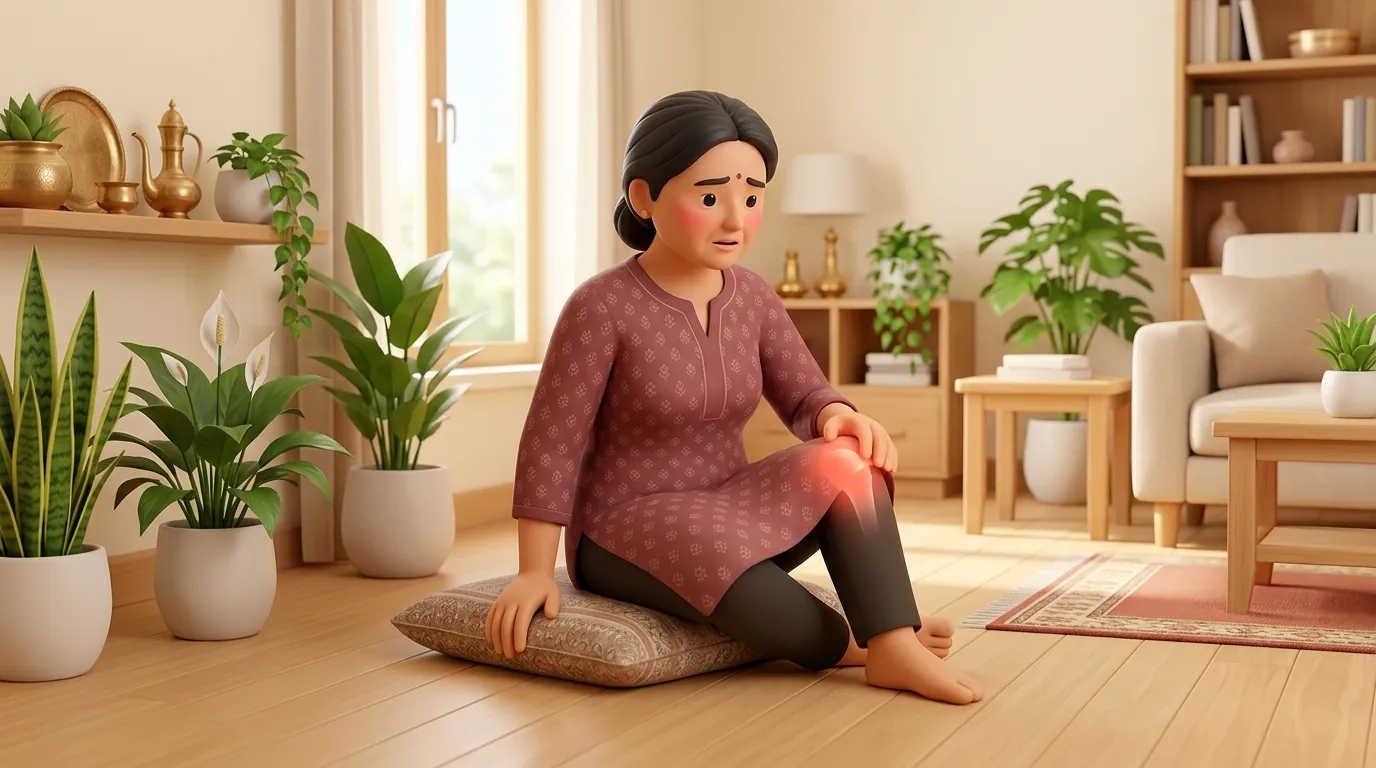
Patellofemoral Pain Syndrome (PFPS) and chondromalacia patellae involve softening, fraying, and fissuring of the thick hyaline cartilage under the kneecap. Abnormal lateral tracking concentrates joint contact pressures across the lateral patellar facet.
Clarke test (patellar grind test) directly compresses the retropatellar articular surface against the femoral trochlea during an active quadriceps contraction.
How to Perform Clarke's Test (Patellar Grind Test)
The patient lies supine with the knee fully extended and relaxed:
- Web Space Placement: The clinician places the web space of their hand directly against the superior pole of the patella, applying a gentle downward and posterior force.
- Isometric Contraction: The patient is asked to gently contract their quadriceps muscle as if pushing the back of their knee into the table.
- Positive Finding: Sharp retropatellar pain and inability to complete or hold the quadriceps contraction due to pain.
The McConnell Test: Pain Relief with Medial Glide
The McConnell test is more specific: the patient sits with the knee flexed to 30, 60, and 90 degrees, performing isometric quadriceps contractions against resistance to elicit pain. If pain is reproduced at an angle, the clinician repeats the contraction while manually pushing the patella medially with their thumb. Significant reduction in pain confirms lateral tracking patellofemoral etiology.
Diagnostic Performance Matrix
| Examination Test | Sensitivity | Specificity | Clinical Caveats | |
|---|---|---|---|---|
| Clarke's Test | 39 to 53 percent (Low) | 67 percent (Moderate) | High false-positive rate if excessive downward force is applied | |
| McConnell Test | 82 percent | 97 percent | Superior test; identifies beneficial taping candidates | |
| Knee Crepitus during Squat | 89 percent | 78 percent | Audible crunching strongly correlates with cartilage wear |
Frequently Asked Questions
Why do so many healthy people test positive on Clarke test?
Applying excessive downward force can pinch the suprapatellar fat pad or normal synovial tissue, causing discomfort even in completely healthy knees. The clinician must use minimal pressure.
How does McConnell patellar taping relieve knee pain?
Rigid zinc-oxide tape provides a mechanical medial glide to the patella, centralizing it within the trochlea and reducing lateral facet contact stress during walking and squats.
Patellofemoral Cartilage Fibrillation and Grading
Chondromalacia patellae represents softening, fissuring and eventual erosion of the hyaline cartilage lining the posterior articular surface of the kneecap. Outerbridge grading ranges from Grade I (cartilage softening) to Grade IV (complete cartilage loss with exposed subchondral bone), causing deep anterior knee ache during loaded flexion.
Patellofemoral Pain Syndrome Rehabilitation Protocol
Pain-free quadriceps conditioning is achieved using isometric knee extensions at 60 degrees of flexion, where patellofemoral contact area is maximal and localized joint stress is minimized. Open-kinetic chain leg extensions between 0 and 30 degrees are avoided because they focus tremendous shear force on the patella.
Stair Descent and Squatting in Indian Households
Descending stairs creates compressive patellofemoral forces exceeding 3.5 times body weight. Leading with the unaffected leg when descending steps, utilizing banisters, and transitioning to western-style commodes protects degraded retropatellar cartilage.
Related condition guides


Related recovery guides & articles
BookPhysio.in Editorial Team
The BookPhysio.in editorial team writes and maintains this content, checking it against reliable clinical sources. Content follows our medical review policy: general information only, and no page claims a clinical review until a named registered physiotherapist has signed it off.
Read our medical review policy