
Physiotherapy for Proximal Hamstring Tendinopathy
Quick answer
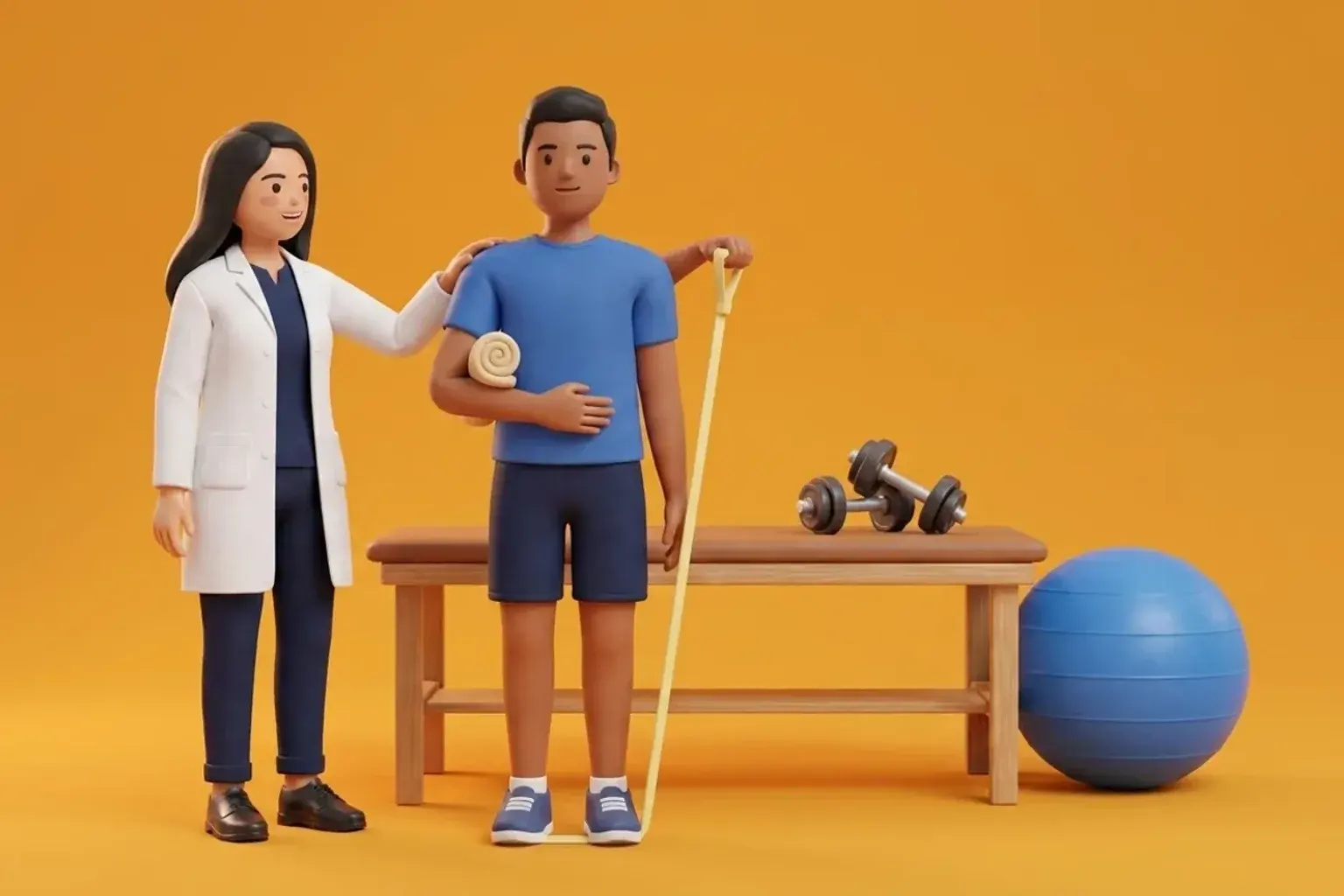
Physiotherapy is the primary treatment for proximal hamstring tendinopathy and deep buttock sit-bone pain. A sports physiotherapist identifies aggravating compressive positions, uses isometric hamstring loading to relieve pain, and builds tendon load capacity with progressive heavy slow resistance and hip-dominant strength exercises.
- Pain deep in the buttock at the sit bone
- Aggravated by prolonged sitting on hard seats
- Hamstring stretching can worsen tendon pinch
- Isometric bridge holds provide pain relief
- Heavy slow resistance builds tendon strength
What is proximal hamstring tendinopathy?
Proximal hamstring tendinopathy (PHT) is an overuse injury causing localized pain at the ischial tuberosity (sit-bone) where the hamstring tendons attach. Common in runners, sprinters, yoga practitioners (repetitive deep forward folds), and individuals who sit for prolonged hours on hard surfaces across India, the tendon is subjected to high tensile and compressive loads against the bone during deep hip flexion. Complete rest leads to tendon weakness, whereas stretching can irritate the tendon further. Physiotherapy uses evidence-based isometric bridge holds for pain reduction, progressing through heavy slow resistance exercises (Romanian deadlifts, hip thrusts) with minimized compressive flexion, and graded return to running and sprinting.

Sports Physiotherapy
Proximal Hamstring Tendinopathy is assessed and treated under Sports physiotherapy (athletic injuries). Injury prevention, athletic rehabilitation, and return-to-play programmes.
How physiotherapy helps
- Isometric hip bridge holds for pain control
- Heavy slow resistance deadlift progressions
- Gluteus maximus and core stability loading
- Sitting ergonomic modifications and cushions
- Graded return to running and speed mechanics
Common signs
- Deep, localized pain in the lower buttock directly over the ischial tuberosity (sit-bone)
- Pain that worsens with prolonged sitting, especially on hard chairs or during long car drives
- Discomfort provoked by running, uphill walking, lunges, or bending forward with straight legs
- Stiffness and ache in the upper hamstring that is worse first thing in the morning or after sitting
- Absence of low back pain or tingling into the foot, differentiating it from lumbar sciatica
In-clinic vs home visit physiotherapy
| What to compare | In-clinic | Home visit |
|---|---|---|
| Typical fee | ₹300 to ₹1,500 a session. It depends on your city. | ₹400 to ₹2,000 a session. It depends on your city. |
| Exact fee | Set by each physiotherapist and shown on their profile | Set separately for home visits and shown on their profile |
| Best for | Equipment-based rehab and first assessments | Limited mobility, post-surgery, and elderly care |
| Equipment | Full clinic setup | Portable equipment the physiotherapist brings |
| Travel | You travel to the clinic | The physiotherapist comes to you |
| Booking | Pick a clinic slot on search | Filter by home visit on search |
Clinical rehabilitation framework
Evidence-informed clinical progression and starter exercise targets for proximal hamstring tendinopathy.
Clinical progression criteria & key observations
- Unlike an acute strain, tendinopathy generally does not need a period of complete rest; controlled loading in a low-compression range is usually better tolerated
Starter exercise targets & evidence-based dosage
When to seek urgent care
Physiotherapy is safe for most people. See a doctor urgently if you have any of these.
- Sudden severe tearing sensation in the buttock with massive bruising, indicating an acute hamstring avulsion
- Progressive radiating neurological symptoms into the calf or foot, warranting lumbar disc herniation workup
- Severe unrelenting nocturnal pain unaffected by position, suggesting bony pathology
- Palpable rapidly enlarging mass in the posterior thigh or buttock requiring urgent medical review
Seek urgent medical care first. Physiotherapy comes after, when it is safe.
Frequently asked questions
Why does hamstring stretching make proximal hamstring tendinopathy worse?
Can I get physiotherapy for proximal hamstring tendinopathy at home?
How should I sit if I have sit-bone hamstring pain?
How much does physiotherapy for proximal hamstring tendinopathy cost in India?
Related conditions & care


Clinical guides & articles for proximal hamstring tendinopathy
Evidence-informed articles, recovery timelines, and home care advice from our clinical library.
Gluteal Tendinopathy (Greater Trochanteric Pain): Adduction Avoidance and Isometric Loading
Lateral hip pain is rarely simple trochanteric bursitis; it is compressive gluteus medius tendinopathy. Learn adduction avoidance rules, sleep setups, and progressive loading.
Proximal Hamstring Tendinopathy (High Hamstring Tendinitis): Ischial Compression Avoidance and Loading
Pain deep in the buttock during prolonged sitting or sprinting points to proximal hamstring tendinopathy. Learn ischial compression mechanics, sitting cushions, and loading.
ACL Reconstruction Autograft Selection: Bone-Patellar Tendon-Bone vs Hamstring vs Quadriceps
Graft choice determines donor site morbidity and rehabilitation timelines after ACL reconstruction. Compare BPTB, hamstring, and quadriceps autografts, and ligamentization.
Knee Flexion Contracture Prevention: Hamstring Tightness & Extension Board Splinting
A bent knee contracture makes wearing a below-knee artificial leg impossible. Learn why prevention is a surgical priority and how extension splints keep knees straight.
Find physiotherapists for proximal hamstring tendinopathy by city
Verified physiotherapists treat proximal hamstring tendinopathy in these cities. Home visit and in-clinic options vary by physiotherapist.
Find a physiotherapist for proximal hamstring tendinopathy
Compare physiotherapists by fee, experience, and availability. Clinic visits and home visits across India.
This page is for general education and booking guidance. It does not diagnose your condition or replace medical care.
If your symptoms are severe, sudden, or getting worse, seek urgent medical care first. The same applies with fever, chest pain, breathlessness, fainting, new weakness, loss of bladder or bowel control, or unexplained bleeding.
Always consult a qualified physiotherapist or doctor about your condition.