
Physiotherapy for Scaphoid Fracture Rehabilitation

Quick answer
Physiotherapy is vital after scaphoid fracture union or fixation to restore wrist motion and grip strength. An orthopaedic physiotherapist manages post-cast stiffness, mobilises carpal joints, retrains wrist extension and radial-ulnar deviation, and rebuilds functional hand grip without placing excessive compression across the carpal bones.
- Most common carpal wrist fracture from a fall
- Retrograde blood supply requires careful care
- Post-cast wrist stiffness resolves with rehab
- Gentle carpal mobilisations restore movement
- Grip strength exercises rebuild hand function
What is a scaphoid fracture?
The scaphoid is the most commonly fractured carpal bone, typically injured from a fall onto an outstretched hand (FOOSH) during motorcycling, cricket, or slips on wet monsoon pathways across India. Due to its retrograde arterial blood supply entering from the distal pole, the proximal scaphoid is vulnerable to delayed union, non-union, or avascular necrosis. Following cast immobilization or percutaneous screw fixation, patients experience significant wrist stiffness and thumb grip weakness. Physiotherapy provides staged carpal mobilisations, active wrist flexion-extension, thumb carpometacarpal exercises, and progressive gripping protocols to return patients to work and sports.
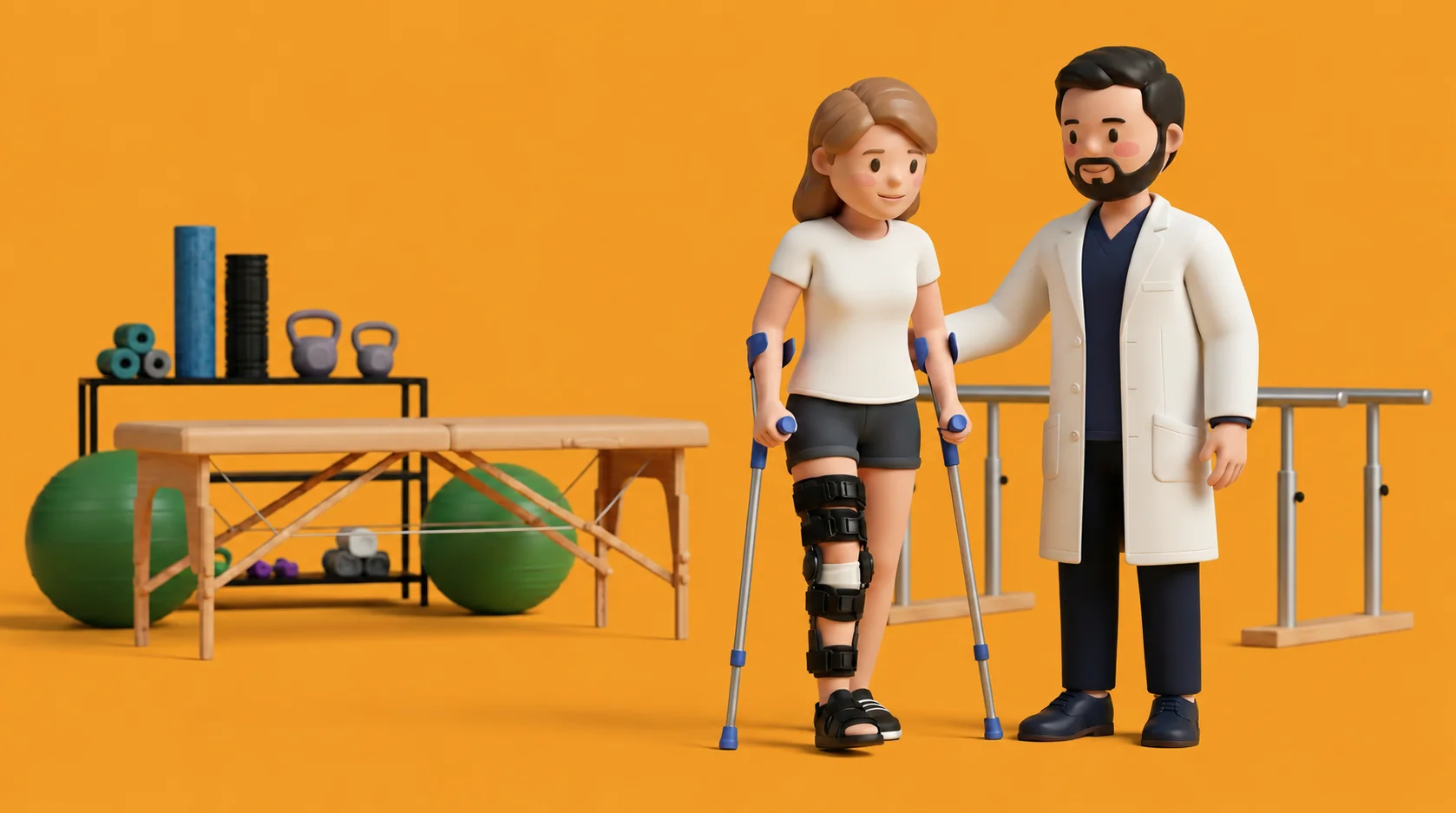
Orthopaedic Physiotherapy
Scaphoid Fracture is assessed and treated under Orthopaedic physiotherapy (bones & joints). Bones, joints, muscles, and ligaments. Back pain, fractures, and post-surgery recovery.
How physiotherapy helps
- Carpal and radiocarpal joint mobilisations
- Active wrist flexion and extension exercises
- Thumb opposition and pinch grip strengthening
- Forearm pronation and supination drills
- Gradual loaded grip and weight-bearing return
Common signs
- Deep pain and tenderness in the anatomical snuffbox at the base of the thumb
- Marked wrist stiffness following weeks of plaster cast immobilization or surgical screw placement
- Pain provoked by pushing up from a chair or bearing weight through an extended wrist
- Reduced grip strength and difficulty turning doorknobs or wringing wet clothes
- Swelling over the radial aspect of the wrist joint that fluctuates with hand usage
In-clinic vs home visit physiotherapy
| What to compare | In-clinic | Home visit |
|---|---|---|
| Typical fee | ₹300 to ₹1,500 a session. It depends on your city. | ₹400 to ₹2,000 a session. It depends on your city. |
| Exact fee | Set by each physiotherapist and shown on their profile | Set separately for home visits and shown on their profile |
| Best for | Equipment-based rehab and first assessments | Limited mobility, post-surgery, and elderly care |
| Equipment | Full clinic setup | Portable equipment the physiotherapist brings |
| Travel | You travel to the clinic | The physiotherapist comes to you |
| Booking | Pick a clinic slot on search | Filter by home visit on search |
Clinical rehabilitation framework
Evidence-informed clinical progression and starter exercise targets for a scaphoid fracture.
Clinical progression criteria & key observations
- Scaphoid fractures carry a high risk of non-union and avascular necrosis because of the bone's tenuous, distal-to-proximal blood supply; keep a low threshold for re-imaging if pain persists past the expected timeline
- Proximal pole fractures are at the highest risk of avascular necrosis and typically need the longest, most cautious rehabilitation timeline
Starter exercise targets & evidence-based dosage
When to seek urgent care
Physiotherapy is safe for most people. See a doctor urgently if you have any of these.
- Persistent anatomical snuffbox pain after six weeks in cast, indicating suspected scaphoid non-union
- Avascular necrosis (Preiser disease) changes visible on repeat radiographs or CT imaging
- Severe burning dysaesthesia and shiny hand skin characteristic of complex regional pain syndrome
- Carpal collapse or dorsal intercalated segment instability (DISI) requiring revision surgery
Seek urgent medical care first. Physiotherapy comes after, when it is safe.
Frequently asked questions
When can I start physiotherapy after a scaphoid fracture?
Can I get physiotherapy for scaphoid fracture at home?
Why does scaphoid fracture rehabilitation take longer than other fractures?
How much does physiotherapy for scaphoid fracture cost in India?
Related conditions & care


Clinical guides & articles for a scaphoid fracture
Evidence-informed articles, recovery timelines, and home care advice from our clinical library.
Carpal Tunnel Syndrome and Mouse Wrist in IT and BPO Workers: Clinical Rehabilitation Protocol
Continuous mouse navigation, trackpad dragging, and mechanical keyboard typing elevate carpal tunnel pressure, compressing the median nerve. Learn how median nerve flossing, nocturnal splinting, and vertical mouse ergonomics relieve numbness.
Phalen's test and Tinel's sign for carpal tunnel syndrome: procedure, accuracy, and interpretation
Phalen's maneuver and Tinel's sign are standard clinical provocative tests for carpal tunnel syndrome. By compressing or percussing the median nerve within the carpal tunnel at the wrist, these tests identify nerve entrapment in desk workers, drivers, and pregnant women.
Watson's Scaphoid Shift Test: Scapholunate Ligament Instability Guide
Scapholunate dissociation is the most common form of carpal instability following a fall onto an outstretched hand. Learn how Watson scaphoid shift test detects carpal subluxation and prevents dorsal intercalated segment instability (DISI).
Scaphoid Fracture: Herbert Screw Fixation, Avascular Necrosis (AVN) Risks and Dart-Thrower Rehab
Scaphoid fractures carry high non-union and avascular necrosis risks due to retrograde blood supply. Learn anatomical snuffbox screening, Herbert screw fixation, and dart-thrower rehab.
Find physiotherapists for a scaphoid fracture by city
Verified physiotherapists treat a scaphoid fracture in these cities. Home visit and in-clinic options vary by physiotherapist.
Find a physiotherapist for a scaphoid fracture
Compare physiotherapists by fee, experience, and availability. Clinic visits and home visits across India.
This page is for general education and booking guidance. It does not diagnose your condition or replace medical care.
If your symptoms are severe, sudden, or getting worse, seek urgent medical care first. The same applies with fever, chest pain, breathlessness, fainting, new weakness, loss of bladder or bowel control, or unexplained bleeding.
Always consult a qualified physiotherapist or doctor about your condition.