
Physiotherapy for Thoracic Spine and Mid-Back Pain
Quick answer
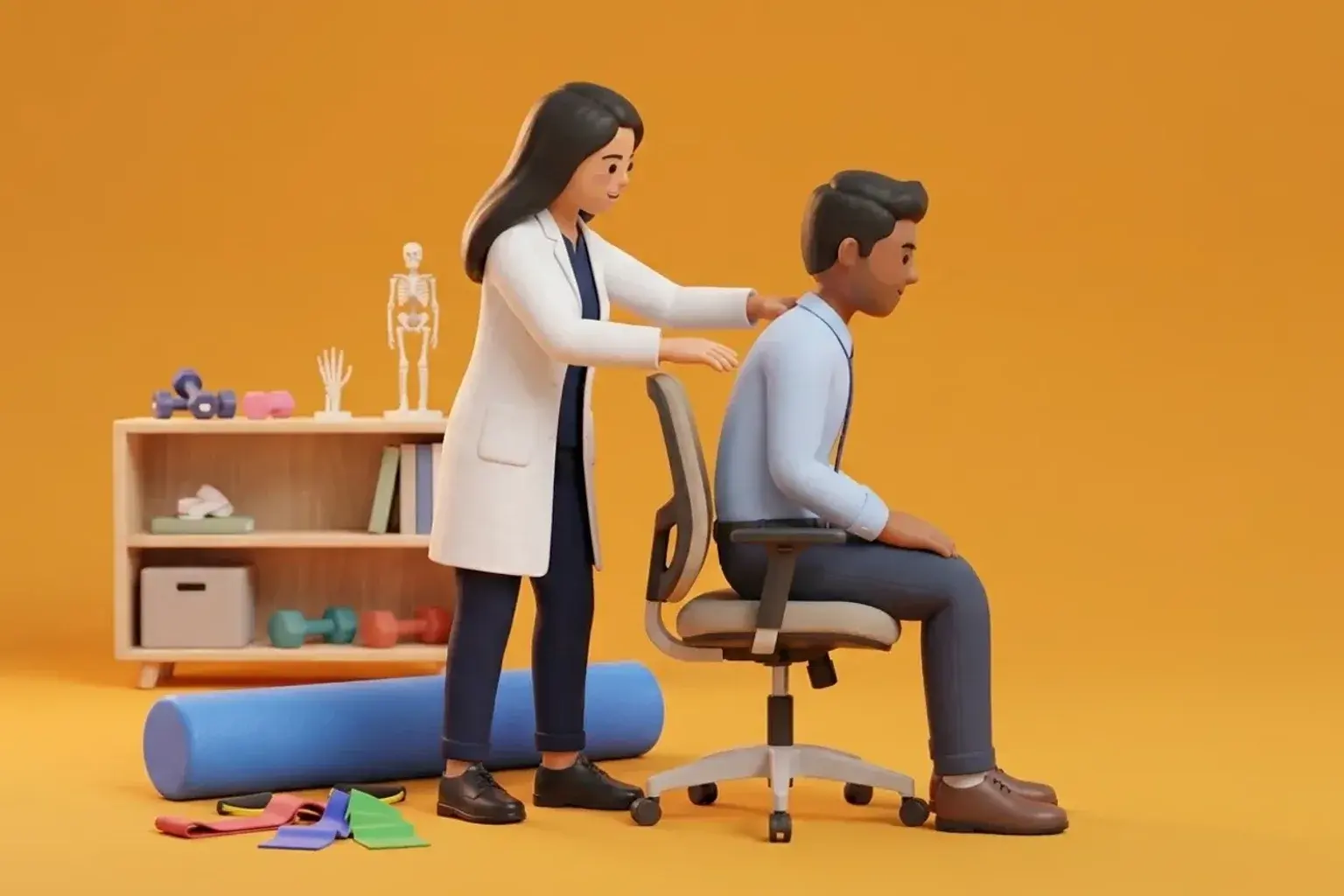
Physiotherapy provides targeted relief for thoracic spine stiffness, mid-back aching, and costovertebral rib pain. An orthopaedic physiotherapist mobilises hypomobile thoracic vertebrae, restores thoracic extension and rotation, releases intercostal and rhomboid muscle spasms, and improves seated desk ergonomics for lasting comfort.
- Mid-back ache from prolonged laptop sitting
- Rib attachments make the thoracic spine stiff
- Thoracic extension exercises restore posture
- Rhomboid and scapular loading eases ache
- Deep diaphragmatic breathing expands rib cage
What is thoracic back pain?
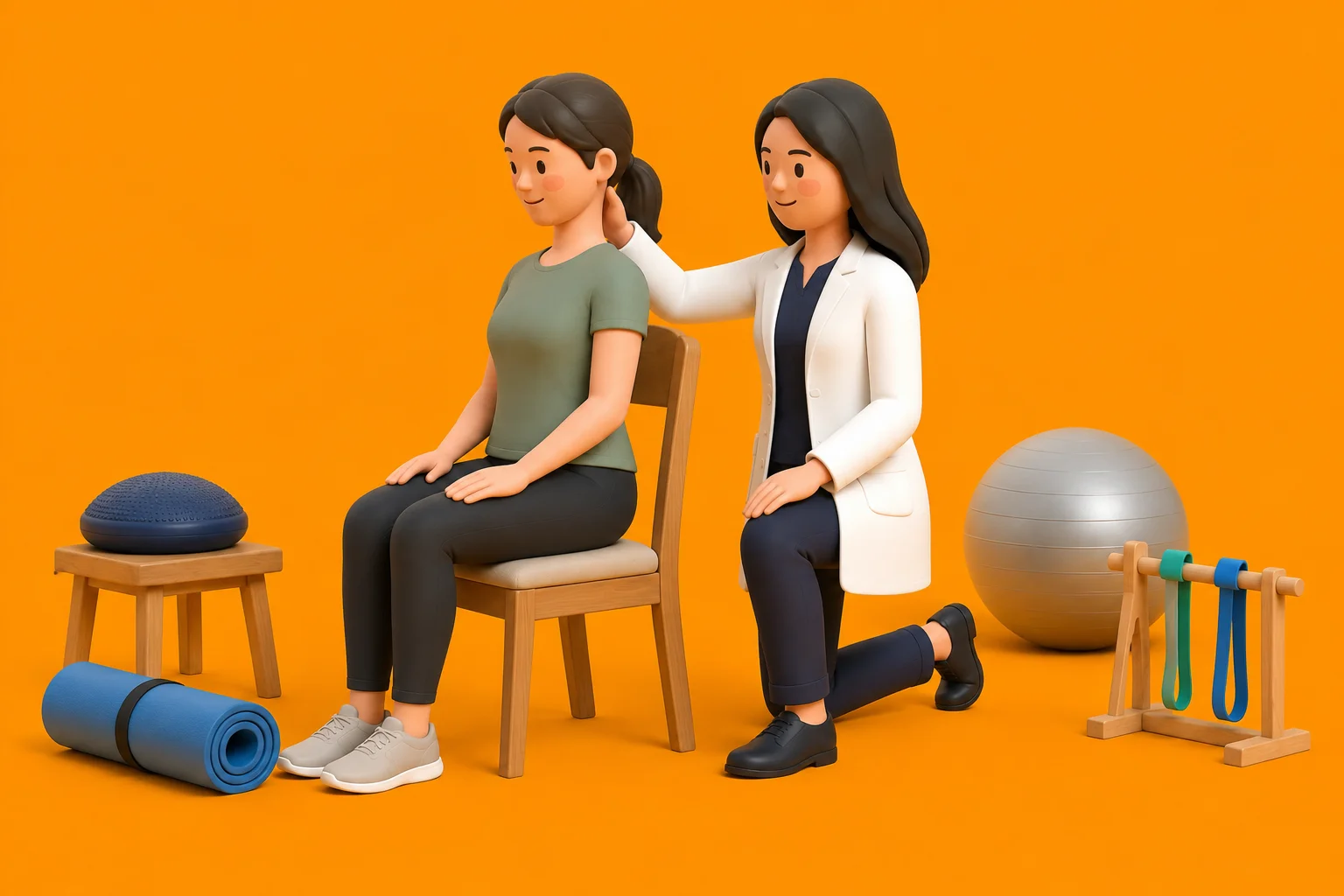
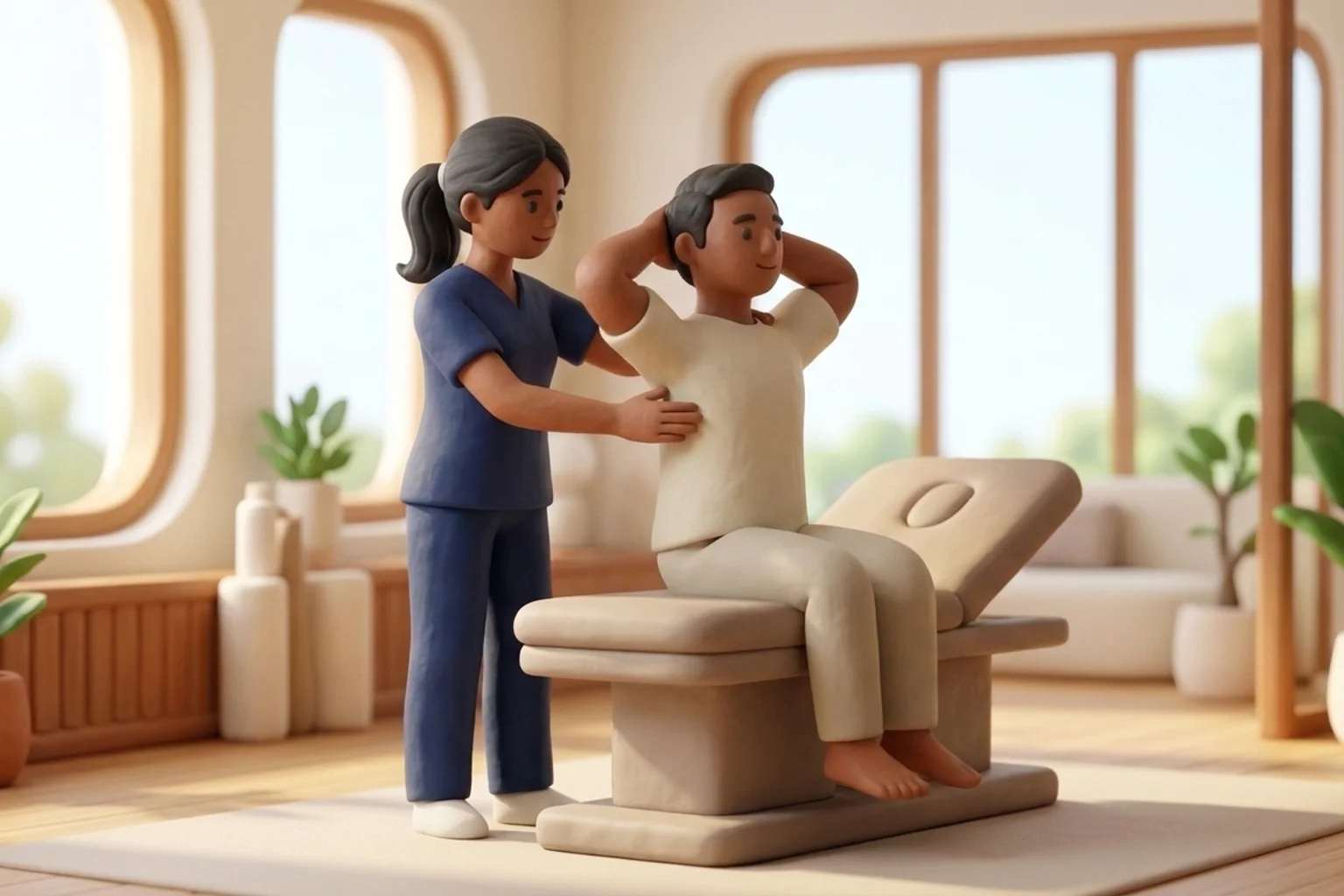
Mid-back and thoracic spine pain is increasingly common among software professionals, students, and desk workers across India who sit in sustained kyphotic slouch postures for ten to twelve hours daily. Unlike the flexible lumbar and cervical spines, the thoracic cage is mechanically rigid due to rib attachments. Prolonged slumping causes costovertebral joint hypomobility, rhomboid muscle fatigue, and painful trigger points between the shoulder blades. Physiotherapy restores thoracic extension through foam roller mobilisations and targeted manual therapy, strengthens the mid-back postural stabilizers (middle and lower trapezius), and retrains diaphragmatic rib-expansion breathing.

Orthopaedic Physiotherapy
Thoracic Back Pain is assessed and treated under Orthopaedic physiotherapy (bones & joints). Bones, joints, muscles, and ligaments. Back pain, fractures, and post-surgery recovery.
How physiotherapy helps
- Thoracic extension and rotation mobilisations
- Costovertebral joint manual glide therapy
- Mid and lower trapezius muscle strengthening
- Foam roller thoracic mobility exercises
- Desk ergonomic setup and posture break habits
Common signs
- Dull, burning, or aching pain between the shoulder blades and across the mid-back
- Sharp catch or pinch when taking a deep breath or twisting the upper torso
- Stiffness and hunching after long hours working on laptops or driving in traffic
- Tenderness over the costovertebral joints along the side of the spine
- Compensatory tension spreading into the lower neck and upper trapezius muscles
In-clinic vs home visit physiotherapy
| What to compare | In-clinic | Home visit |
|---|---|---|
| Typical fee | ₹300 to ₹1,500 a session. It depends on your city. | ₹400 to ₹2,000 a session. It depends on your city. |
| Exact fee | Set by each physiotherapist and shown on their profile | Set separately for home visits and shown on their profile |
| Best for | Equipment-based rehab and first assessments | Limited mobility, post-surgery, and elderly care |
| Equipment | Full clinic setup | Portable equipment the physiotherapist brings |
| Travel | You travel to the clinic | The physiotherapist comes to you |
| Booking | Pick a clinic slot on search | Filter by home visit on search |
Clinical rehabilitation framework
Evidence-informed clinical progression and starter exercise targets for thoracic back pain.
Starter exercise targets & evidence-based dosage
When to seek urgent care
Physiotherapy is safe for most people. See a doctor urgently if you have any of these.
- Severe chest pain radiating to the left arm or jaw with shortness of breath (cardiac emergency)
- Band-like thoracic burning dysaesthesia accompanied by leg weakness or bowel-bladder issues (myelopathy)
- Unexplained mid-back pain with history of osteoporosis or long-term steroid use (compression fracture)
- Persistent thoracic nocturnal pain, unexplained fever, or weight loss (malignancy or discitis)
Seek urgent medical care first. Physiotherapy comes after, when it is safe.
Frequently asked questions
Why does my mid-back hurt so much after sitting at my computer all day?
Can I get physiotherapy for thoracic back pain at home?
Can a stiff mid-back cause difficulty taking a deep breath?
How much does physiotherapy for thoracic back pain cost in India?
Related conditions & care


Clinical guides & articles for thoracic back pain
Evidence-informed articles, recovery timelines, and home care advice from our clinical library.
Working from Bed and Couch Posture: Relieving Thoracic Spine Stiffness and Interscapular Pain
Working with a laptop propped on your lap in bed or sunk into a soft sofa locks the thoracic spine into persistent kyphosis. Learn how thoracic extension drills, foam rolling, and WFH support setups relieve mid-back burning.
Thoracic Outlet Syndrome (TOS): Neurovascular Compression, Scalene Release, and Physiotherapy in India
Arm numbness, tingling, and heavy aching often originate at the thoracic outlet. Learn the three compression tunnels, neurovascular testing, and specialized physiotherapy.
WFH Laptop Ergonomics in India: Neck Pain, Thoracic Kyphosis and Active Microbreaks
Laptops force a dangerous trade-off: if the screen is at eye level, the keyboard is too high; if the keyboard is at elbow level, the screen forces neck flexion. Learn how simple Indian home workstation adaptations and 2-minute microbreaks prevent tech neck and thoracic kyphosis.
Costochondritis vs Tietze Syndrome: Chest Wall Pain, Cardiac Triage and Thoracic Mobility
Sharp anterior chest wall pain frequently triggers heart attack fears. Learn the differences between Costochondritis and Tietze syndrome, cardiac screening, and thoracic mobility.
Find physiotherapists for thoracic back pain by city
Verified physiotherapists treat thoracic back pain in these cities. Home visit and in-clinic options vary by physiotherapist.
Find a physiotherapist for thoracic back pain
Compare physiotherapists by fee, experience, and availability. Clinic visits and home visits across India.
This page is for general education and booking guidance. It does not diagnose your condition or replace medical care.
If your symptoms are severe, sudden, or getting worse, seek urgent medical care first. The same applies with fever, chest pain, breathlessness, fainting, new weakness, loss of bladder or bowel control, or unexplained bleeding.
Always consult a qualified physiotherapist or doctor about your condition.