
C-Section Recovery: Post-Operative Scar Tissue Mobilization, Diastasis Recti and Core Synergy
In short
Cesarean delivery is major abdominal surgery involving multiple tissue layers. Learn scar tissue mobilization techniques, Diastasis Recti rehabilitation, and core restoration.
In this guide (5 sections)
The Surgical Trauma of Cesarean Delivery
Cesarean delivery (C-Section) is the most frequently performed major inpatient surgery worldwide, accounting for over 21 percent of all births globally and more than 40 percent of births in private healthcare facilities across urban India.
A transverse lower abdominal Pfannenstiel incision transects or dissects through seven distinct anatomical tissue layers: skin, subcutaneous fat (Camper's and Scarpa's fascia), anterior rectus sheath, rectus abdominis separation, transversalis fascia, parietal peritoneum, and the lower uterine segment.
While surgical healing of the skin occurs within 2 weeks, deep fascia and uterine scar remodeling continues for 6 to 12 months. Untreated fibrotic scarring can tether the abdominal wall to the bladder and pelvic floor, causing chronic pelvic pain, urinary urgency, painful intercourse (dyspareunia), and low back pain.
The 3-Phase Scar Tissue Mobilization Protocol
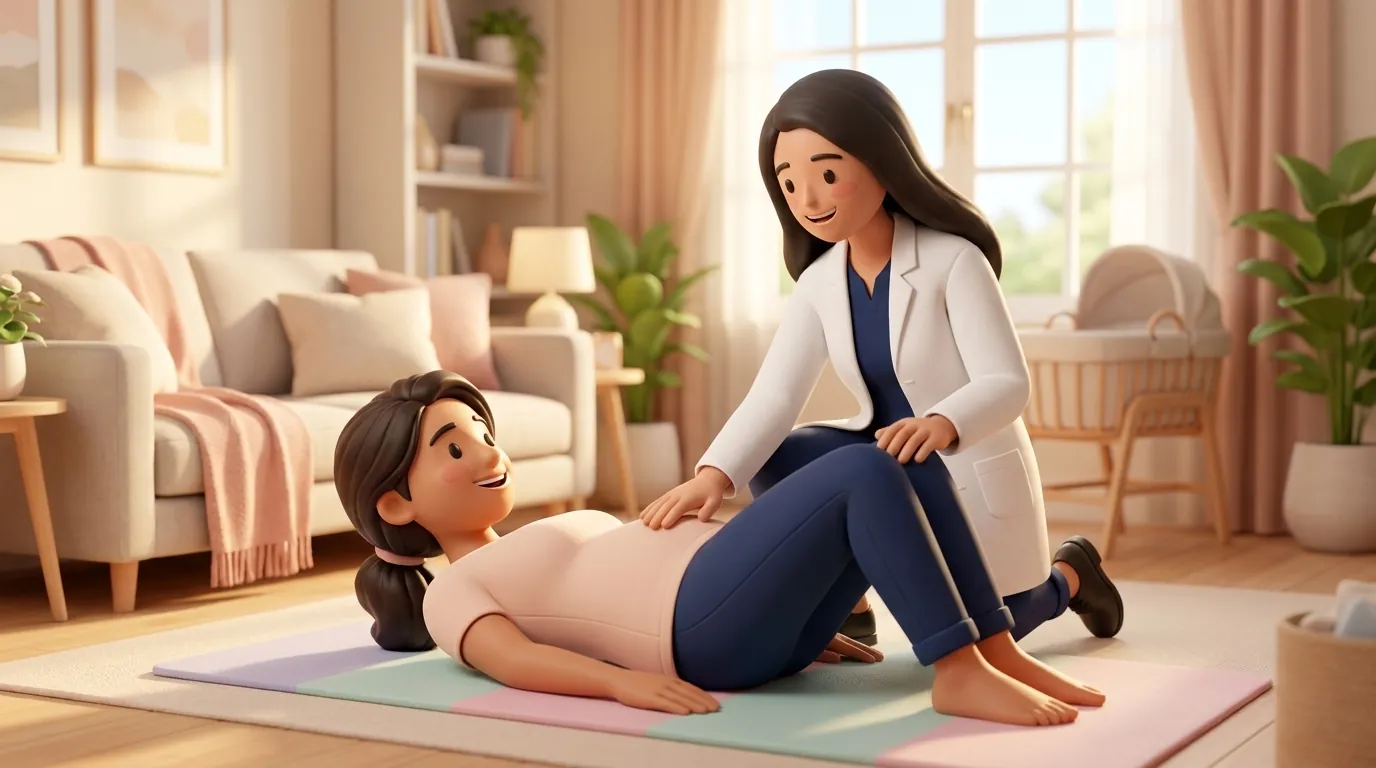
Scar mobilization prevents pathological adhesions and restores multi-planar tissue glide. Mobilization commences only after full medical clearance and complete epithelial closure (typically 6 weeks post-op).
| Post-Operative Phase | Healing Status & Timing | Mobilization Technique Performed | Clinical Objective | |
|---|---|---|---|---|
| Phase 1: Desensitization | Weeks 2 to 6 (Incision closed) | Gentle stroking with silk, cotton ball, dry washcloth around incision | Normalizes hyperesthesia and eliminates central sensory neglect. | |
| Phase 2: Perpendicular & Circular | Weeks 6 to 10 (Full closure) | Fingertip circles and gentle perpendicular stretching 1 cm above/below scar | Frees superficial fascial tethers from deep rectus sheath. | |
| Phase 3: Direct Skin Rolling | Weeks 10+ (Mature scar) | Pinching the scar between thumb and index finger, rolling horizontally | Breaks dense fibrotic collagen bridges; restores full fascial glide. |
Diastasis Recti and Transverse Abdominis Coordination
C-Section delivery does not exempt mothers from Diastasis Recti Abdominis (DRA); in fact, surgical incision of the anterior rectus sheath alters linea alba tensioning.
Rehabilitation must restore coordinated co-contraction between the deep Transverse Abdominis (TrA) and the Pelvic Floor Muscles (PFM) without generating excessive intra-abdominal pressure that bulges the healing incision.
- The Diaphragmatic Breath and Core Connection: Inhale gently allowing the belly and pelvic floor to expand softly; exhale smoothly while gently drawing the lower abdomen inward (below the navel) and lifting the pelvic floor.
- Strict Avoidance of Crunches and Sit-Ups: Traditional abdominal crunches, planks, and sit-ups spike intra-abdominal pressure, pushing the linea alba apart and straining the surgical scar. They are prohibited for the first 12 weeks.
- Supine Heel Slides with Neutral Spine: Maintain gentle TrA activation while slowly sliding one heel along the floor and back, ensuring zero abdominal doming or arching of the lower back.
- Log-Rolling Bed Transfers: Always roll onto your side before rising from bed to eliminate forceful rectus abdominis strain across the healing uterine incision.
Indian Postpartum Traditions and Belly Binding
In India, traditional practices often involve wrapping tight cotton cloth (sari binding) around the abdomen immediately postpartum. Rigid, excessively tight binders compress abdominal viscera downward into the pelvic floor, predisposing to uterine prolapse and urinary incontinence.
Physiotherapists advocate for gentle, elastic supportive compression garments that provide light incision comfort without crushing intra-abdominal organs.
Frequently Asked Questions
Why is the skin above my C-section scar numb or strange to touch?
The Pfannenstiel incision transects microscopic sensory cutaneous branches of the iliohypogastric and ilioinguinal nerves. Sensation gradually regenerates over 6 to 12 months, and sensory desensitization massage helps accelerate nerve recovery.
Can scar massage help reduce the 'C-section shelf' (pooch)?
Yes. The 'shelf' is frequently caused by tight, contracted scar tissue anchoring the skin to the deep abdominal wall, forcing tissue above it to bulge outward. Releasing deep fascial adhesions allows the abdominal wall to flatten naturally.
When is it safe to return to running or high-impact exercise after a C-section?
International guidelines recommend waiting a minimum of 12 weeks post-cesarean delivery before returning to running, provided the mother passes a formal pelvic floor and abdominal wall assessment with zero heaviness, leaking, or pain.
Related condition guides


Related recovery guides & articles
BookPhysio.in Editorial Team
The BookPhysio.in editorial team writes and maintains this content, checking it against reliable clinical sources. Content follows our medical review policy: general information only, and no page claims a clinical review until a named registered physiotherapist has signed it off.
Read our medical review policy