
Diabetic Frozen Shoulder (Adhesive Capsulitis): Collagen Glycation, Recovery Timeline, and Physio Protocols
In short
Diabetes multiplies frozen shoulder risk five-fold, causing stubborn capsular cross-linking. Discover biological recovery timelines and gentle physiotherapy.

In this guide (5 sections)
Adhesive Capsulitis, universally known as Frozen Shoulder, is one of the most agonizing, protracted musculoskeletal disorders affecting urban Indian adults. While it strikes 2 to 5 percent of the general population, its incidence surges dramatically to 20 to 30 percent among individuals with type 2 diabetes mellitus: an alarming reality given that India is recognized as the diabetes capital of the world, with over 100 million diagnosed individuals.
Diabetic frozen shoulder is not merely a common frozen shoulder in a patient who happens to have elevated blood sugars; it is a biologically distinct, far more aggressive disease process. Diabetic adhesive capsulitis is characterized by severe bilateral involvement (occurring in both shoulders in over 40% of cases), profound resistance to standard anti-inflammatory medications, and a protracted clinical duration that routinely stretches from 18 to 36 months if unaddressed. Specialized, staged physiotherapy restores capsular glide and functional independence.
1. Pathophysiology: Advanced Glycation End-Products (AGEs) and Capsular Fibrosis
Under conditions of chronic circulating hyperglycemia, glucose molecules react non-enzymatically with long-lived structural proteins: a chemical cascade known as the Maillard reaction. This non-enzymatic glycosylation creates irreversible covalent chemical bridges called Advanced Glycation End-Products (AGEs) within the dense type I and type III collagen fibrils of the glenohumeral joint capsule and the coracohumeral ligament.
These AGE cross-links fundamentally alter the physical properties of the shoulder capsule. Normally supple, elastic collagen fibers become brittle, stiff, and yellowed, losing their physiological ability to glide and elongate. Concurrently, AGEs bind to specific cell-surface receptors (RAGE) on synovial fibroblasts and macrophages, triggering sustained release of pro-inflammatory cytokines: transforming growth factor-beta (TGF-beta), platelet-derived growth factor (PDGF), and connective tissue growth factor (CTGF).
This chronic cytokine storm induces dense myofibroblast proliferation: the same pathological cellular process seen in Dupuytren's contracture. The axillary pouch of the inferior glenohumeral capsule contracts and obliterates, effectively "shrink-wrapping" the humeral head against the glenoid socket. Normal intra-articular joint volume collapses from 15 to 30 millilitres down to less than 3 to 5 millilitres, producing agonizing pain and total mechanical loss of external rotation and abduction.
| Clinical Disease Stage | Capsular Pathology & Duration | Clinical Physical Symptoms | Physiotherapy Management Strategy |
|---|---|---|---|
| Stage 1: Freezing (Inflammatory) | Hypervascular synovitis; intense neo-innervation; 3 to 9 months | Severe unremitting night pain; inability to sleep on affected side; progressive stiffness | Pain relief; gentle pendulum exercises; scapular setting; strictly avoid aggressive stretching |
| Stage 2: Frozen (Fibrotic Contracture) | Capsular thick fibrotic contracture; hypovascularity; 4 to 12 months | Night pain diminishes to dull ache; profound mechanical block in external rotation and abduction | Maitland Grade III/IV joint mobilisations; sustained end-range capsular stretches; wand exercises |
| Stage 3: Thawing (Remodeling) | Gradual spontaneous collagen remodeling and maturation; 6 to 18 months | Steady progressive recovery of functional range; minimal resting discomfort | Progressive rotator cuff strengthening; high-load scapulothoracic conditioning; overhead functional reach |
2. The Indian Glycaemic Challenge: Poor HbA1c Control and Cortisone Dilemmas
In Indian clinical practice, diabetic frozen shoulder is severely exacerbated by poor long-term glycaemic management. Many patients maintain HbA1c levels between 8.5% and 11.0% due to carbohydrate-dense diets (white polished rice, refined wheat chapatis, sweet chai) and sedentary lifestyles. In uncontrolled diabetes, the relentless formation of AGEs continuously outpaces collagen remodeling, locking the shoulder in an endless inflammatory-fibrotic loop.
Furthermore, standard medical treatments carry acute metabolic hazards for diabetics. Orthopaedic specialists frequently administer intra-articular corticosteroid (cortisone) injections to quell shoulder pain. While effective for non-diabetic patients, a single steroid injection in a diabetic patient routinely causes catastrophic blood glucose spikes: sending fasting blood sugars surging past 300 to 400 mg/dL for 7 to 14 days, risking diabetic ketoacidosis or hyperosmolar hyperglycaemic state.
Specialized physiotherapy provides a non-pharmacological, metabolically safe alternative. By respecting the biological stage of the disease, physiotherapists gently mobilize the capsule without spiking blood sugars or triggering destructive rebound capsular spasms.
3. Three-Phase Staged Frozen Shoulder Recovery Protocol
Three-Phase Diabetic Frozen Shoulder Rehabilitation Protocol
Objective: Down-regulate capsular inflammation, stretch dense collagen adhesions, and restore multi-planar overhead reaching.
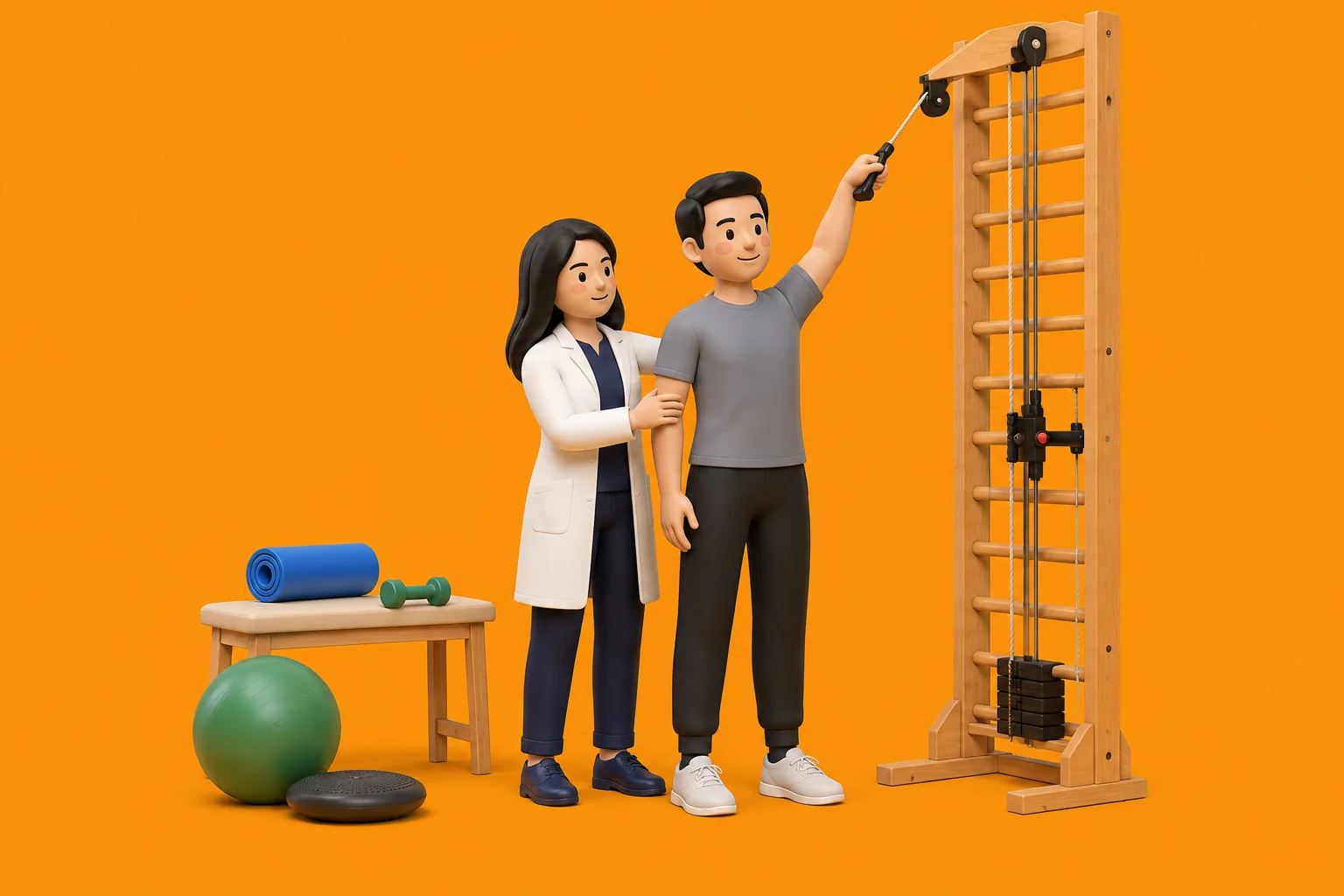
- 1Phase 1 (Pain Relief and Low-Load Movement - Freezing Stage): 1. Codman Pendulum Swings: lean forward over a table supporting your good arm; let your stiff arm dangle relaxed like a pendulum; gently sway your entire body to create small circles (clockwise and anticlockwise) for 2 minutes without using shoulder muscles. 2. Supine Wand External Rotation: lie on your back holding a cane or walking stick with both hands, elbows tucked against your ribs at 90 degrees; use your healthy hand to gently push the cane, guiding the stiff shoulder outward into external rotation until mild tension is felt. Hold for 5 seconds. Repeat 10 times.
- 2Phase 2 (Capsular Stretching and Passive Mobilisation - Frozen Stage): 1. Sleeper Stretch: lie on your affected side with elbow bent at 90 degrees; use your other hand to gently push your forearm down toward the mattress to stretch the posterior capsule. Hold for 30 seconds. Repeat 3 times. 2. Wall Climbing: stand facing a wall, slowly walk your fingers up the wall as high as comfortable, step gently closer to the wall to increase overhead stretch, and hold for 15 seconds.
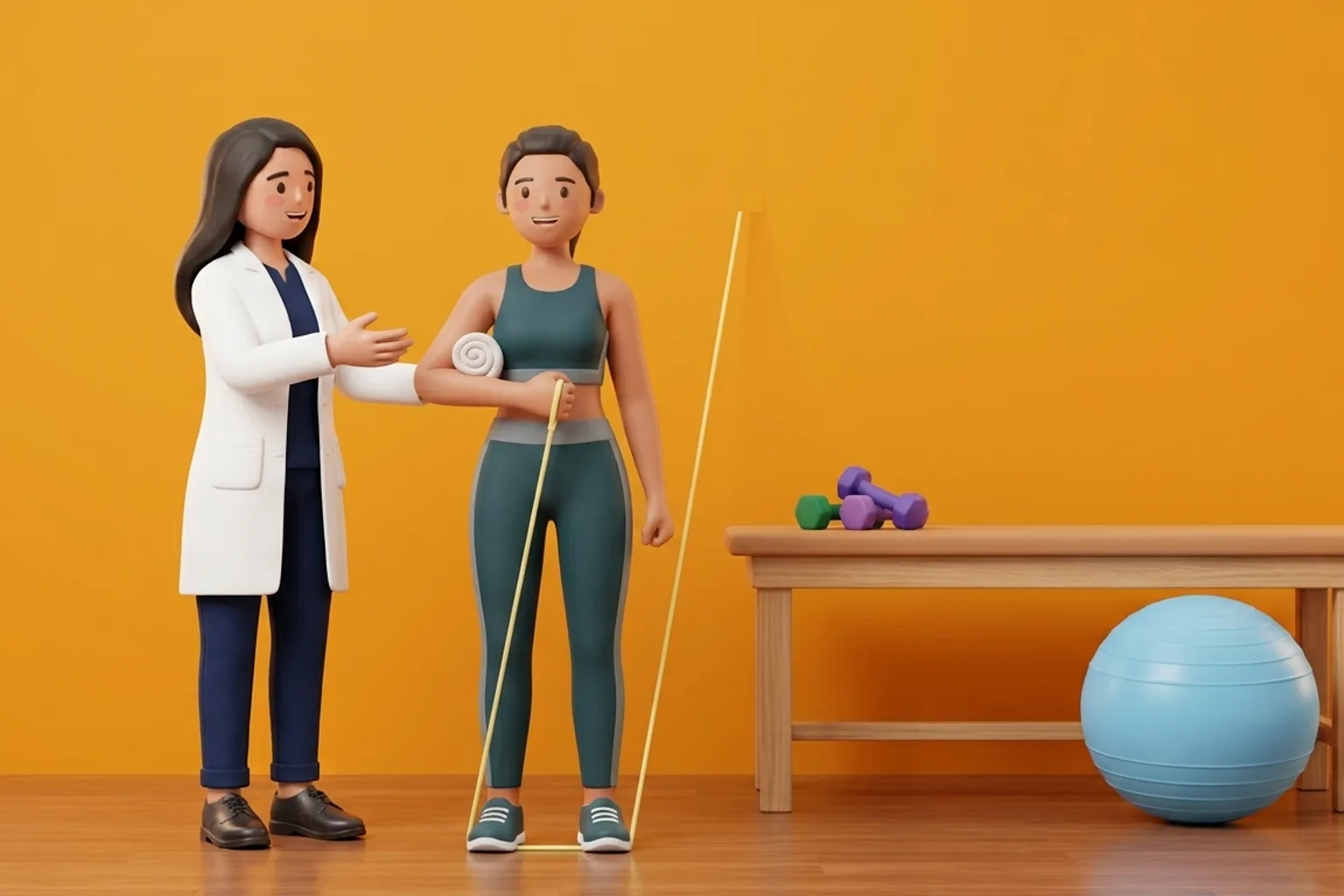
- 3Phase 3 (Rotator Cuff Reconditioning and Scapular Rhythm - Thawing Stage): 1. Scapular Retraction with Loop Band: hold an elastic resistance band with both hands; pull elbows back and squeeze shoulder blades together while maintaining tall posture. Perform 3 sets of 10 repetitions. 2. Standing External Rotation with Resistance Band: anchor band at door level; rotate forearm outward against light resistance to rebuild infraspinatus and teres minor strength.
- 4Cardio-Metabolic Tip: Incorporate 30 minutes of brisk lower-body recumbent cycling or walking daily. Improving systemic insulin sensitivity and lowering HbA1c directly accelerates capsular collagen remodeling.
4. Critical Red Flags: When Shoulder Pain Indicates Systemic or Cardiac Emergency
Because patients with diabetes have an exceptionally high incidence of silent coronary artery disease and atypical ischemic presentations, shoulder pain must be evaluated with extreme vigilance. Seek immediate emergency cardiology care if you experience acute left shoulder or jaw pain that begins suddenly during exertion or is accompanied by chest tightness, cold sweats, or unexplained nausea: this may represent an acute myocardial infarction. In orthopaedic terms, seek urgent surgical evaluation if you notice an expanding, hot, red swelling around the shoulder accompanied by fever and chills, which indicates septic arthritis of the glenohumeral joint.
Frequently Asked Questions
Why does diabetic frozen shoulder take so much longer to heal than non-diabetic cases?
In diabetes, high circulating glucose levels create permanent chemical cross-links (AGEs) between collagen fibers in the joint capsule, making the tissue significantly thicker, more fibrotic, and less vascular. While non-diabetic frozen shoulder typically resolves in 12 to 18 months, diabetic frozen shoulder often requires 24 to 36 months of patient, staged rehabilitation.
Will aggressive, forceful stretching by a physiotherapist speed up my recovery?
No! Forceful, aggressive stretching during the inflammatory or early frozen stage tears the fragile, fibrotic capsule, triggering acute synovitis, severe muscle guarding, and rapid worsening of stiffness. Effective physiotherapy relies on gentle, oscillatory Maitland mobilisations and sustained low-load stretches within the patient pain threshold.
Is Manipulation Under Anaesthesia (MUA) safe for diabetic patients with frozen shoulder?
Manipulation Under Anaesthesia (MUA) involves forcefully breaking adhesions while the patient is asleep. In diabetic patients, whose bones are often osteopenic and whose capsules are extremely thick, MUA carries high risks of iatrogenic humerus fractures, labral tears, and rotator cuff ruptures. Modern orthopaedic surgeons prefer gentle arthroscopic capsular release if conservative physiotherapy plateaus.
Why does my shoulder pain intensify dramatically at night when lying down?
When you lie supine at night, gravitational pressure pushes the humeral head posteriorly against the tight posterior capsule. Furthermore, decreased daytime distractions amplify pain signals, and the absence of muscle movement allows inflammatory cytokines to pool within the contracted joint space.
How does BookPhysio.in connect diabetic patients with experienced shoulder physiotherapists?
BookPhysio.in connects patients across major Indian cities with certified orthopaedic and musculoskeletal physiotherapists experienced in diabetic capsulitis, gentle joint mobilization, and staged recovery. Transparent session fees range from ₹400 to ₹1,500 in clinic and ₹600 to ₹2,000 for home visits, with direct payment to your clinician and zero platform commission.
Related condition guides
BookPhysio.in Editorial Team
The BookPhysio.in editorial team writes and maintains this content, checking it against reliable clinical sources. Content follows our medical review policy: general information only, and no page claims a clinical review until a named registered physiotherapist has signed it off.
Read our medical review policy