
Rotator Cuff Tendinopathy: Scapular Upward Rotation, Painful Arc Relief, and Overhead Strength
In short
Painful arc pain when reaching overhead is the classic sign of rotator cuff tendinopathy. Learn how serratus anterior strengthening, scapular upward rotation, and progressive tendon loading cure shoulder pain.
In this guide (5 sections)
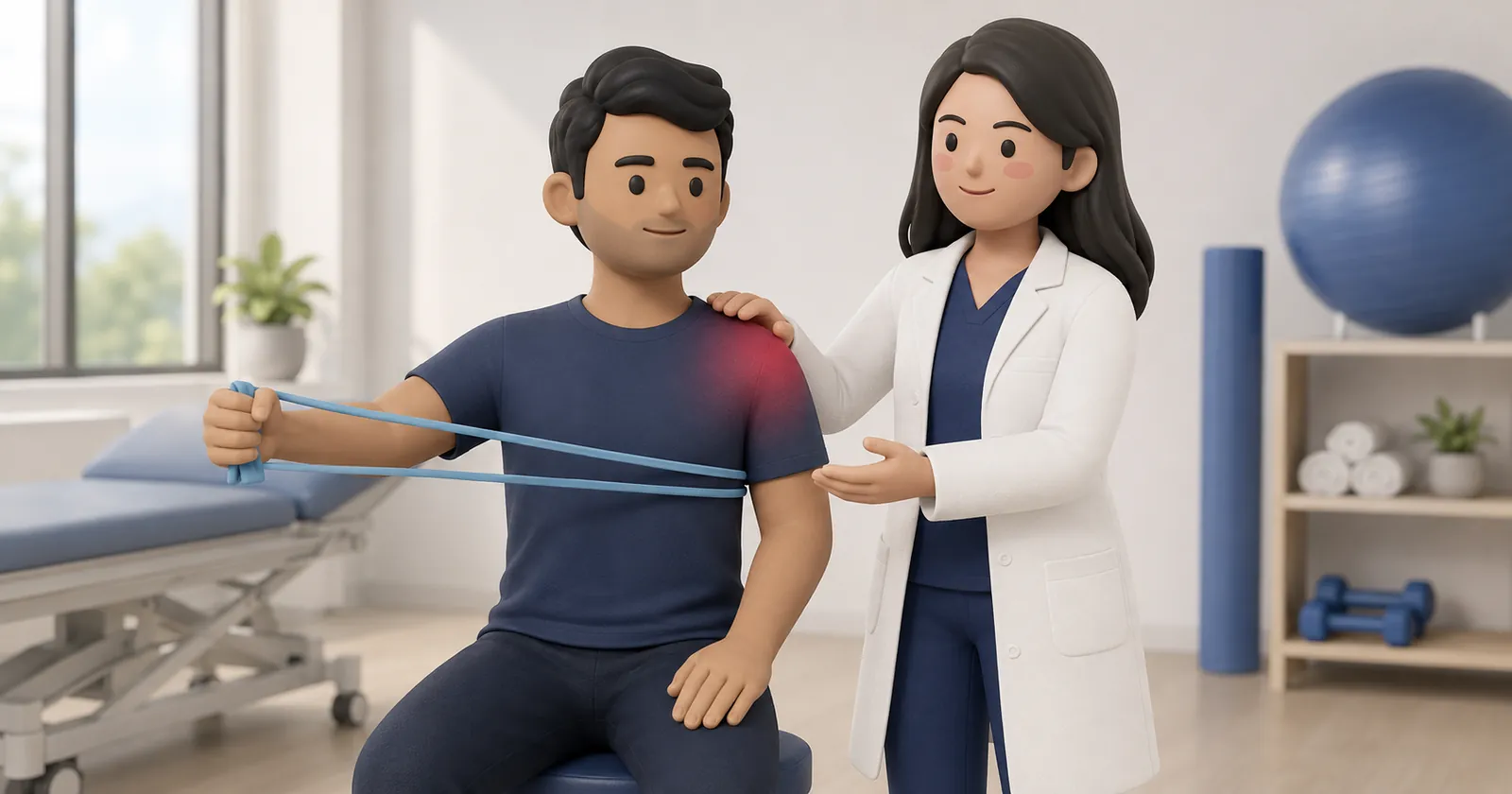
Shoulder pain during overhead arm elevation, reaching behind the back to put on a jacket, or lifting heavy household cookware is one of the most frequent musculoskeletal complaints evaluated in Indian healthcare clinics. Clinically diagnosed under the umbrella of Subacromial Pain Syndrome (SAPS) or Rotator Cuff Tendinopathy, this condition is characterized by a classic Painful Arc: sharp, pinching pain that strikes as the arm elevates between 60 and 120 degrees of abduction, but settles once the arm drops back to the side. Left unmanaged, chronic tendon irritation can progress to partial-thickness and full-thickness rotator cuff tears.
For decades, medicine attributed this pain to a simple bone spur mechanically shaving the tendon (Neer subacromial impingement), leading to widespread arthroscopic bone shaving surgeries (subacromial decompression). Modern orthopedic science has proven this concept fundamentally flawed: clinical trials demonstrate that surgery provides zero benefit over sham surgery or exercise. True recovery requires optimizing scapular upward rotation kinematics and progressively loading the rotator cuff tendons through Heavy Slow Resistance training.
1. Anatomy of the Rotator Cuff and the Subacromial Space
The rotator cuff is a dynamic muscular sleeve composed of four deep muscles that originate on the scapula and insert into the tuberosities of the humeral head: the Supraspinatus (abduction and humeral head centering), Infraspinatus (external rotation), Teres Minor (external rotation), and Subscapularis (internal rotation).
Together, these four muscles act as the dynamic centring mechanism of the shoulder. When the powerful deltoid muscle contracts to lift the arm overhead, it exerts an upward shearing force that pulls the humeral head upward toward the acromion. The rotator cuff muscles must co-contract to exert an equal and opposite downward depression force, keeping the ball perfectly centered in the shallow glenoid socket. When the supraspinatus tendon becomes fatigued, degenerative, or overloaded, this depression force fails: the humeral head migrates superiorly, compressing the tendon and subacromial bursa against the rigid coracoacromial arch.
2. Scapular Dyscalculia: The Role of the Serratus Anterior
The shoulder cannot function in isolation from the shoulder blade (scapula). For every 2 degrees of arm elevation at the glenohumeral joint, the scapula must upwardly rotate by 1 degree: a concept known as Scapulohumeral Rhythm. If the serratus anterior and lower trapezius muscles are weak, the scapula fails to rotate upward, tipping anteriorly and downward, effectively narrowing the subacromial space by over 40% during overhead movement.
| Diagnostic Feature | Rotator Cuff Tendinopathy / SAPS | Frozen Shoulder (Adhesive Capsulitis) | Cervical Radiculopathy (C5-C6) |
|---|---|---|---|
| Hallmark Clinical Movement Sign | Painful Arc between 60° and 120° abduction; full passive range maintained with gentle assistance | Global loss of passive motion in capsular pattern (External Rotation severely blocked) | Pain exacerbated by neck extension and rotation (Positive Spurling test); full shoulder range |
| Night Pain Characteristics | Aching pain when sleeping directly on affected shoulder; settles when arm is supported on pillow | Severe, unremitting nocturnal pain waking patient regardless of sleep posture (Stage 1) | Sharp electrical pain radiating down the arm into the thumb/forearm during sleep |
| Key Provocative Special Tests | Positive Neer test, Hawkins-Kennedy impingement test, Painful Arc test | Firm capsular end-feel block; severe restriction in passive external rotation | Positive Spurling test, Upper Limb Neurodynamic Test (ULNT 1) |
| Primary Rehabilitation Focus | Rotator cuff Heavy Slow Resistance and Serratus Anterior upward rotation retraining | Stage-matched gentle pendulum swings (Stage 1) to low-load prolonged stretching (Stage 2) | Cervical traction, neurodynamic median nerve flossing, postural de-slumping |
3. Three-Phase Rotator Cuff and Scapular Rehabilitation Protocol
Rehabilitating rotator cuff tendinopathy requires progressive tendon loading in the plane of the scapula (scaption) to avoid pinching the supraspinatus.
Three-Phase Rotator Cuff Loading and Scapular Upward Rotation Protocol
Objective: Relieve subacromial compression, reactivate serratus anterior upward rotation, and build tendon tensile strength.
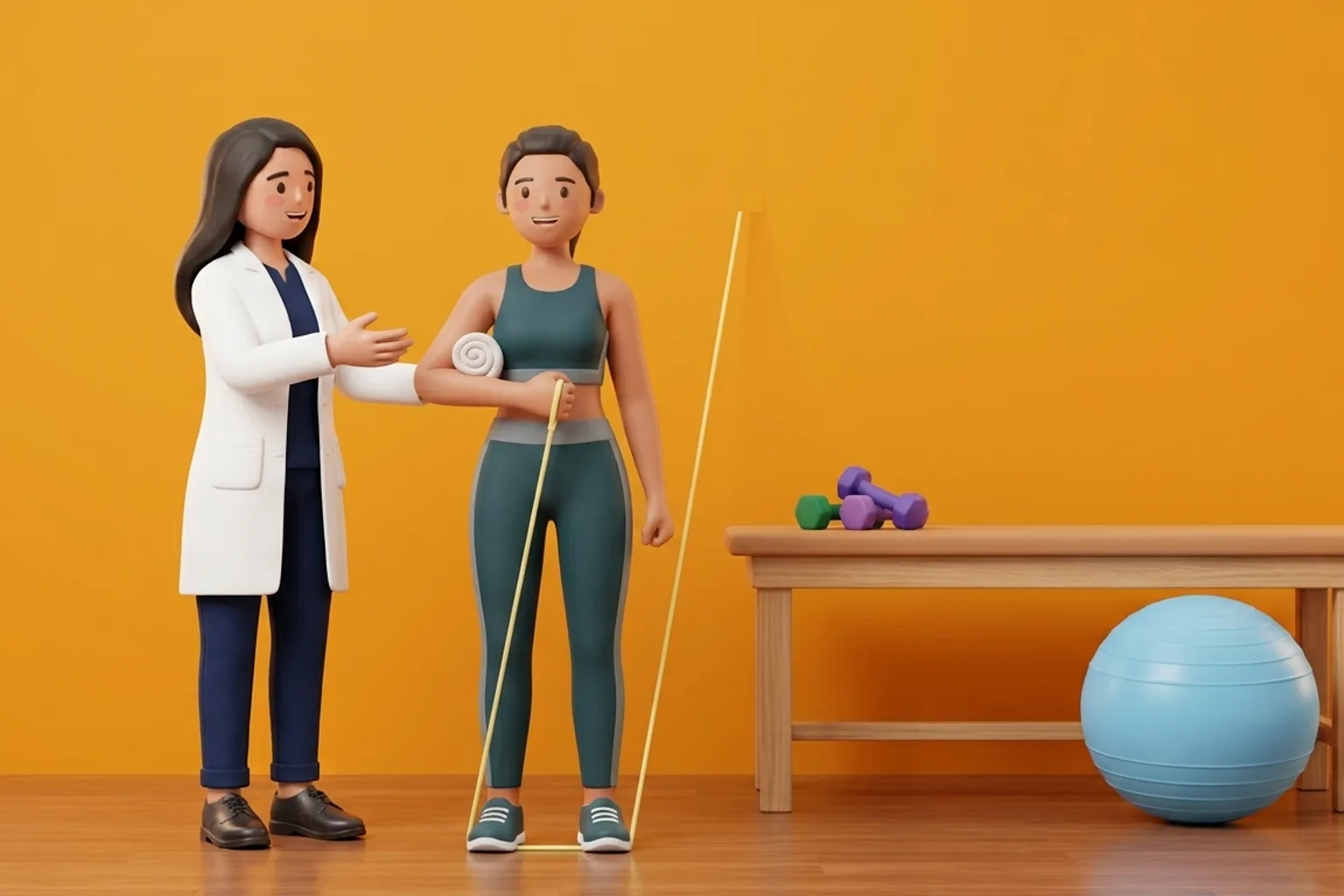
- 1Phase 1 (Pain-Relieving Isometric External Rotation): Stand with your affected elbow bent at 90 degrees, tucked against your side with a small rolled towel between your elbow and torso. Place the back of your wrist against a wall. Press outward into the wall at 40% effort without moving your arm. Hold for 30 seconds; complete 4 repetitions. Isometrics inhibit pain signaling and improve humeral depression.
- 2Phase 2 (Scaption Full Can Exercise): Stand holding a light 1 kg dumbbell or water bottle. Elevate your arm at a 30-degree forward angle (the scapular plane) with your thumb pointing upward (Full Can position, never thumb down). Lift up to shoulder height over 3 seconds, and slowly lower over 3 seconds. Complete 3 sets of 10 repetitions.
- 3Phase 3 (Serratus Anterior Wall Slides with Band): Place a mini resistance band around your wrists. Stand facing a wall with forearms pressed flat against it at shoulder width. Slowly slide your forearms upward along the wall, pushing your chest away from the wall to protract and upwardly rotate your shoulder blades. Complete 3 sets of 12 repetitions.
- 4Household Kitchen Ergonomic Adaptation: In Indian kitchens, avoid lifting heavy stainless steel kadais or pressure cookers with an outstretched arm. Keep the cookware close to your chest and use two hands to lift, eliminating long lever arm torque on the rotator cuff.
4. Surgery vs Conservative Care: Why Decompression Is Obsolete
Multiple high-quality double-blind clinical trials (including the UK CSAW trial published in The Lancet) have evaluated subacromial decompression surgery against placebo/sham surgery. The results were conclusive: surgically shaving the bone spur provided zero clinical advantage over diagnostic arthroscopy or structured physiotherapy.
Bone spurs on the acromion are an adaptive biological response to tensile traction from the coracoacromial ligament, not the primary cause of disease. Restoring muscle balance and tendon capacity through progressive loading resolves symptoms completely without the pain, expense, and downtime of surgery.
Frequently Asked Questions
What is the difference between rotator cuff tendinopathy and a full-thickness rotator cuff tear?
In rotator cuff tendinopathy, the tendon fibers are intact but degenerate, thickened, and painful under load, and the patient retains active ability to elevate the arm (even if painful). In a massive full-thickness tear, the tendon is physically detached from the bone, resulting in the Drop Arm Sign: when the arm is lifted passively and released, the patient cannot hold it up and it drops unassisted.
Should I get an MRI for my shoulder pain in India?
An MRI is rarely necessary during the initial evaluation of routine shoulder pain unless there is a history of high-energy trauma (such as a fall from a two-wheeler) or suspicion of a complete tendon rupture. Extensive studies reveal that over 50% of completely pain-free adults over age 50 show rotator cuff partial tears on MRI. Clinical movement examination by a skilled physiotherapist is far more predictive of treatment success.
How should I sleep if I have rotator cuff pain in my shoulder?
Never sleep directly on the painful shoulder. Sleep on your back with a small pillow under your elbow and forearm to keep the shoulder in neutral alignment, or sleep on your unaffected side while hugging a thick pillow across your chest to support the affected arm, preventing it from dropping across your body into adduction and stretching the inflamed tendon.
Can rotator cuff tendinopathy heal without cortisone injections?
Yes, over 80% to 85% of rotator cuff tendinopathy cases resolve completely with structured physiotherapy alone. While cortisone provides temporary pain relief, it carries risks of tendon weakening and collagen atrophy if repeated. Progressive Heavy Slow Resistance loading and scapular retraining provide lasting, durable recovery without medication risks.
How does BookPhysio.in assist patients recovering from rotator cuff pain?
BookPhysio.in connects individuals across India with verified musculoskeletal and shoulder physiotherapists specializing in rotator cuff rehabilitation, scapular movement retraining, and posture correction. Book clinic consultations or convenient home visits with transparent per-session pricing (₹400 to ₹1,500 clinic, ₹600 to ₹2,000 home visits) and zero platform commission.
Related condition guides
BookPhysio.in Editorial Team
The BookPhysio.in editorial team writes and maintains this content, checking it against reliable clinical sources. Content follows our medical review policy: general information only, and no page claims a clinical review until a named registered physiotherapist has signed it off.
Read our medical review policy