
Diaphragmatic Breathing vs Pursed-Lip Breathing in COPD: Biomechanics and Clinical Indications
In short
Breathing retraining transforms functional capacity in COPD. Learn the precise biomechanics of pursed-lip breathing, why diaphragmatic breathing can paradoxically worsen severe emphysema, and clinical indications.
In this guide (5 sections)
The Biomechanics of Respiratory Dysfunction in COPD
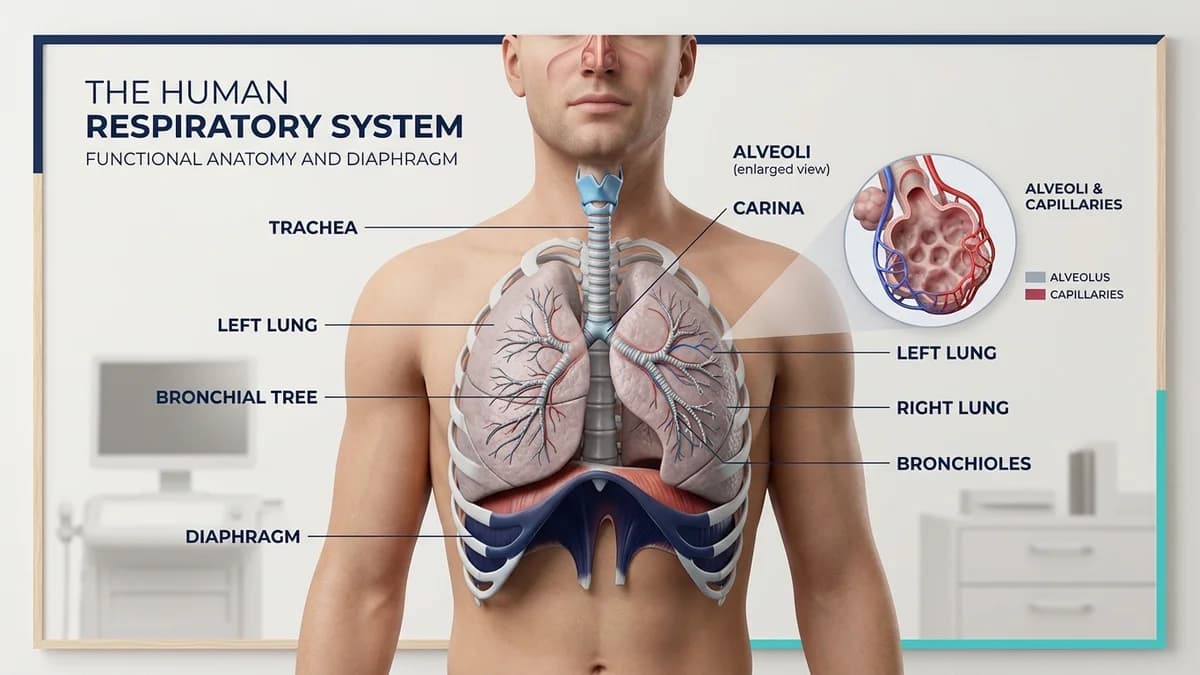
In healthy individuals, the diaphragm is a dome-shaped muscle that contracts downward during inspiration, generating negative intrathoracic pressure while expanding the lower rib cage laterally (bucket-handle movement).
In severe COPD, chronic air trapping and loss of lung elastic recoil lead to progressive pulmonary hyperinflation. The diaphragm is pushed downward and flattened, shortening its resting sarcomere length and blunting its force-generating capacity.
A flattened diaphragm pulls the lower rib cage inward during inspiration rather than outward (Hoover's sign), forcing the patient to recruit accessory neck muscles (sternocleidomastoid, scalenes), which markedly increases the work and metabolic cost of breathing.
Pursed-Lip Breathing: Biomechanics and Intrinsic PEEP
Pursed-Lip Breathing (PLB) is a simple, highly effective clinical technique naturally adopted by many patients experiencing acute respiratory distress.
By exhaling against the resistance of puckered lips, positive pressure is maintained throughout the bronchial tree during expiration, creating 3 to 5 cmH2O of intrinsic Positive End-Expiratory Pressure (PEEP).
| Breathing Technique | Primary Biomechanical Action | Impact on Airway Stability | Optimal Clinical Setting | |
|---|---|---|---|---|
| 1. Pursed-Lip Breathing (PLB) | Creates positive back-pressure during active exhalation | Prevents dynamic small airway collapse; prolongs exhalation | Acute dyspnea episodes, walking exertion, stairs climbing. | |
| 2. Diaphragmatic Breathing (DB) | Conscious outward abdominal displacement on inhalation | Improves basal ventilation in mild-to-moderate disease | Resting relaxation, mild COPD, early post-operative recovery. | |
| 3. DB in Severe Emphysema | Forced abdominal breathing against flattened diaphragm | Can paradoxically increase work of breathing and dyspnea | Contraindicated if patient displays marked dynamic hyperinflation. | |
| 4. Forward Lean (Tripod) | Resting arms on knees or table with trunk flexed forward | Mechanically pushes diaphragm back up into dome configuration | Immediate recovery posture following strenuous physical exertion. |
Step-by-Step Training Protocol for Pursed-Lip Breathing
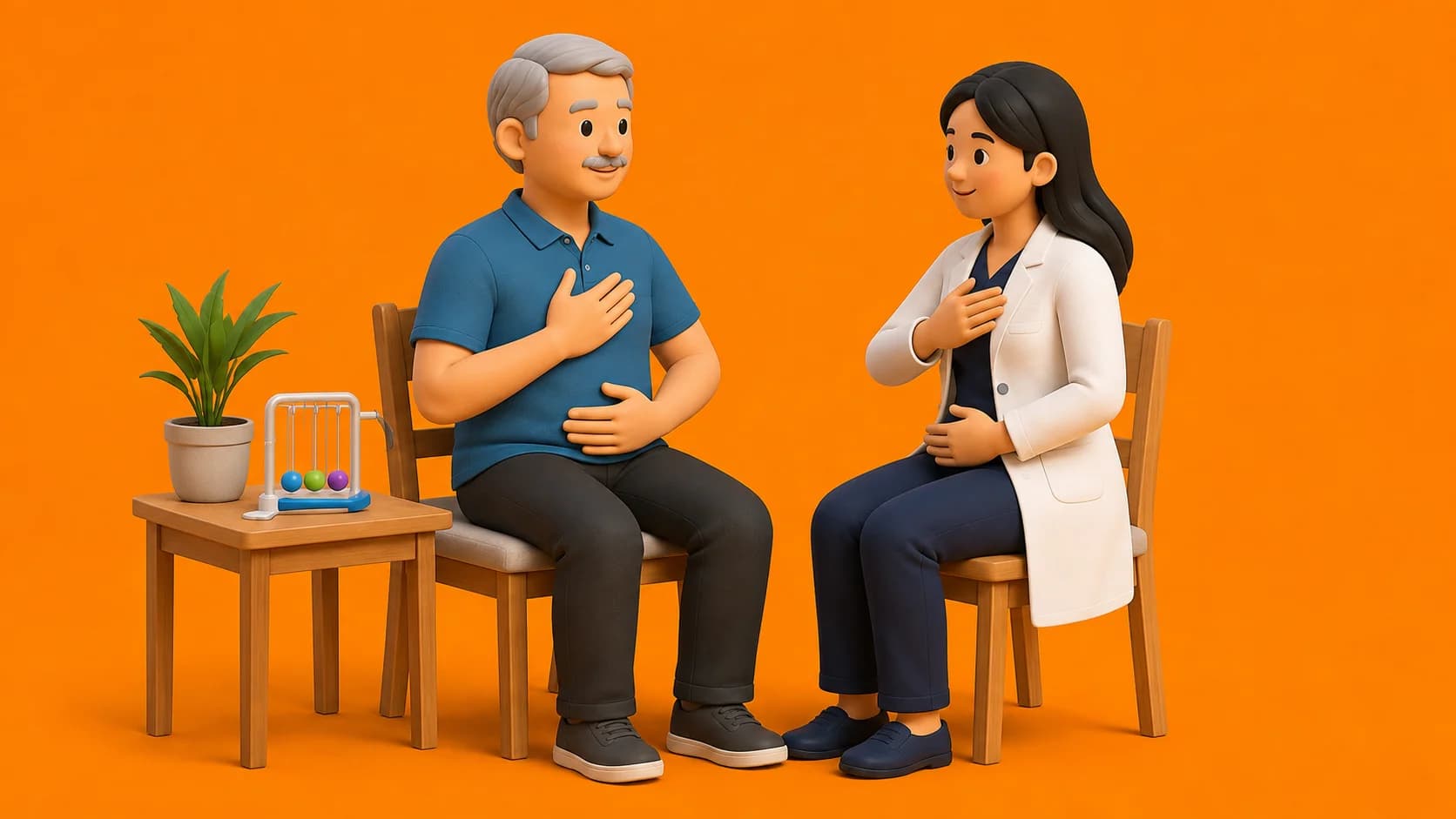
Proper execution of pursed-lip breathing requires conscious relaxation of the shoulder girdle and adherence to a strict 1:2 or 1:3 inspiratory-to-expiratory ratio.
- Relax the Shoulders and Neck: Drop shoulders away from the ears, placing hands loosely in the lap or supported on a armrest.
- Inhale Gently Through the Nose: Breathe in through the nose for a slow count of 2, keeping the mouth closed.
- Pucker Lips as if Whistling: Pucker lips as though blowing out a birthday candle or whistling, maintaining a small central opening.
- Exhale Smoothly Without Forcing: Exhale gently and smoothly through puckered lips for a count of 4 or 6, never forcefully squeezing abdominal muscles.
Clinical Caution: When Diaphragmatic Breathing Fails
Landmark studies by Gosselink and colleagues demonstrated that in patients with severe emphysema (GOLD Stage 3 and 4), instructing the patient to perform deep diaphragmatic breathing often worsens asynchrony between the rib cage and abdomen, increasing dyspnea.
Physiotherapists assess rib cage motion before prescribing diaphragmatic breathing; if Hoover sign is positive, training focuses exclusively on pursed-lip breathing and energy conservation.
Frequently Asked Questions
Why does leaning forward (tripod position) make breathing easier in COPD?
Leaning forward pushes abdominal viscera upward against the flattened diaphragm, restoring its curved dome configuration. This improves length-tension relationships and increases diaphragmatic excursion during breathing.
How long should pursed-lip exhalation take compared to inhalation?
Exhalation should take approximately twice as long as inhalation (a 1:2 ratio, such as 2 seconds in, 4 seconds out) to allow trapped alveolar air sufficient time to exit before the next breath begins.
Can pursed-lip breathing increase oxygen saturation?
Yes. By improving alveolar ventilation, reducing respiratory rate, and clearing trapped carbon dioxide, pursed-lip breathing frequently raises SpO2 by 2 to 4 percent during active dyspnea episodes.
Related condition guides

Related recovery guides & articles
BookPhysio.in Editorial Team
The BookPhysio.in editorial team writes and maintains this content, checking it against reliable clinical sources. Content follows our medical review policy: general information only, and no page claims a clinical review until a named registered physiotherapist has signed it off.
Read our medical review policy