
Ventilator Weaning and Spontaneous Breathing Trials: The Rapid Shallow Breathing Index (RSBI)
In short
Up to 30 percent of intensive care patients encounter difficult or prolonged ventilator weaning. Learn the Tobin RSBI index, spontaneous breathing trials, and diaphragmatic fatigue signs.

In this guide (5 sections)
The Critical Challenge of Ventilator Weaning
Mechanical ventilation is an essential life-support modality during acute respiratory failure, but prolonged intubation carries high risks of ventilator-associated pneumonia (VAP), tracheal stenosis, and diaphragmatic muscle atrophy (VIDD).
Ventilator weaning is the process of decreasing ventilator support and transferring the work of breathing back to the patient. It accounts for more than 40 percent of total mechanical ventilation duration.
Premature extubation results in acute respiratory collapse, emergency re-intubation, and an eight-fold increase in hospital mortality; conversely, delayed weaning unnecessarily prolongs ICU stay and multiplies complications.
The Rapid Shallow Breathing Index (RSBI / Tobin Index)
Introduced by Martin Tobin and colleagues in 1991, the Rapid Shallow Breathing Index (RSBI) remains the most widely validated and utilized bedside weaning predictor.
RSBI quantifies the ratio of respiratory frequency (f) to tidal volume in liters (Vt): RSBI = f (breaths/min) / Vt (Liters). When a patient breathes rapidly and shallowly, the index surges, signaling impending respiratory pump exhaustion.
| Weaning Metric | Clinical Measurement Method | Successful Weaning Threshold | Failure / High-Risk Cut-Off | |
|---|---|---|---|---|
| 1. RSBI (Tobin Index) | f / Vt measured on room air / CPAP after 1 min | RSBI < 105 breaths/min/L | RSBI > 105 (predicts 95% weaning failure) | |
| 2. Maximal Inspiratory Pressure | PImax against occluded one-way valve | PImax < -30 cmH2O (more negative) | PImax > -20 cmH2O (severe muscle weakness) | |
| 3. Spontaneous Tidal Volume | Exhaled volume measured via Wright spirometer | Vt > 5 mL/kg of ideal body weight | Vt < 4 mL/kg (inadequate alveolar ventilation) | |
| 4. Arterial Blood Gas (ABG) | pH, PaCO2, and PaO2/FiO2 ratio | pH 7.35-7.45; PaO2/FiO2 > 150-200 with PEEP <= 8 | Severe respiratory acidosis (pH < 7.30, PaCO2 > 50) |
Conducting the Spontaneous Breathing Trial (SBT)
A Spontaneous Breathing Trial (SBT) is the clinical stress test for extubation readiness. The patient is placed on minimal support (either a T-piece circuit or low pressure support of 5 to 7 cmH2O with PEEP of 0 to 5 cmH2O) for 30 to 120 minutes.
- Initial Weaning Screen Readiness: Resolve initial underlying pathology; patient alert and cooperative; stable hemodynamics without high-dose vasopressors; adequate cough on suctioning.
- The 30-Minute Tolerance Test: Observe the patient continuously during the initial 30 minutes of unassisted breathing, monitoring for tachypnea or paradoxical breathing.
- Diaphragmatic Fatigue Signs: Inspect the abdomen: abdominal paradox (inward belly movement during inspiration) indicates acute diaphragmatic muscle exhaustion and dictates immediate SBT abort.
- The Airway Cuff Leak Test: Deflate the endotracheal cuff to verify audible airflow leak around the tube, ruling out acute laryngeal edema and post-extubation stridor.
Post-Extubation Physiotherapy Management
Following successful extubation, the first 24 to 48 hours are critical. The patient upper airway is edematous, vocal cords are sluggish, and cough clearance is weak.
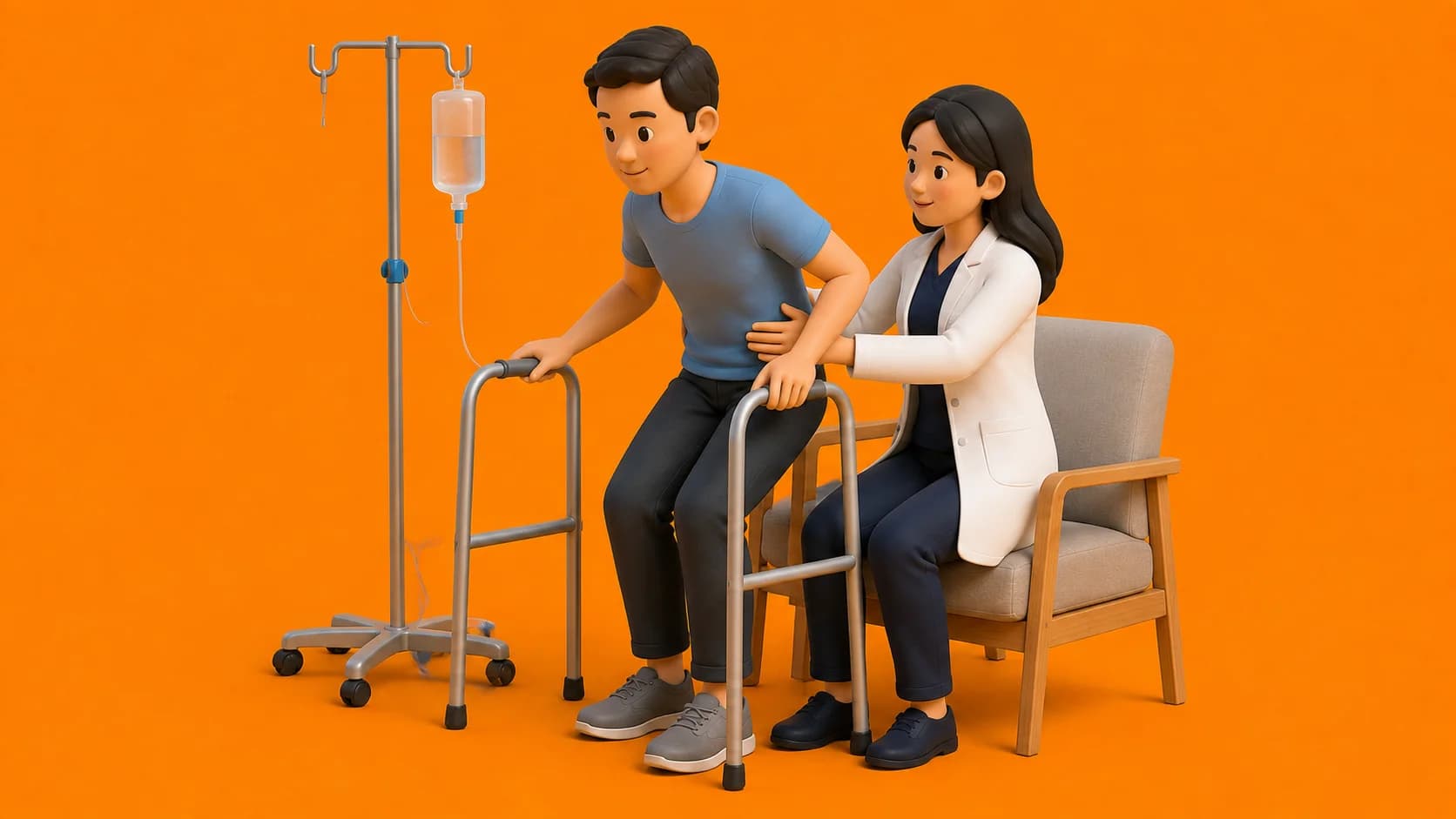
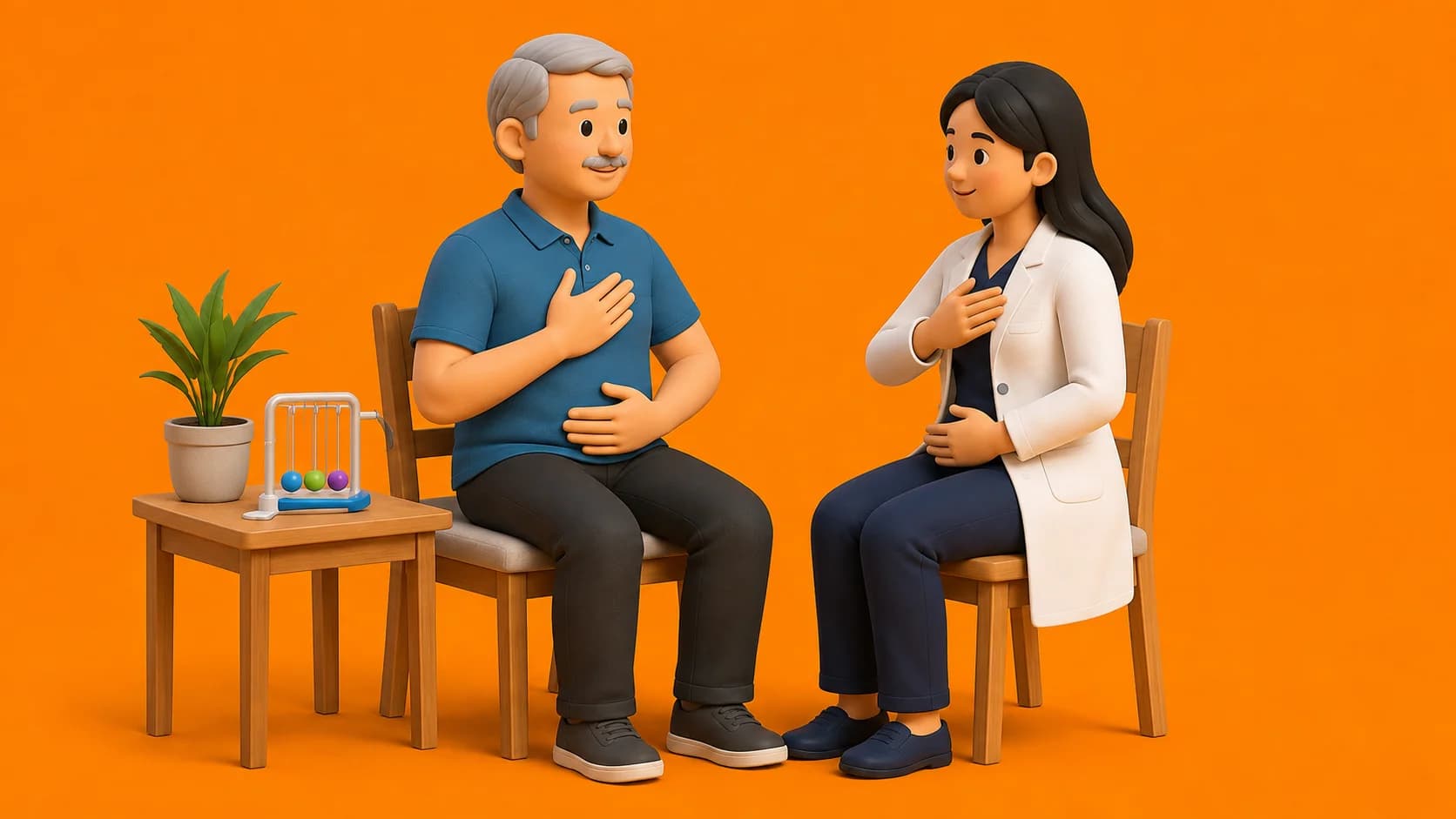
ICU physiotherapists immediately initiate upright positioning (60 to 90 degrees), incentive spirometry, gentle suctioning, and High-Flow Nasal Cannula (HFNC) or non-invasive ventilation (NIV) to prevent post-extubation atelectasis and re-intubation.
Frequently Asked Questions
What does an RSBI score above 105 mean?
An RSBI greater than 105 breaths/min/liter indicates rapid, shallow breathing, meaning the respiratory muscles are fatigued and cannot sustain independent breathing. Over 95 percent of patients with RSBI > 105 fail extubation.
How long should a spontaneous breathing trial last?
Clinical trials demonstrate that a 30-minute SBT is just as effective and reliable as a 120-minute trial for predicting successful extubation, avoiding unnecessary patient fatigue.
Why is the cuff leak test performed before removing the breathing tube?
The cuff leak test verifies that air can flow freely around the deflated tube. An absent cuff leak indicates laryngeal swelling (edema), which could cause fatal upper airway closure upon extubation.
Related condition guides
Related recovery guides & articles
BookPhysio.in Editorial Team
The BookPhysio.in editorial team writes and maintains this content, checking it against reliable clinical sources. Content follows our medical review policy: general information only, and no page claims a clinical review until a named registered physiotherapist has signed it off.
Read our medical review policy