
Empty Can and Full Can tests for supraspinatus tears: procedure, electromyography, and interpretation
In short
The supraspinatus initiates shoulder abduction and stabilizes the humeral head into the glenoid socket. When assessing rotator cuff pathology, clinicians choose between the classic Empty Can (Jobe) test and the Full Can test. Review the mechanics, accuracy, electromyographic evidence, and corrective exercise protocols.
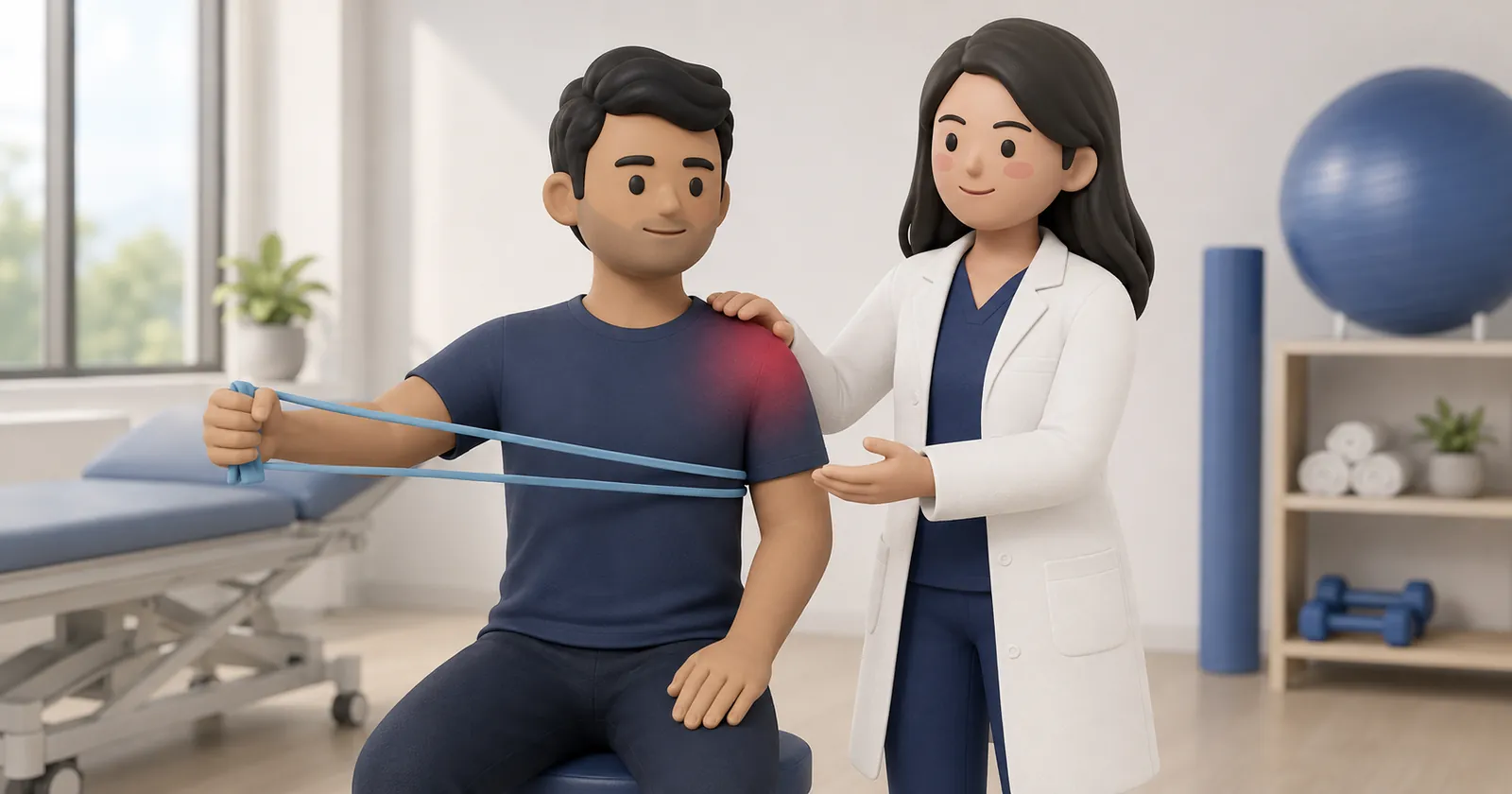
In this guide (7 sections)
Functional anatomy of the supraspinatus and scapular plane mechanics
The supraspinatus muscle arises from the supraspinous fossa of the scapula and passes beneath the acromion process to insert onto the superior facet of the humeral greater tuberosity. Its mechanical role is essential: it acts as a dynamic force couple with the deltoid, compressing the humeral head firmly against the concave glenoid fossa to prevent superior humeral migration during elevation.
Because the scapula rests angled approximately 30 degrees anterior to the coronal plane of the thorax, true functional abduction occurs in this scapular plane (scaption). Testing outside the scapular plane strains the anterior capsule or pinches the posterior cuff, producing misleading clinical findings.
The Jobe Empty Can Test vs The Full Can Test
First described by Frank Jobe in 1982, the Empty Can test became the most widespread clinical exam for the supraspinatus. However, modern electromyographic (EMG) studies have reshaped clinical protocols.
| Parameter | Empty Can (Jobe) Test | Full Can Test | |
|---|---|---|---|
| Arm Elevation Angle | 90 degrees of elevation in the scapular plane (30 degrees anterior to coronal plane). | 90 degrees of elevation in the scapular plane (30 degrees anterior to coronal plane). | |
| Rotational Orientation | Full internal rotation with thumb pointing straight down toward the floor (empty can position). | 45 degrees of external rotation with thumb pointing upward toward the ceiling (full can position). | |
| Examiner Force | Downward pressure applied to the distal forearm while patient attempts to resist. | Downward pressure applied to the distal forearm while patient attempts to resist. | |
| Subacromial Clearance | Significantly reduced. Rotates greater tuberosity under the anterior acromion, mechanically pinching the subacromial bursa. | Maximized. Rotates greater tuberosity away from the coracoacromial arch, creating open subacromial space. | |
| Electromyographic (EMG) Specificity | High supraspinatus activation, but also triggers high middle deltoid co-contraction. | Equal supraspinatus activation with significantly lower deltoid activation and minimal bursal pain. |
Electromyographic research by Kelly and colleagues in the American Journal of Sports Medicine demonstrated that the Full Can test produces identical supraspinatus motor unit firing as the Empty Can, but without triggering severe subacromial bursitis pain. Clinicians should use the Full Can first to test true muscle strength rather than provoking false weakness caused by pain inhibition.
Interpreting clinical results: pain vs true structural weakness
When conducting can tests, examiners must distinguish between pain alone, pain-induced weakness, and true structural muscle failure.
- Grade 1: Isolated Pain with Normal Strength: Patient holds position against firm resistance but reports localized subacromial pain. Indicates supraspinatus tendinopathy or subacromial bursitis without macroscopic tendon discontinuity.
- Grade 2: Pain-Inhibited Cogwheel Weakness: Patient starts resisting but gives way intermittently with sharp pain. Common in partial-thickness articular or bursal-sided cuff tears.
- Grade 3: Painless or Severe Drop (True Rupture): Patient is completely incapable of holding the arm at 90 degrees against gravity or minimal downward resistance, often dropping the limb immediately. Diagnostic of a large or massive full-thickness supraspinatus tear.
Diagnostic accuracy: sensitivity, specificity, and multi-test clusters
Systematic reviews published in the Journal of Shoulder and Elbow Surgery indicate that neither test should be used in isolation:
| Clinical Test | Sensitivity for Tears | Specificity for Tears | Primary Diagnostic Utility | |
|---|---|---|---|---|
| Empty Can Test | 69% to 89% | 50% to 68% | High sensitivity for screening, but low specificity due to false-positive pain from subacromial bursitis. | |
| Full Can Test | 66% to 80% | 74% to 88% | Higher specificity than Empty Can because it isolates true structural weakness from impingement pain. | |
| Drop Arm Test | 27% to 35% | 92% to 98% | Low sensitivity, but virtually confirms massive full-thickness tear when positive. | |
| Composite Rotator Cuff Cluster | 88% | 90% | When Full Can weakness, positive Hawkins-Kennedy, and external rotation lag sign are present simultaneously, tear likelihood exceeds 90%. |
Targeted physiotherapy for supraspinatus tendinopathy
Conservative management focuses on restoring glenohumeral stability and rebuilding tendon load tolerance through progressive loading.
- Isometric Scaption Holds: Perform pain-free submaximal isometric elevation at 30 to 45 degrees in the scapular plane against a wall for 30 to 45 seconds to induce tendon analgesia.
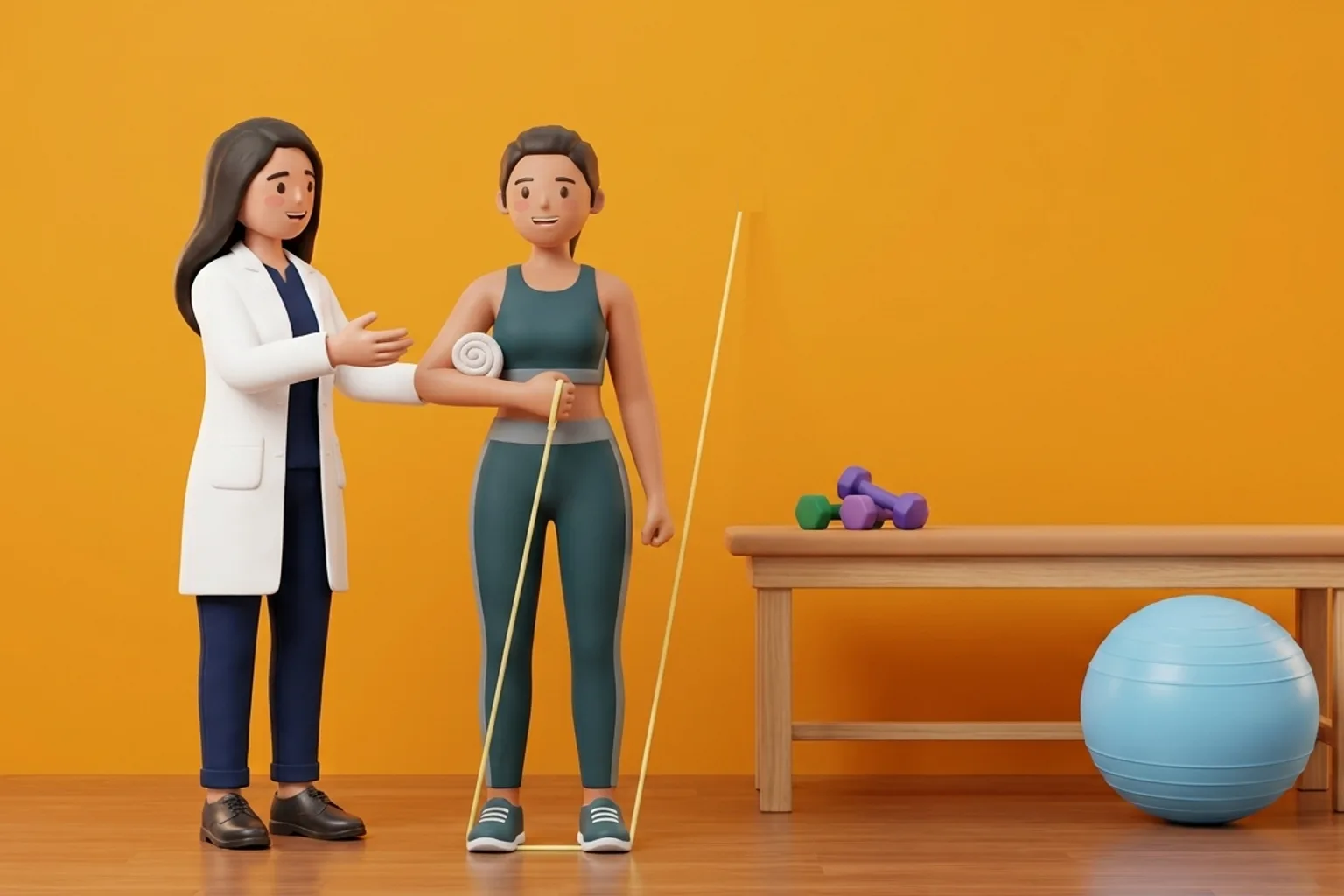
- Sidelying External Rotation: Lying on the unaffected side with a folded towel under the armpit, rotate the light dumbbell upward. Strengthening the infraspinatus and teres minor unloads the supraspinatus by depressing the humeral head.
- Scapular Stabilization Protocols: Incorporate prone horizontal abduction and serratus anterior wall slides to prevent anterior scapular tilt during arm elevation.
Frequently asked clinical questions
Can an Empty Can test be positive without a rotator cuff tear?
Yes. The internally rotated Empty Can position mechanically pinches the subacromial bursa against the acromion. Patients with subacromial bursitis, calcific tendinitis, or AC joint arthritis frequently experience sharp pain and reflex weakness even when the supraspinatus tendon is structurally intact.
Why should you test both arms during the Full Can test?
Bilateral comparison is essential to establish the patient normal baseline strength. A patient with dominant arm weakness compared to their non-dominant side has a much higher likelihood of structural cuff pathology than someone with symmetrical mild weakness.
Evidence sources and clinical references
- American Journal of Sports Medicine: Electromyographic analysis of the supraspinatus during Full Can and Empty Can testing: https://ajsm.sagepub.com
- Journal of Shoulder and Elbow Surgery: Accuracy of clinical diagnostic tests for rotator cuff tears: https://jshoulderelbow.org
- Indian Association of Physiotherapists: Clinical Standards for Shoulder Rehabilitation: https://physiotherapyindia.org
Related condition guides

Related recovery guides & articles
BookPhysio.in Editorial Team
The BookPhysio.in editorial team writes and maintains this content, checking it against reliable clinical sources. Content follows our medical review policy: general information only, and no page claims a clinical review until a named registered physiotherapist has signed it off.
Read our medical review policy