
Hip Scour Test (Quadrant Test): Acetabular Labral and Articular Cartilage Guide
In short
Anterior groin clicking and deep hip ache frequently arise from acetabular labral tears or early cartilage wear. Learn how the Hip Scour test evaluates the full circumference of the acetabulum.
In this guide (8 sections)
Biomechanics of the Hip Scour Test
The hip joint is a ball-and-socket joint encased in a thick fibrocartilaginous labrum. The Hip Scour test, or Quadrant test, sweeps the femoral head across the anterior, superior, and posterior quadrants of the acetabular rim while applying axial joint compression.
It is a provocative clearance test that detects labral tears, loose bodies, capsular impingement, and articular cartilage degeneration.
How to Perform the Hip Scour Test
The patient lies supine with both legs extended:
- Initial Position: The clinician passively flexes the patient hip to 90 degrees with the knee flexed.
- Axial Compression: The clinician applies a downward axial load along the long axis of the femur toward the plinth.
- Circumferential Sweeping Arc: Maintaining axial compression, the clinician moves the hip in an arc from full internal rotation and adduction across into full external rotation and abduction.
- Positive Findings: Reproduction of sharp groin pain, mechanical clicking, catching, or irregular roughness (grating) during the circular sweep.
Interpreting Hip Scour Pain Locations
Pain elicited during the adduction quadrant suggests anterior labral or femoroacetabular impingement. Rough crepitus through the entire arc indicates advanced articular cartilage loss and hip osteoarthritis.
Diagnostic Performance Table
| Hip Maneuver | Sensitivity | Specificity | Diagnostic Value | |
|---|---|---|---|---|
| Hip Scour Test | 62 to 91 percent | 43 to 75 percent | Broad screening test; rules out intra-articular hip pathology when negative | |
| FADIR Test | 94 to 99 percent | 10 to 25 percent | Highly sensitive for anterior labral tears | |
| FABER Test | 82 percent | 57 percent | Distinguishes hip intra-articular pain from sacroiliac pain |
Frequently Asked Questions
What is the C-Sign in hip pathology?
When asked where their hip hurts, patients with intra-articular labral tears or hip osteoarthritis frequently cup their hand in a C-shape above the greater trochanter, with fingers on the groin and thumb on the posterior buttock.
Can hip scouring aggravate acute hip bursitis?
Yes. If a patient has severe trochanteric bursitis, extreme adduction during the scour can provoke superficial lateral pain. The clinician must verify whether the pain is deep groin discomfort or superficial lateral hip pain.
Chondrolabral Junction Mechanics and Articular Stress
The hip scour test sweeps the femoral head across the anterior, superior and posterior acetabular labrum while applying axial compression. In patients with osteoarthritis or labral delamination, this test produces sharp pain and audible or palpable crepitation as raw articular surfaces grind together.
Hip Joint Preservation and Deep Gluteal Loading
Rehabilitation focuses on strengthening the deep hip external rotators (gemelli, obturator internus, quadratus femoris) and gluteus medius. Controlled closed-chain stepping and clamshells improve femoral head centring within the acetabulum, relieving anterior rim impingement.
Indian Floor Sitting and Squatting Modifications
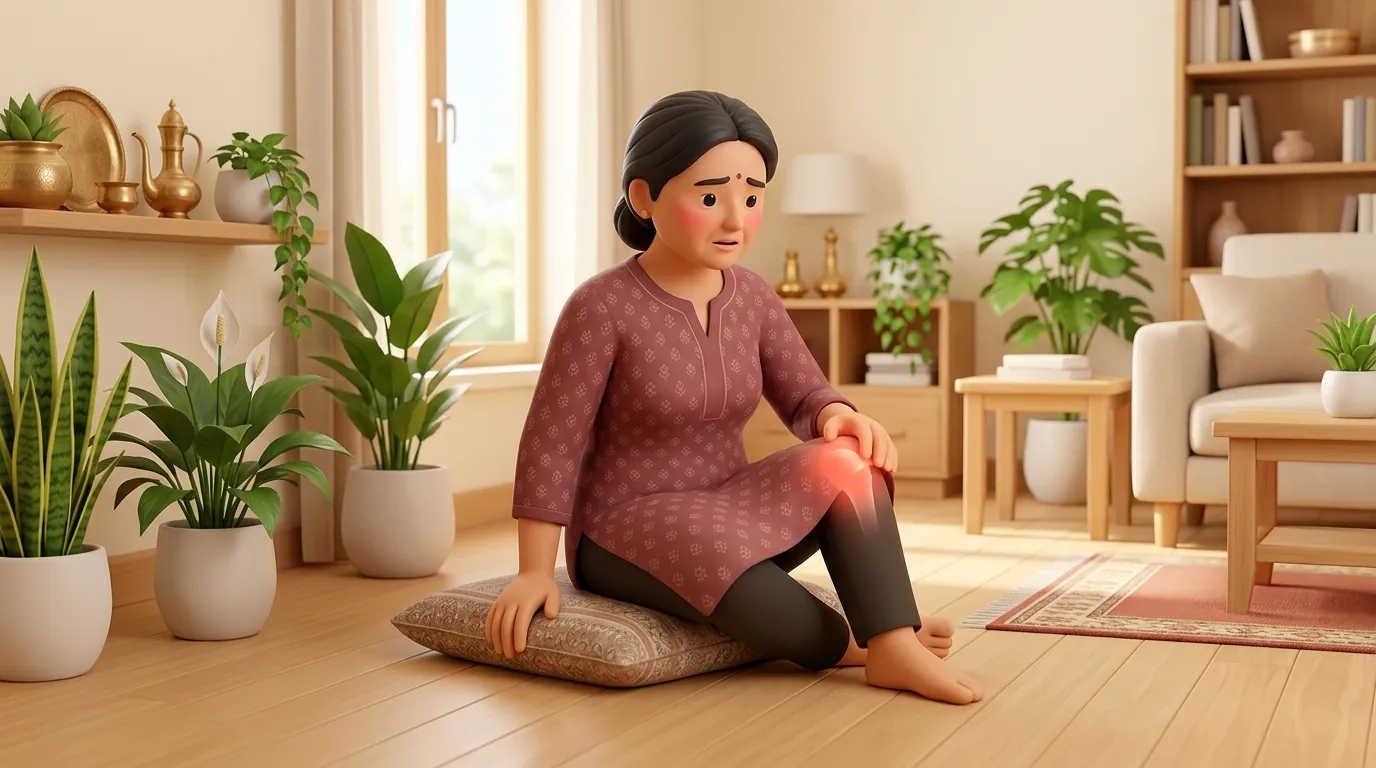
Deep squatting for traditional chores or sitting cross-legged (Sukhasana) on the floor forces the hip into extreme flexion and internal rotation. Elevating seating onto a wooden chowki or firm cushion reduces hip flexion angles below 90 degrees, preventing joint impingement.
Related condition guides


Related recovery guides & articles
BookPhysio.in Editorial Team
The BookPhysio.in editorial team writes and maintains this content, checking it against reliable clinical sources. Content follows our medical review policy: general information only, and no page claims a clinical review until a named registered physiotherapist has signed it off.
Read our medical review policy