
Knee osteoarthritis and floor sitting in India: what the evidence actually says
In short
Floor sitting, deep squatting, and getting up from the floor can be difficult for people with knee osteoarthritis because these tasks demand substantial knee movement and load. That functional difficulty should not be turned into a claim that Indian-style floor activities caused the arthritis. Observational research cannot establish that causal conclusion.
In this guide (6 sections)
Floor sitting, deep squatting, and getting up from the floor can be difficult for people with knee osteoarthritis because these tasks demand substantial knee movement and load. That functional difficulty should not be turned into a claim that Indian-style floor activities caused the arthritis. Observational research cannot establish that causal conclusion.
This article corrects a common internet mistake. An Indian community study has sometimes been cited to imply that Indian-style toilet use predicts knee osteoarthritis. In that study, observed osteoarthritis prevalence was actually higher among Western-toilet users, and the authors warned that the association could reflect people changing toilet type because knee symptoms made squatting difficult. That is a classic reverse-causation problem.
Separate "this hurts" from "this caused my arthritis"
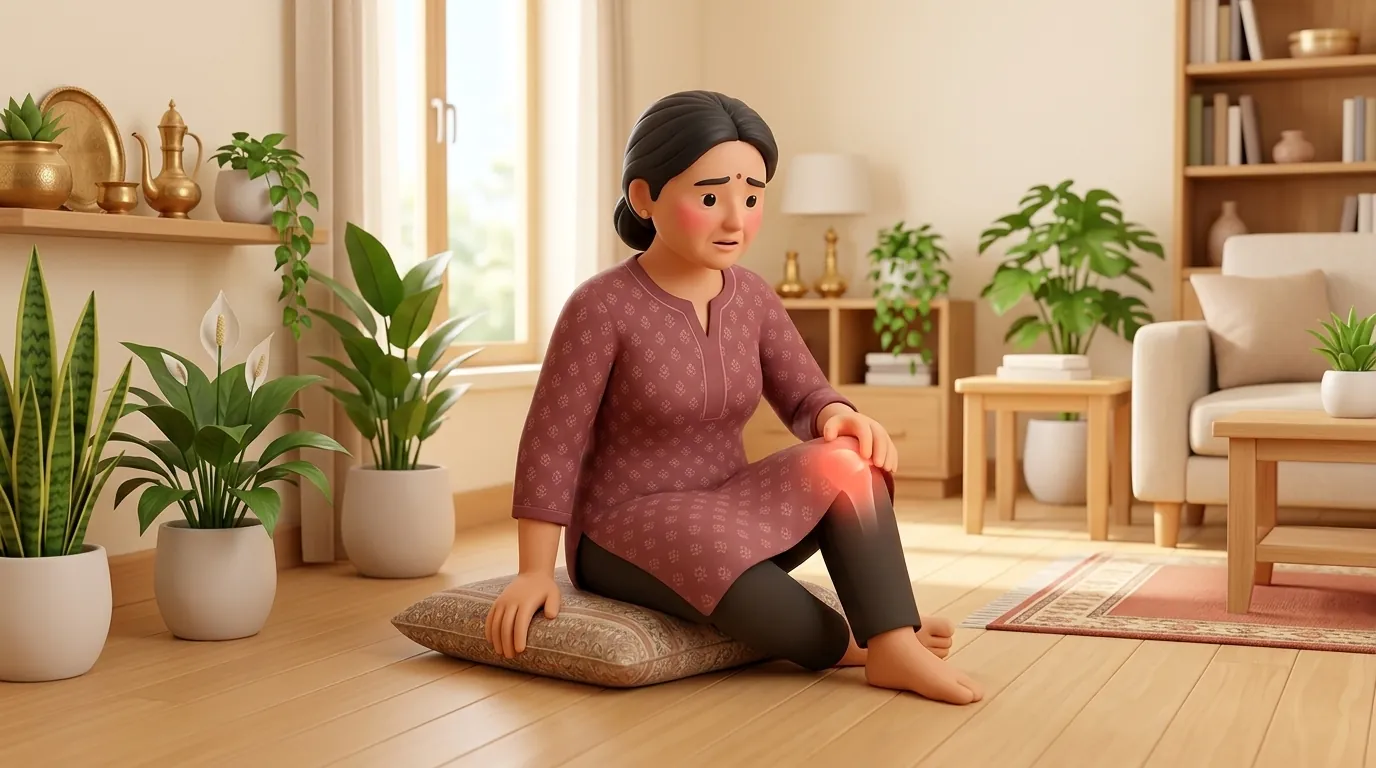
A person with knee osteoarthritis may struggle with squatting, floor sitting, stairs, or getting up from the ground. Those limitations are clinically relevant because they affect daily life. They do not prove that the activity created the osteoarthritis in the first place.
Osteoarthritis is influenced by multiple factors. Avoid blaming one culturally common activity from a cross-sectional association.
What current osteoarthritis guidance emphasises
NICE guidance says management should be guided by symptoms and physical function. Core non-surgical care includes information and support, tailored therapeutic exercise, and weight management when appropriate. Exercise should be individualised rather than replaced by blanket rules to never bend the knee.
General guidance. Check with a physiotherapist for your situation.
How a physiotherapist can make the discussion practical
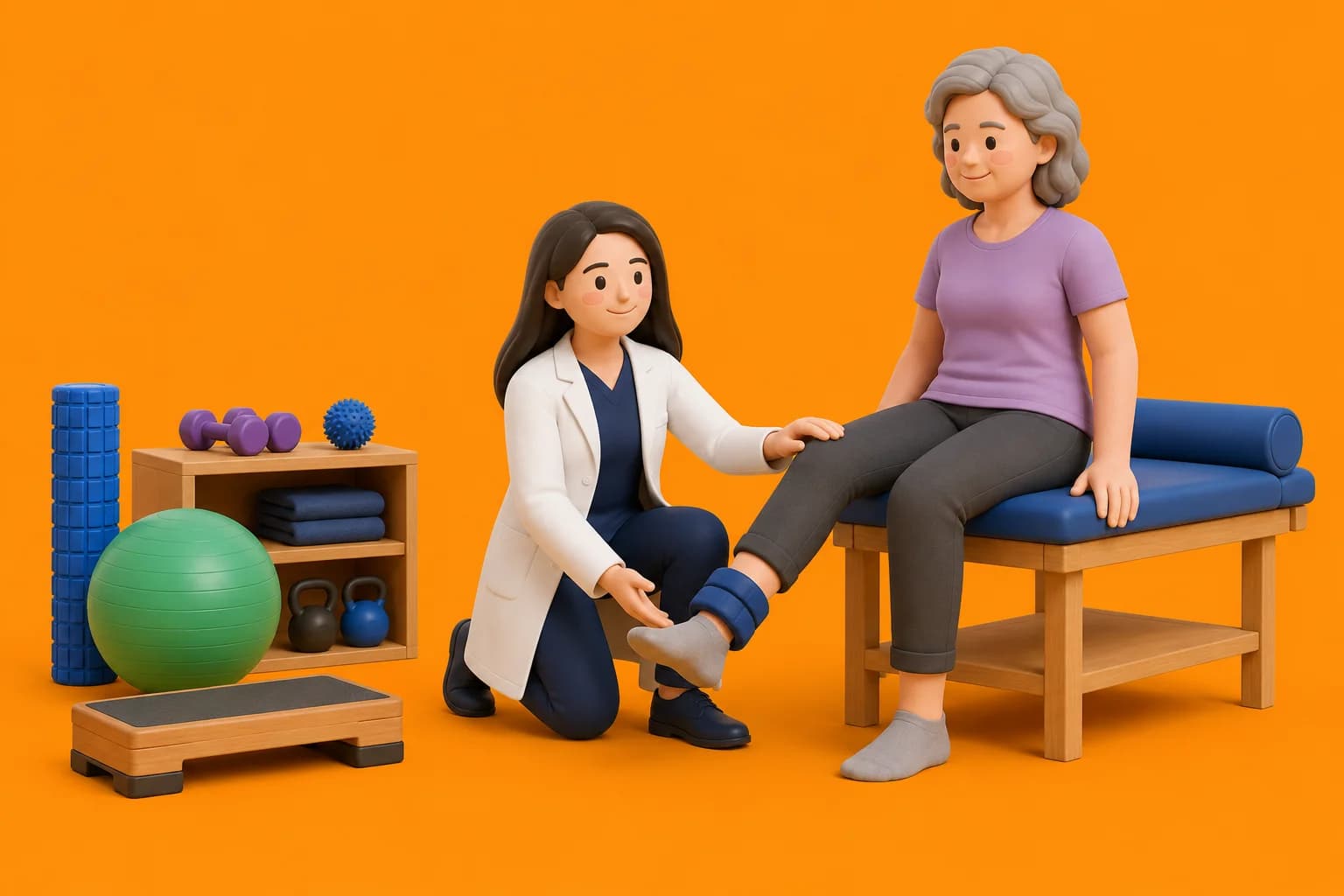
Tell the physiotherapist which floor-level tasks matter to you: eating on the floor, prayer positions, household work, playing with children, using a low toilet, or getting up after sitting. Assessment can then focus on the movement, strength, confidence, and adaptations relevant to your goals.
When knee pain needs another assessment
A diagnosis of osteoarthritis should not be assumed from age and knee pain alone. New major trauma, a locked knee, marked swelling with systemic illness, or symptoms that do not fit a routine osteoarthritis picture may need medical assessment. Imaging is not routinely required for every typical osteoarthritis presentation, but clinicians may use it when the diagnosis is uncertain or management may change.
For an emergency, call 112 or go to the nearest hospital.
Frequently asked questions
Does squatting cause knee osteoarthritis?
The evidence does not support a simple universal claim that squatting causes knee osteoarthritis. Associations can be affected by many other factors and reverse causation.
Should I stop sitting on the floor forever?
Not automatically. Discuss the specific task, symptoms, and goals with a physiotherapist rather than applying a lifetime ban from an article.
Does Indian toilet use cause knee OA?
The cited Indian observational study does not support that causal claim. In fact, OA prevalence was higher among Western-toilet users in that sample, and the authors cautioned that people with OA may have switched toilet type.
Can exercise help knee osteoarthritis?
Current guidelines support tailored therapeutic exercise as a core part of management for people with osteoarthritis, while the exact programme should be individualised.
If symptoms change fast, follow a major injury, or need urgent care, take the medical route rather than working from search results.
What to expect at a first sessionEvidence reviewed 20 August 2026. General information only.
Find a physiotherapist near you on BookPhysio.in.
Find a physiotherapistSources reviewed
Pal et al.: Indian knee osteoarthritis community study (opens in new tab) · NICE: Osteoarthritis in over 16s (opens in new tab)
Related condition guides


BookPhysio.in Editorial Team
The BookPhysio.in editorial team writes and maintains this content, checking it against reliable clinical sources. Content follows our medical review policy: general information only, and no page claims a clinical review until a named registered physiotherapist has signed it off.
Read our medical review policy