
Huntington's Disease: Chorea Management, UHDRS Staging and Seating Fall Prevention
In short
Huntington's disease causes involuntary choreic movements and severe balance deterioration. Learn UHDRS staging, core stabilization, adapted seating, and fall prevention protocols.
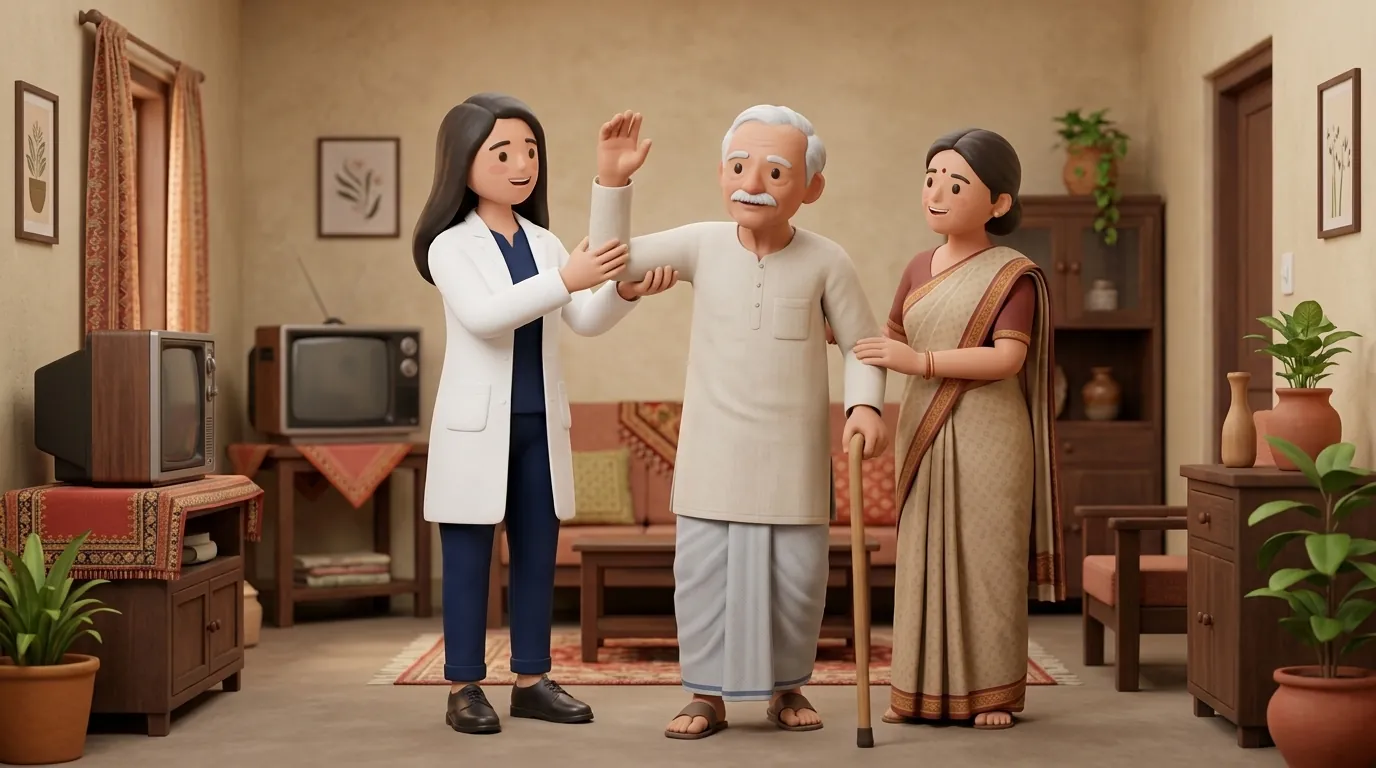
In this guide (5 sections)
The Genetics and Pathophysiology of Huntington's Disease
Huntington's Disease (HD) is an autosomal dominant, progressive neurodegenerative disorder caused by an expanded CAG trinucleotide repeat (> 36 repeats) in the huntingtin (HTT) gene on chromosome 4.
Mutant huntingtin protein causes selective, catastrophic degeneration of medium spiny GABAergic neurons in the striatum (caudate nucleus and putamen), disinhibiting the thalamus and producing the classic motor triad of chorea, dystonia, and severe postural instability.
Onset typically occurs between ages 35 and 50, with a clinical triad of motor impairment, progressive cognitive dementia, and psychiatric disturbances (depression, apathy, psychosis).
The Unified Huntington's Disease Rating Scale (UHDRS)
The UHDRS is the universally accepted clinical rating system evaluating motor, cognitive, behavioral, and functional capacity in HD.
| Disease Stage | Total Functional Capacity (TFC) | Clinical & Motor Presentation | Physiotherapy Rehabilitation Focus | |
|---|---|---|---|---|
| 1. Early Stage | TFC 11 to 13 points (Independent) | Mild chorea, minor fine motor clumsiness, executive dysfunction | Aerobic conditioning, dual-task balance, falls education. | |
| 2. Mid Stage | TFC 7 to 10 points (Partially Dependent) | Prominent chorea, dysmetria, dystonia, frequent falls, dysphagia | Gait re-education with 4-wheel rollator, core stability, home modifications. | |
| 3. Late Stage | TFC 0 to 6 points (Fully Dependent) | Severe chorea replaced by rigidity and bradykinesia; chairbound | Custom molded seating, contracture prevention, chest clearance, safe transfers. |
Physiotherapy Strategies for Choreic Involuntary Movements
Chorea consists of rapid, irregular, non-stereotyped, involuntary movements that flow unpredictably from one muscle group to another. In mid-stage HD, chorea destabilizes the center of mass, leading to devastating falls.
Physiotherapy focuses on axial core stabilization, weighted assistive devices, and environmental adaptation.
- Heavy 4-Wheeled Rollator with Handbrakes: Prescribe a sturdy, weighted rollator walker with forearm gutters. Lightweight walkers tip over easily when a sudden choreic jerk shifts body weight.
- Core and Trunk Resistance Training: Engage deep abdominal and paraspinal muscles with seated stability ball exercises, bridging, and bird-dog holds to anchor the torso.
- Rhythmic, Predictable Stepping Patterns: Practice stepping onto visual markers at a steady pace to overcome choreic step variability.
- Caloric Intake and Sarcopenia Prevention: Continuous involuntary choreic movements burn up to 4,000 to 5,000 calories daily, predisposing to profound muscle wasting; coordinate high-calorie, protein-dense nutrition.
Adapted Seating and Indian Home Safety
In late-stage HD, patients frequently slide, thrust, or fall out of standard chairs due to extensor choreic thrusts.
Physiotherapists prescribe customized contoured seating with tilt-in-space mechanisms, padded lateral trunk supports, and safety harness belts, ensuring the patient remains safely seated without skin breakdown.
Frequently Asked Questions
Can exercise stop or reduce chorea in Huntington's disease?
Exercise does not eliminate involuntary chorea, which is driven by striatal neurodegeneration. However, core strengthening and balance training significantly improve the patient ability to control their center of mass, reducing fall frequency.
Why does chorea turn into stiffness in late-stage Huntington's?
In early and mid stages, loss of indirect basal ganglia pathway neurons leads to chorea. In late stages, progressive degeneration spreads to the direct pathway as well, causing chorea to decline and be replaced by severe rigidity, dystonia, and bradykinesia.
Is Huntington's disease hereditary to all children?
Each child of an affected parent has a 50 percent (1 in 2) chance of inheriting the mutated HTT gene, as Huntington's is an autosomal dominant condition with complete penetrance.
Related condition guides


Related recovery guides & articles
BookPhysio.in Editorial Team
The BookPhysio.in editorial team writes and maintains this content, checking it against reliable clinical sources. Content follows our medical review policy: general information only, and no page claims a clinical review until a named registered physiotherapist has signed it off.
Read our medical review policy