
Interstitial Lung Disease (ILD) and Idiopathic Pulmonary Fibrosis (IPF): Pulmonary Rehabilitation Guide
In short
Restrictive lung diseases cause severe exertional breathlessness and rapid oxygen desaturation. Learn interval exercise training parameters, ambulatory oxygen pacing, and home care.
In this guide (5 sections)
Pathophysiology of Restrictive Lung Diseases
Interstitial Lung Disease (ILD) encompasses over 200 chronic, progressive parenchymal pulmonary disorders, with Idiopathic Pulmonary Fibrosis (IPF) representing the most lethal, progressive fibrosing variant.
In India, ILD is also widely caused by hypersensitivity pneumonitis (from pigeon droppings, cooler bird nests, and damp wall molds) and connective tissue diseases (rheumatoid arthritis, scleroderma).
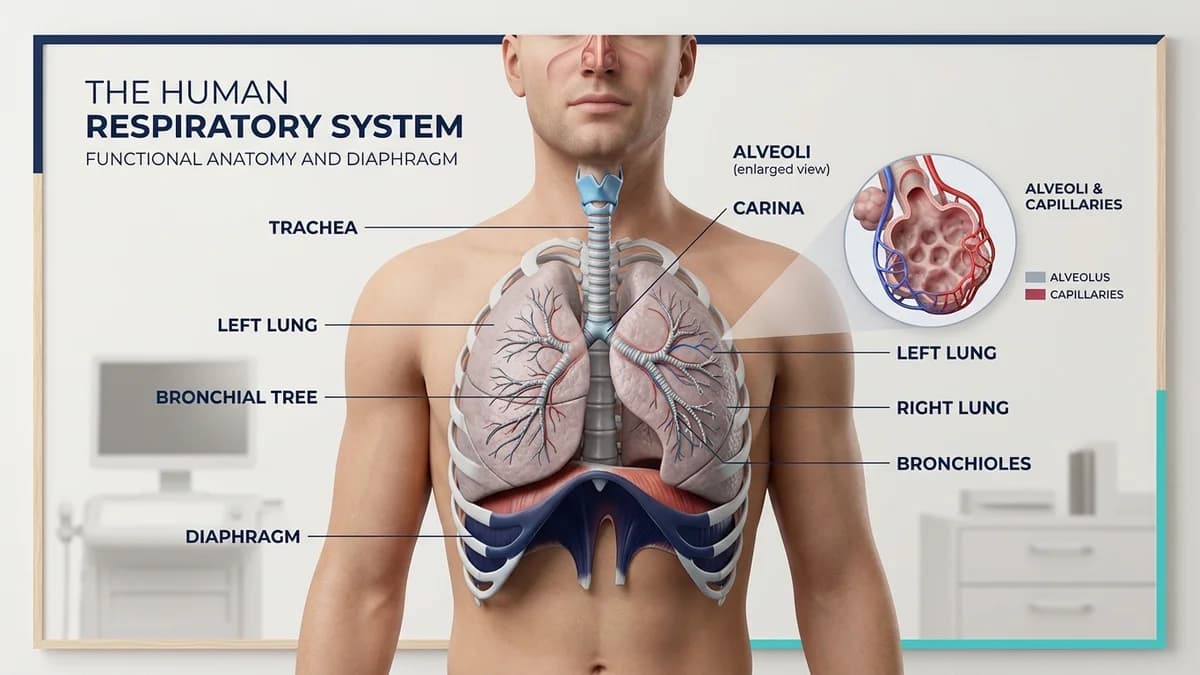
Pathologically, chronic fibrotic thickening of the alveolar interstitium drastically reduces lung compliance ('stiff lungs') and destroys the pulmonary capillary network. The work of breathing increases exponentially, and diffusing capacity (DLCO) collapses, causing marked exertional hypoxia.
Clinical Differences Between ILD and COPD
Understanding the physiological distinction between obstructive (COPD) and restrictive (ILD) lung disease is essential for designing appropriate rehabilitation programs.
| Physiological Parameter | Interstitial Lung Disease (ILD / IPF) | Chronic Obstructive Lung Disease (COPD) | Rehabilitation Implication | |
|---|---|---|---|---|
| 1. Spirometric Pattern | Reduced FVC; normal or elevated FEV1/FVC ratio | Reduced FEV1; low FEV1/FVC ratio (< 0.70) | Restrictive pattern: small, stiff lungs requiring higher breathing rates. | |
| 2. Desaturation Kinetics | Precipitous SpO2 drop within 60 to 90 seconds | Gradual desaturation over several minutes | Mandates strict interval exercise with frequent rest pauses. | |
| 3. Breathing Pattern | Rapid, shallow tachypnea (short inspiratory time) | Prolonged, labored active exhalation | Pursed-lip breathing less effective; focus on pacing and rhythm. | |
| 4. Cough Characteristics | Dry, paroxysmal, exhausting non-productive cough | Productive sputum cough with chronic mucus | Airway clearance rarely needed; focus on cough suppression. |
Interval Exercise Prescription and Oxygen Titration
Continuous high-intensity exercise is hazardous in ILD because alveolar-capillary transit time becomes too brief for oxygen diffusion, causing SpO2 to plummet below 80 percent.
Rehabilitation utilizes structured interval training, alternating short bouts of walking with seated recovery.
- The 2:2 Interval Walk Protocol: Walk at a steady, comfortable pace for 2 minutes, sit and rest for 2 minutes, repeating for 5 to 6 cycles to accumulate 10 to 12 minutes of training.
- Ambulatory Oxygen Flow Titration: Titrate high-flow nasal cannula oxygen (often 4 to 8 L/min) to maintain ambulatory SpO2 strictly at or above 90 percent throughout exertion.
- Peripheral Resistance Bands: Perform seated quadriceps, hamstring, and upper back resistance band exercises to build peripheral muscle strength without taxing ventilation.
- Cough Suppression Breathing Techniques: Teach diaphragmatic sniffing, sips of water, and gentle swallowing to abort exhausting paroxysmal coughing episodes triggered by dry air.
Domestic Triggers in Indian Households
Hypersensitivity pneumonitis is frequently exacerbated by pigeon nesting in air conditioning outdoor units, window balconies, and evaporative desert coolers with stagnant water.
Physiotherapists counsel families on professional pigeon netting installation, regular cooler cleaning, and keeping the home free of incense (agarbatti) smoke and mosquito coils.
Frequently Asked Questions
Can exercise improve lung scarring in pulmonary fibrosis?
Exercise cannot reverse established fibrotic scarring in lung tissue. However, pulmonary rehabilitation significantly improves peripheral muscle oxygen extraction, reduces breathlessness sensations, and increases functional walking distance.
Why does oxygen drop so fast in ILD compared to COPD?
The alveolar walls are thick and rigid with scar tissue. As heart rate increases during exercise, red blood cells rush through lung capillaries so fast that oxygen cannot diffuse across the dense scar barrier in time.
What is the 6-Minute Walk Test minimal clinically important difference (MCID) in IPF?
An improvement of 24 to 30 meters on the 6-Minute Walk Test is considered clinically meaningful and is associated with reduced hospitalization and mortality.
Related condition guides


Related recovery guides & articles
BookPhysio.in Editorial Team
The BookPhysio.in editorial team writes and maintains this content, checking it against reliable clinical sources. Content follows our medical review policy: general information only, and no page claims a clinical review until a named registered physiotherapist has signed it off.
Read our medical review policy