
Post-COVID Breathlessness and Long COVID: Pulmonary Rehabilitation and Pursed-Lip Breathing in India
In short
Persistent breathlessness when climbing stairs or walking after COVID-19 indicates respiratory deconditioning. Discover pulmonary physiotherapy and pursed-lip breathing.
In this guide (5 sections)
Years after the peak of the global pandemic, millions of Indian adults continue to live with the debilitating, long-term legacy of SARS-CoV-2 infection: clinically termed Post-COVID Syndrome or "Long COVID." Among the most persistent and distressing symptoms reported across post-viral clinics in Mumbai, Delhi, Bengaluru, and Chennai is unresolving breathlessness (dyspnea) on mild exertion. Previously active individuals find themselves gasping for air simply climbing a flight of stairs, carrying groceries, or taking a shower.
Crucially, in a massive proportion of these patients, standard high-resolution CT (HRCT) chest scans show that acute viral pneumonia and ground-glass opacities have largely cleared, and resting pulse oximeter readings display a reassuring 98% oxygen saturation. Yet the sensation of air hunger is profoundly real and terrifying. Long COVID breathlessness is driven by breathing pattern disorders (hyperventilation syndrome), diaphragmatic muscle weakness, autonomic dysregulation, and microvascular endothelial dysfunction. Clinical pulmonary rehabilitation provides the definitive cure.
1. Pathophysiology: Diaphragmatic Inhibition, Breathing Pattern Disorders, and Dysautonomia
During the acute phase of viral lung infection, systemic inflammation and prolonged coughing induce profound changes in respiratory mechanics. When breathing becomes painful or labored, the brain unconsciously down-regulates the primary respiratory muscle: the diaphragm. To maintain minute ventilation, the nervous system recruits accessory neck and chest muscles: the sternocleidomastoids, scalenes, and pectoralis minor.
Over weeks and months, this emergency pattern locks into a permanent Breathing Pattern Disorder (BPD) or Apical Hyperventilation Syndrome. Instead of slow, efficient 360-degree diaphragmatic expansion, patients breathe rapidly and shallowly into their upper chest (apical breathing) at 18 to 24 breaths per minute. This shallow apical breathing blows off excessive carbon dioxide (hypocapnia), which alters arterial blood pH and triggers systemic vasoconstriction: producing lightheadedness, chest tightness, tingling fingertips, and heightened panic.
Concurrently, SARS-CoV-2 frequently triggers Postural Orthostatic Tachycardia Syndrome (POTS) and autonomic nervous system dysregulation (dysautonomia). In dysautonomia, standing upright causes abnormal venous pooling in the lower extremities, triggering an excessive compensatory heart rate spike (> 30 bpm increase) that the patient interprets as acute breathlessness and cardiac distress. Pulmonary rehabilitation restores autonomic balance and diaphragmatic dominance.
| Respiratory Parameter | Normal Physiological Respiration | Post-COVID Breathing Pattern Disorder | Pulmonary Rehabilitation Objective |
|---|---|---|---|
| Primary Muscle Driver | Diaphragm (70-80% of quiet tidal volume) | Accessory neck & chest muscles (scalenes, SCM) | Re-train diaphragmatic excursion; down-train neck tension |
| Respiratory Rate & Pattern | 10 to 14 breaths per minute; nasal; smooth rhythm | 18 to 26 breaths per minute; frequent mouth breathing & sighs | Pursed-lip breathing; rhythmic 4-second in, 6-second out pacing |
| Chest & Abdominal Kinematics | 360-degree lower ribcage and abdominal expansion | Vertical upper chest heaving; paradoxical abdominal drawing-in | Lower costal expansion belts; manual basal ribcage mobilisation |
| Arterial Blood Gas Profile | Normal PaCO2 (35 to 45 mmHg); normal arterial pH | Chronic hypocapnia (PaCO2 < 35 mmHg); respiratory alkalosis | Restores normal arterial CO2 sensitivity and cerebral perfusion |
2. Indian Environmental Realities: Urban Air Pollution and Summer Heat
In Indian metropolitan centers, recovering from post-COVID respiratory symptoms is severely complicated by atmospheric environmental factors. Chronic exposure to elevated particulate matter (PM2.5 and PM10) from vehicle emissions, industrial dust, and seasonal agricultural crop burning causes ongoing bronchial hyper-reactivity and airway inflammation, continuously irritating recovering respiratory membranes.
Furthermore, the intense heat and humidity of Indian summers place heavy cardiovascular demands on patients with post-viral dysautonomia. Stepping from air-conditioned indoor rooms into 40-degree outdoor heat triggers immediate autonomic distress, heart rate spikes, and acute sensations of suffocation.
In domestic settings, traditional practices such as burning mosquito coils or dhoop/agarbatti inside poorly ventilated rooms release concentrated aromatic hydrocarbons that provoke bronchospasm and coughing spells. Pulmonary physiotherapy creates a clean indoor breathing sanctuary and equips patients with immediate recovery postures.
3. Three-Phase Pulmonary Rehabilitation and Breath Control Protocol
Three-Phase Post-COVID Pulmonary Rehabilitation Protocol
Objective: Restore diaphragmatic excursion, eliminate accessory muscle over-activation, and build graded exertional stamina.
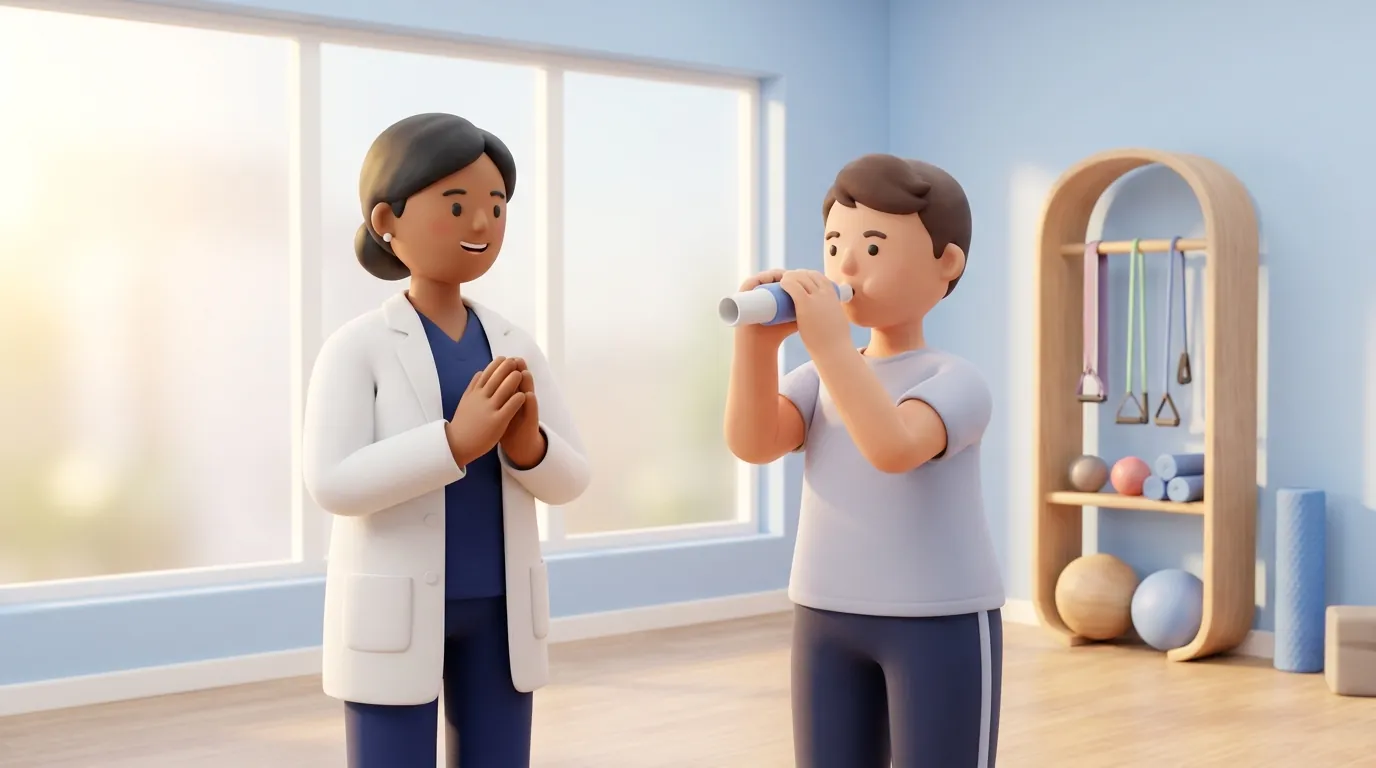
- 1Phase 1 (Pursed-Lip Breathing and Emergency Recovery Postures - Daily): When feeling breathless, immediately assume a recovery posture: 1. Forward Lean Sitting: sit in a chair, lean forward resting your forearms on your knees or on a table; this relaxes your shoulder girdle and fixes the accessory muscles so the diaphragm can work efficiently. 2. Pursed-Lip Breathing: inhale gently through your nose for a count of 2; purse your lips like gently blowing out a birthday candle; exhale smoothly and slowly for a count of 4. Never force the air out. Pursed-lip breathing creates positive back-pressure (PEEP) in the airways, keeping small bronchioles open and preventing dynamic airway collapse.
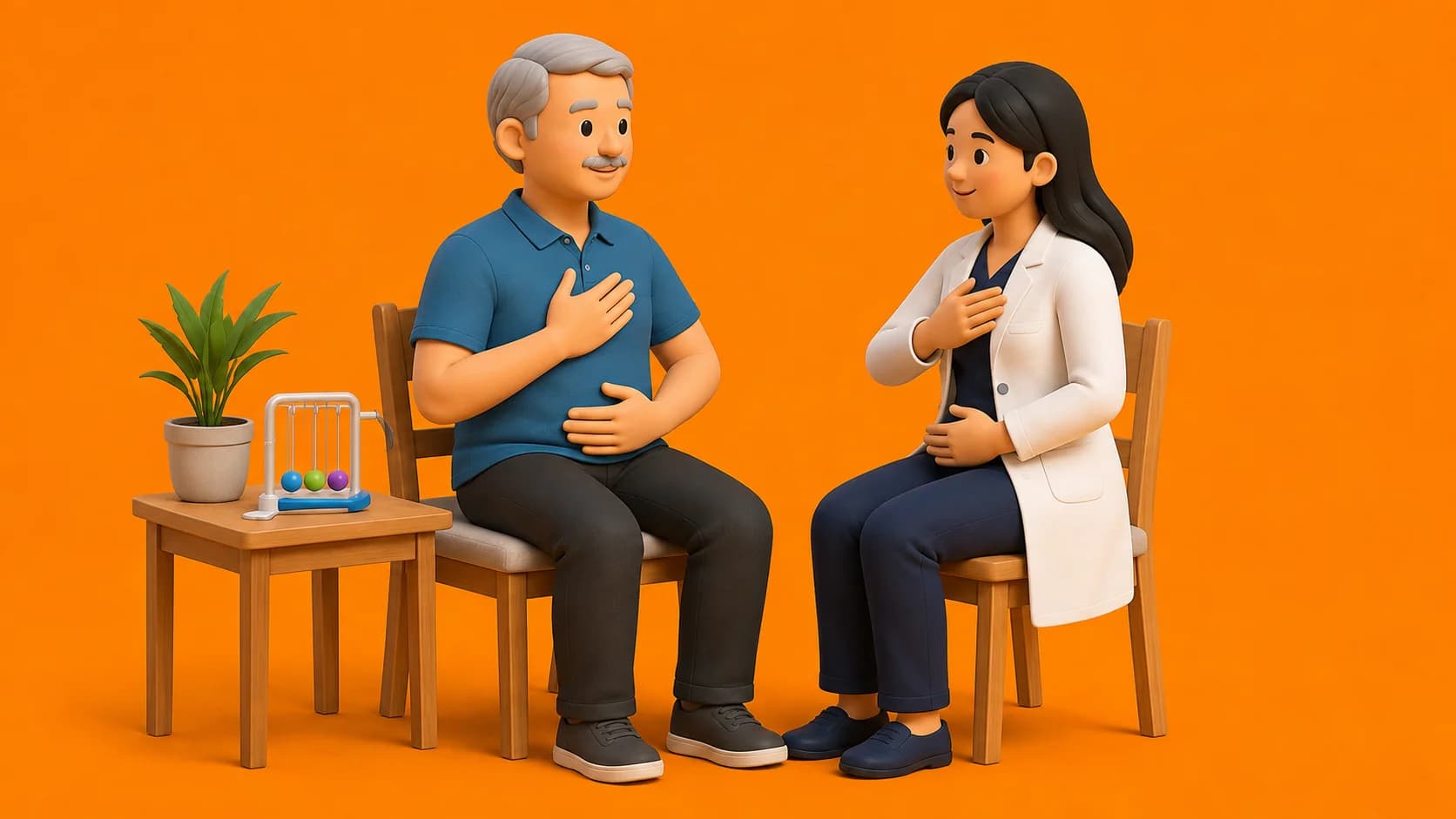
- 2Phase 2 (Diaphragmatic Re-Education and Lateral Costal Expansion - 3 Times Daily): Lie in crook-lying (on back with knees bent) or sit tall in a supportive chair. Place one hand on your upper chest and one hand on your belly just below your ribs. Inhale slowly through your nose, guiding the breath down so your lower hand rises while your upper chest remains completely quiet. Exhale through relaxed lips, feeling your lower hand sink down. Perform 10 calm breath cycles, 3 times daily.
- 3Phase 3 (Sub-Maximal Graded Exertional Conditioning - 4 Days Weekly): Begin progressive walking guided by the Borg Dyspnea Scale (0 to 10 scale). Walk at a pace where your breathlessness does not exceed a rating of 3 or 4 ("moderate / somewhat hard"). If breathlessness reaches 5, stop, assume a forward lean recovery posture, perform pursed-lip breathing until calm, and then resume. Gradually build from 10 minutes to 30 minutes over 8 to 12 weeks.
- 4Nasal Breathing Invariant: Practice breathing exclusively through your nose at all times during resting daily life. Nasal breathing filters, warms, and humidifies inhaled air while mixing it with endogenous nitric oxide produced in the paranasal sinuses, which dilates pulmonary blood vessels and enhances oxygen uptake.
4. Critical Red Flags: Recognizing Pulmonary Embolism and Myocarditis
Post-COVID patients retain an elevated hypercoagulable risk for weeks and months after infection. It is critical to distinguish a benign breathing pattern disorder from life-threatening cardiovascular pathology. Seek immediate emergency hospital care if you experience sudden, sharp, stabbing chest pain that worsens on deep inhalation (pleuritic pain), sudden coughing up of blood (hemoptysis), acute resting oxygen saturation dropping below 92%, rapid heart rate exceeding 120 beats per minute at rest accompanied by dizziness or syncope, or severe unilateral leg swelling and pain indicating Deep Vein Thrombosis (DVT) with risk of Pulmonary Embolism.
Frequently Asked Questions
Why do I feel breathless if my oxygen saturation (SpO2) is 98% and my chest X-ray is normal?
Because breathlessness in Long COVID is frequently driven by a Breathing Pattern Disorder (hyperventilation) and diaphragmatic fatigue rather than damaged lung tissue. Rapid, shallow upper-chest breathing alters blood carbon dioxide levels and exhausts neck muscles, creating a powerful sensation of air hunger even with normal oxygen.
How does pursed-lip breathing stop shortness of breath so quickly?
Breathing out through gently pursed lips creates mild positive back-pressure (positive end-expiratory pressure / PEEP) throughout your bronchial tree. This physical pressure splints open fragile small airways that would otherwise collapse during exhalation, allowing trapped air to escape and slowing your breathing rate.
Can I use an incentive spirometer at home for post-COVID recovery?
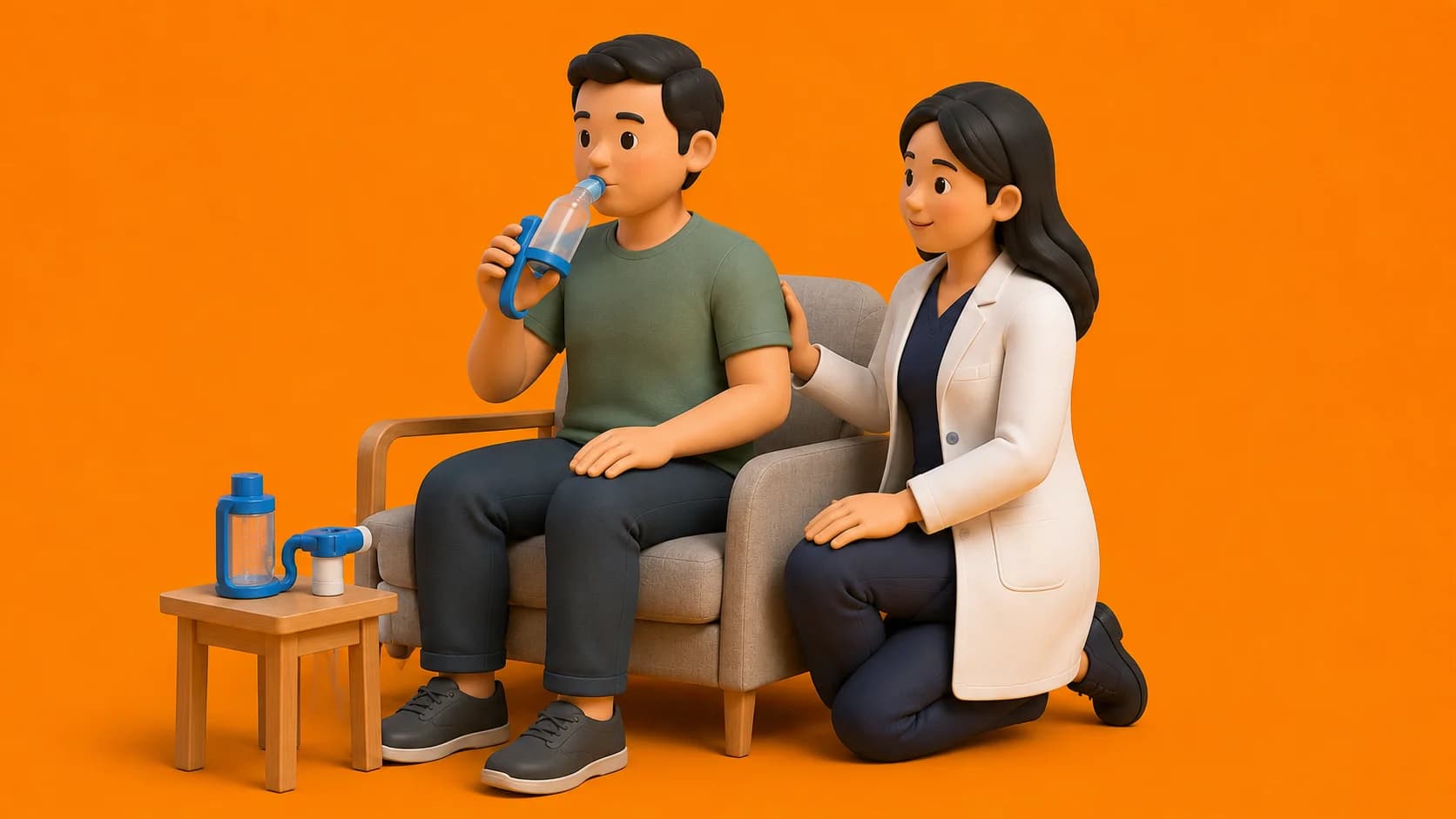
Yes, an incentive spirometer is a useful visual feedback tool to encourage deep lung expansion and prevent basal atelectasis. However, focus on slow, smooth sustained inhalations holding the ball up for 3 seconds, rather than rapid, violent gasps that trigger coughing.
Why does my heart race whenever I stand up after having COVID-19?
This is often Postural Orthostatic Tachycardia Syndrome (POTS), a form of autonomic dysregulation where peripheral blood vessels fail to constrict properly upon standing. The heart beats rapidly to pump blood upward to the brain. Graded recumbent exercise (cycling, rowing) and increased fluid and electrolyte intake help restore autonomic balance.
How do I access certified cardiopulmonary physiotherapists via BookPhysio.in?
BookPhysio.in connects patients across major Indian cities with certified cardiopulmonary physiotherapists skilled in pulmonary rehabilitation, breathing retraining, and post-viral recovery. Consultations are available in clinic (₹400 to ₹1,500) and via home visits (₹600 to ₹2,000) with direct per-visit payment and zero platform commission.
Related condition guides

BookPhysio.in Editorial Team
The BookPhysio.in editorial team writes and maintains this content, checking it against reliable clinical sources. Content follows our medical review policy: general information only, and no page claims a clinical review until a named registered physiotherapist has signed it off.
Read our medical review policy