
Chest Physiotherapy and Pulmonary Rehabilitation: Exercises for Breathlessness and Lung Recovery
In short
Chest physiotherapy and pulmonary rehabilitation rebuild lung capacity, clear retained secretions, and reduce breathlessness. Learn evidence-based techniques for asthma, COPD, and post-viral recovery.
In this guide (9 sections)
Chronic breathlessness, persistent post-viral fatigue, and airway secretion retention significantly impair everyday independence. Supervised pulmonary rehabilitation and specialized chest physiotherapy are strongly recommended by the British Thoracic Society and American Thoracic Society as frontline therapies to improve exercise tolerance and restore functional lung capacity.
How chest physiotherapy restores airway dynamics
When lung tissues experience infection, chronic inflammation, or asthma bronchospasm, mucus clearance slows down and airway resistance increases. Patients instinctively adopt rapid, shallow breathing patterns that overuse accessory neck muscles, trap stale air in the lung bases, and heighten sensations of panic and air hunger.
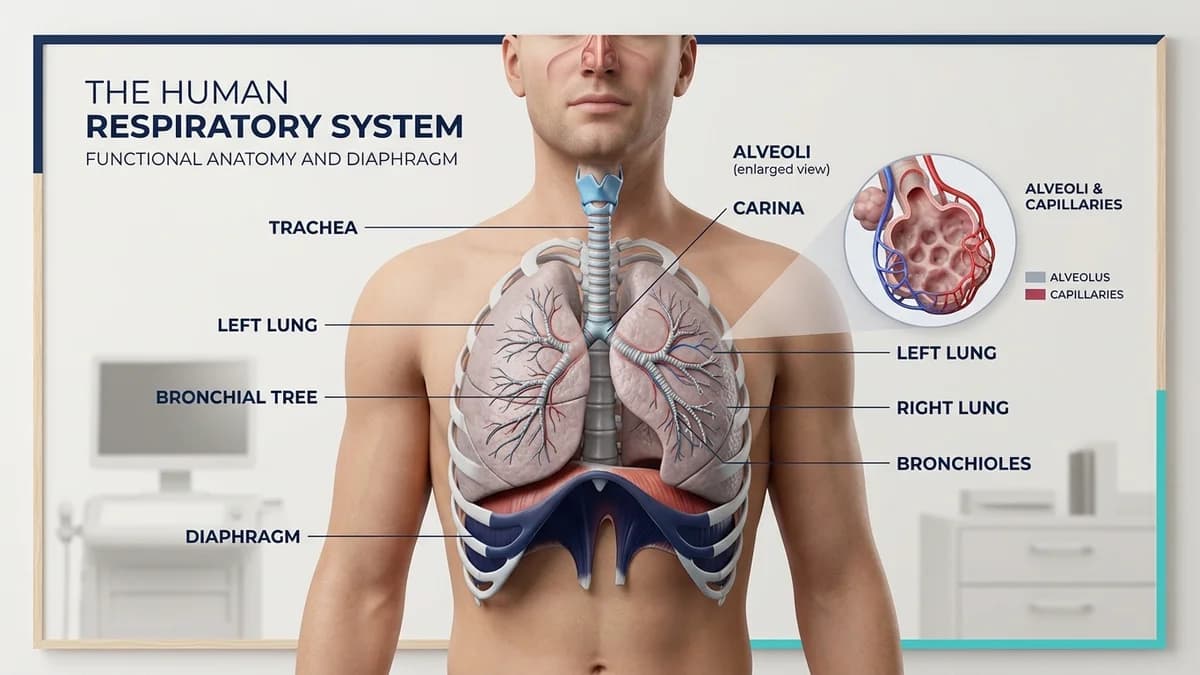
Chest physiotherapy applies biomechanical principles to improve ventilation distribution, recruit collapsed alveoli, and move pooled bronchial secretions up toward major airways where they can be cleared with minimal physical strain.
| Phase | Physiological Action | Clinical Benefit |
|---|---|---|
| 1. Breathing Control | Gentle, relaxed tidal breathing at your own natural pace, resting hands on the lower abdomen. | Relieves spasm, calms the sympathetic nervous system, and rests fatigued accessory neck muscles. |
| 2. Thoracic Expansion | 3 to 4 deep, slow inhalations through the nose with a 3-second breath-hold at full inspiration. | Opens collateral ventilation channels (pores of Kohn) to get air behind retained mucus plugs. |
| 3. Forced Expiration (Huff) | 1 or 2 smooth, open-throat huffs from medium or low lung volume through an imaginary tube. | Uses dynamic airway compression to shear secretions inward without triggering coughing fits. |
Targeted breathing exercises for home practice
Practice these exercises in a comfortable upright seated position twice daily or whenever you feel early signs of breathlessness.
Diaphragmatic Pursed-Lip Breathing
Objective: Create positive back-pressure to keep small airways open and eliminate trapped air.
- 1Sit comfortably upright with your shoulders completely relaxed away from your ears.
- 2Inhale slowly and steadily through your nose for a count of 2 seconds, feeling your lower ribs expand.
- 3Pucker your lips as if you are gently cooling a hot cup of tea.
- 4Exhale slowly and effortlessly through your pursed lips for a count of 4 seconds (twice as long as inhalation).
- 5Do not force the air out. Let the exhalation flow out smoothly.
Lateral Basal Thoracic Expansion
Objective: Expand lower lung segments and stretch intercostal rib cage muscles.
- 1Place your palms flat against the lower sides of your rib cage.
- 2Breathe all the air out gently.
- 3As you take a deep, slow breath in through your nose, concentrate on pushing your ribs out against your hands.
- 4Hold your breath at full expansion for 3 seconds.
- 5Exhale quietly and completely through your mouth.
Forward-Lean Supported Recovery Breathing
Objective: Mechanically optimize the diaphragm dome during acute breathlessness episodes.
- 1Sit on a chair and lean forward from your hips, resting your forearms on a sturdy table or your thighs.
- 2Keep your neck soft and head relaxed.
- 3This forward-leaning posture pushes abdominal organs against the diaphragm, doming it upward into its optimal mechanical length-tension relationship.
- 4Practice slow pursed-lip breathing until your respiratory rate normalizes.
Postural drainage and gravity-assisted clearance
For individuals with conditions such as bronchiectasis or heavy mucus retention, physiotherapists prescribe gravity-assisted drainage postures. Lying on your side or with your pelvis elevated allows gravity to drain specific lung segments toward the central trachea. Postural drainage should be adapted cautiously under guidance if you experience severe acid reflux or high blood pressure.
Critical red flags: When to seek emergency medical care
Seek immediate emergency hospital attention if you cough up blood (haemoptysis), if resting pulse oximeter saturation drops below 90 percent on room air, if breathlessness is accompanied by severe crushing chest pain, or if you notice bluing around the lips or nail beds. These symptoms indicate acute cardiovascular or respiratory compromise requiring urgent hospital evaluation.
In-clinic vs home visit chest physiotherapy
For individuals experiencing severe respiratory weakness or recovering from hospital stays, traveling through traffic to an outpatient clinic can trigger severe fatigue and oxygen desaturation. Home visit chest physiotherapy allows a specialist to monitor your pulse oximetry, evaluate sputum production, and train you directly in your familiar living space.
On BookPhysio.in, chest physiotherapy and pulmonary rehabilitation sessions typically range from ₹600 to ₹2,000 for home visits and ₹400 to ₹1,500 for clinic appointments across Indian cities. You pay your clinician directly with zero platform fee.
Active Cycle of Breathing Techniques (ACBT) and Postural Drainage
Airway clearance in cardiopulmonary physiotherapy relies on the evidence-based Active Cycle of Breathing Techniques (ACBT). ACBT consists of three distinct phases: Breathing Control (gentle, relaxed diaphragmatic breathing at tidal volume), Thoracic Expansion Exercises (deep inhalations with a 3-second breath hold to allow air to get behind collateral ventilation channels via the Pores of Kohn), and the Forced Expiration Technique (one or two "huffs" with an open glottis).
Unlike a harsh, exhausting cough that causes dynamic airway collapse and chest pain, a gentle huff moves secretions from peripheral bronchi up into the central trachea where they can be cleared with minimal effort. Paired with gravity-assisted postural drainage positioning, ACBT prevents mucus plugging, atelectasis, and recurrent pneumonia in post-surgical, bronchiectatic, and COPD patients.
Indian domestic realities: Biomass smoke, urban air pollution, and winter smog
In Indian cities and rural districts, respiratory rehabilitation must confront severe environmental air pollution: vehicle exhaust, construction dust, crop-burning PM2.5 particles, and indoor incense (dhoop/agarbatti) smoke. In rural households, lifelong exposure to chulha (biomass) cooking smoke produces chronic obstructive pulmonary disease in non-smoking women. Cardiopulmonary physiotherapists tailor indoor exercise protocols and air purification advice to protect vulnerable lungs.
Frequently asked questions
How is a therapeutic huff different from an ordinary cough?
A cough begins with a closed glottis, which creates sudden high airway pressure that can cause airway collapse and fatigue in sensitive lungs. A huff is performed with an open glottis (like fogging a mirror), which gently squeezes mucus inward through natural shearing forces without collapsing airways.
Does chest physiotherapy help long COVID breathing difficulties?
Yes. Post-COVID breathing pattern disorders frequently stem from dysfunctional upper-chest breathing patterns and autonomic dysregulation rather than irreversible structural damage. Physiotherapy recalibrates the respiratory rhythm, re-trains diaphragmatic excursion, and gradually restores exercise capacity.
Can breathing exercises cure asthma?
Breathing exercises do not replace prescribed inhaler medications, but they significantly reduce hyperventilation episodes, lower rescue inhaler dependency, improve peak flow consistency, and help manage anxiety triggered by breathlessness.
Evidence reviewed 7 October 2026. General information only.
Sources reviewed
British Thoracic Society (BTS) Guideline on Pulmonary Rehabilitation in Adults; Spruit MA et al., An official American Thoracic Society/European Respiratory Society statement: key concepts and advances in pulmonary rehabilitation (Am J Respir Crit Care Med); Bott J et al., Guidelines for the physiotherapy management of the adult, medical, spontaneously breathing patient (Thorax); Global Initiative for Asthma (GINA) Global Strategy for Asthma Management and Prevention.
What is the difference between a cough and a "huff" in chest physiotherapy?
A cough involves closing the vocal cords (glottis), building up high intrathoracic pressure, and blasting air out: which often collapses fragile, diseased airways and causes severe fatigue. A huff is performed with an open glottis (like fogging up a pair of eyeglasses), creating high linear airflow that shears mucus off bronchial walls without collapsing airway passages.
How do I book a home chest physiotherapist through BookPhysio.in?
BookPhysio.in connects post-surgical and pulmonary patients across India with certified cardiopulmonary physiotherapists who provide hands-on chest clearance, breathing retraining, and exercise titration at home. Home visits range from ₹600 to ₹2,000 per session, with zero commission and direct payment to your clinician.
Related condition guides


BookPhysio.in Editorial Team
The BookPhysio.in editorial team writes and maintains this content, checking it against reliable clinical sources. Content follows our medical review policy: general information only, and no page claims a clinical review until a named registered physiotherapist has signed it off.
Read our medical review policy