
Working on Bed & Sofa: Thoracic Kyphosis, Posterior Pelvic Tilt & Portable Laptop Stand Solutions
In short
Curling up on the couch or bed with your laptop seems cozy, but it is a biomechanical disaster for your neck and spine. Discover essential ergonomic adaptations.
In this guide (5 sections)
The Biomechanical Hazards of Soft Furniture Work
Since the widespread adoption of remote work and hybrid corporate models, working from sofas, lounge chairs, and beds has become common. While soft furniture provides initial psychological comfort, it lacks the structural resistance required to support upright human posture.
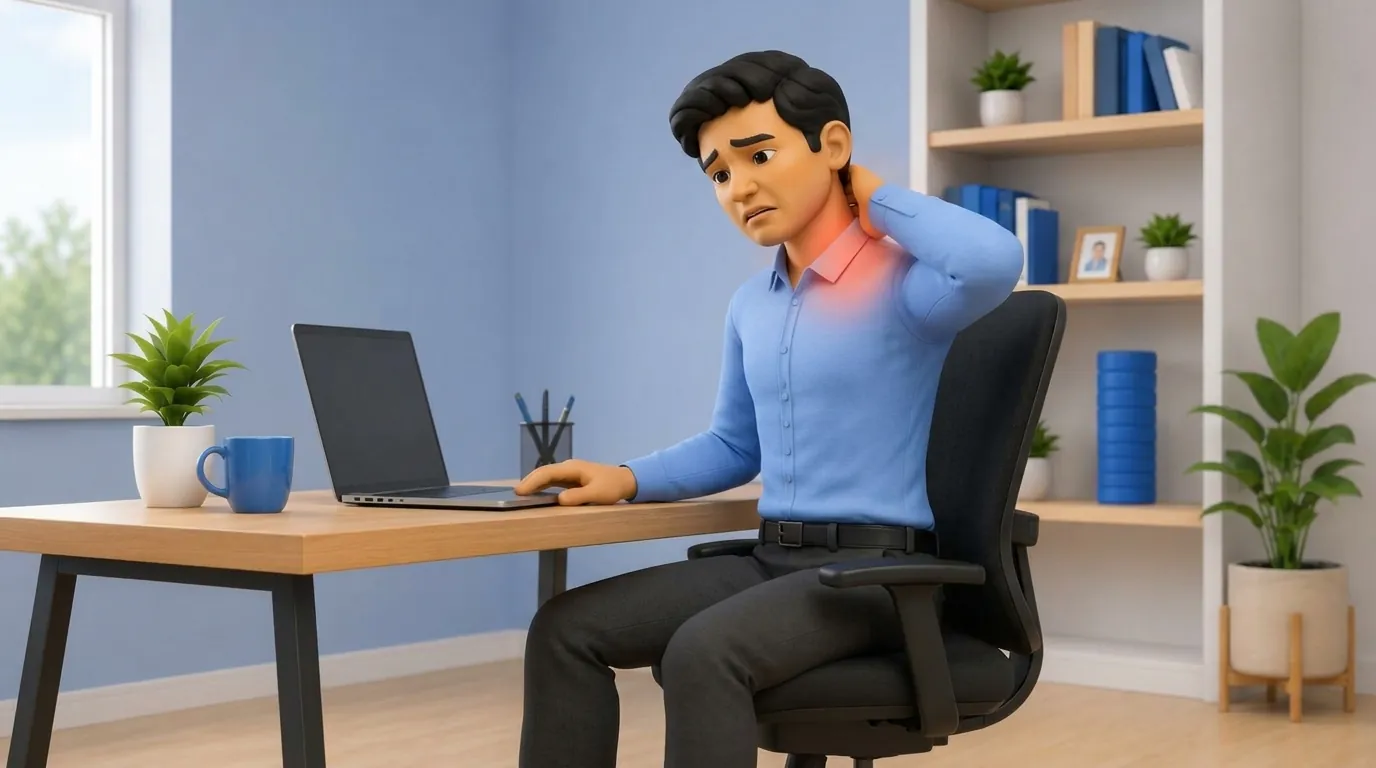
Sofas and soft mattresses cause the pelvis to sink deeply backward into an extreme posterior pelvic tilt. This pelvic collapse forces the lumbar spine to reverse its natural lordosis into full flexion, creating a C-shaped thoracic hyperkyphosis, protracting the shoulders, and forcing the cervical spine into extreme hyperextension to keep the eyes aimed at the downward-tilted laptop screen.
Disc Pressure Dynamics: The Slump Factor
Swedish orthopedic researcher Alf Nachemson established that sitting slouched forward without back support generates the highest intradiscal pressure of any standard daily posture, nearly 200 percent greater than standing upright.
In this collapsed position, the anterior margins of the lumbar vertebrae pinch together, pushing the gelatinous nucleus pulposus backward against the posterior annulus fibrosus, accelerating lumbar disc bulges and sciatica.
| Postural Zone | Adjustable Ergonomic Desk Setup | Unsupported Bed / Sofa Laptop Work | |
|---|---|---|---|
| Pelvic Alignment | Neutral; weight anchored on ischial tuberosities | Severe posterior tilt; weight collapsing onto sacrum/coccyx | |
| Lumbar Spine | Preserved lordotic curve supported by lumbar pad | Reversed C-shaped flexion; extreme posterior disc shear | |
| Cervical Spine | Neutral; head balanced over torso (0-15 deg gaze) | Extreme forward head craning (> 45 deg flexion, 50 lbs force) | |
| Wrists / Forearms | Forearms supported; neutral wrist extension | Wrist hyperextension resting on sharp laptop edge (carpal tunnel risk) | |
| Breathing Dynamics | Full 360-deg diaphragmatic excursion | Compressed thoracic cage; shallow apical chest breathing |
Essential Adaptations for Temporary Bed and Sofa Work
If working on a sofa or bed is temporarily unavoidable, you must use external props to construct artificial structural support.
Never rest a hot laptop directly on your lap or blanket, which overheats the device, burns thighs, and forces your neck into a 60-degree downward tilt.
- Firm Lumbar and Sacral Wedge Cushion: Place a stiff pillow or lumbar cushion behind your lower back to prevent the sofa from swallowing your pelvis into a backward slump.
- The Adjustable Bed Laptop Tray / Stand: Use a folding portable laptop desk that straddles your legs, elevating the screen to eye level and tilting the keyboard.
- Separate Bluetooth Keyboard and Mouse: Never type directly on the elevated laptop; use a compact external keyboard resting on your lap with your elbows bent comfortably at your sides.
- Side-Lying Prone Extension Breaks: Every 30 minutes, lay flat on your stomach propped on your elbows (Sphinx pose) for 2 minutes to restore lumbar lordosis.
Setting Strict Duration Limits
Treat working from the sofa or bed as a short-term temporary transition, capped at a maximum of 45 to 60 minutes, before moving back to a supportive desk and chair.
Frequently Asked Questions
Why does resting my laptop on my lap cause wrist pain?
When the laptop is on your lap, you have to angle your wrists sharply upward (hyperextension) to type, compressing the median nerve inside the carpal tunnel and straining the forearm extensor tendons.
How can I sit comfortably on my bed to work?
Sit with your back flat against the firm headboard, place a stiff cushion behind your lower back, elevate your knees slightly over a bolster, and use a dedicated over-bed laptop tray with an external keyboard.
Can working from the couch cause tension headaches?
Yes. Slouching forces your neck into extreme forward craning, causing intense spasms in your suboccipital muscles that pinch nerves radiating over your scalp to your forehead and eyes.
Related condition guides


Related recovery guides & articles
BookPhysio.in Editorial Team
The BookPhysio.in editorial team writes and maintains this content, checking it against reliable clinical sources. Content follows our medical review policy: general information only, and no page claims a clinical review until a named registered physiotherapist has signed it off.
Read our medical review policy