
Parkinson's home visit physiotherapy: home assessment, safety modifications, and transfer training
In short
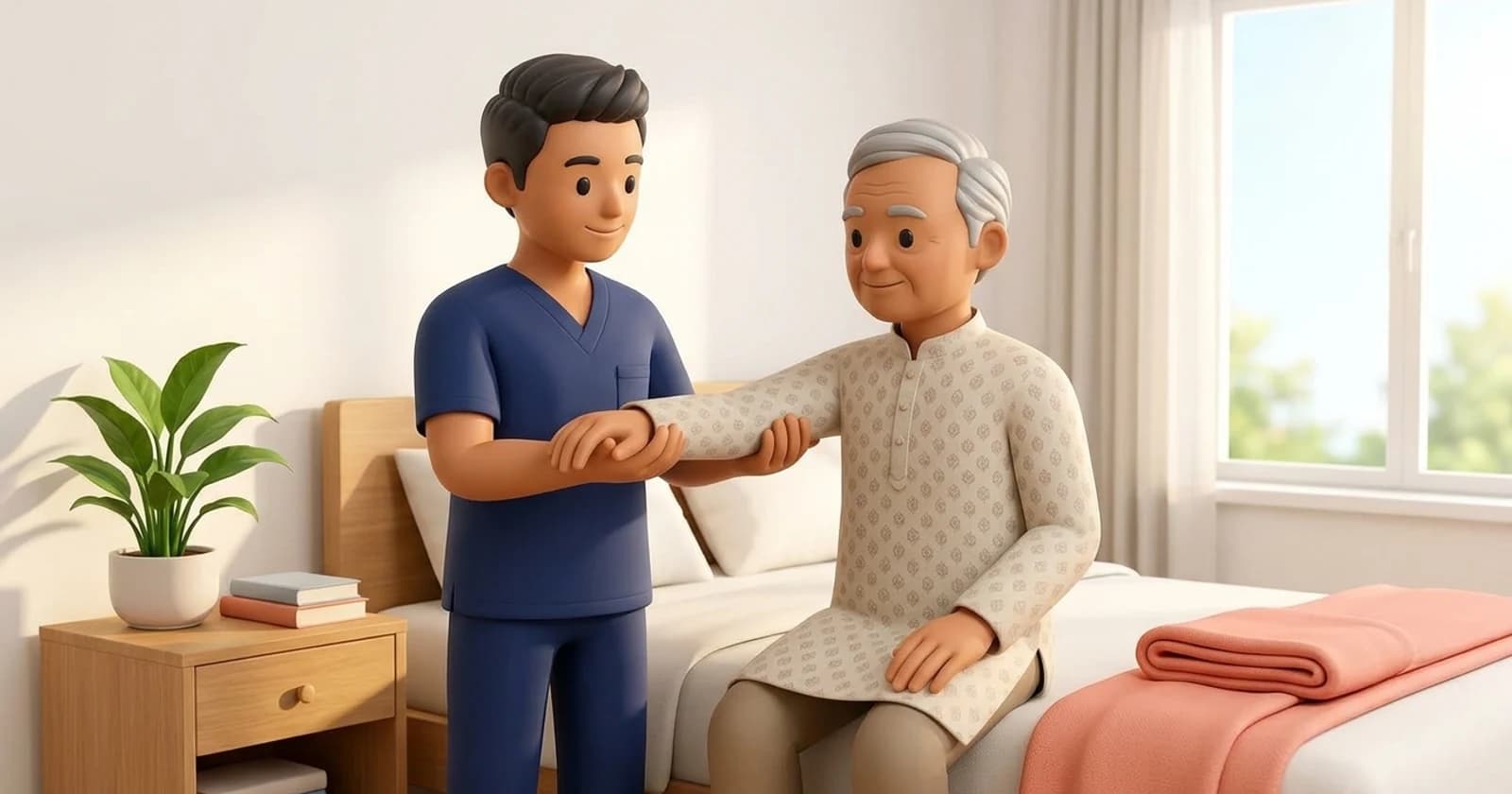
Home visit physiotherapy allows neurological clinicians to assess Parkinson's mobility where falls actually happen. A home visit evaluates bedroom, hallway, and bathroom hazards, trains safer sit-to-stand transfers, and adapts the living environment to prevent falls.
In this guide (4 sections)
Why home visit physiotherapy is critical for Parkinson's
While hospital clinics provide specialized equipment, Parkinson's patients often perform well in wide clinic corridors only to struggle when returning to their cluttered bedrooms and narrow hallways. Because basal ganglia impairment damages the brain's ability to generalize motor skills across different environments, conducting physiotherapy at home directly addresses real-world fall triggers.
Home safety fact: Over 70% of falls in Parkinson's disease occur inside the home during routine activities like rising from bed at night, navigating doorway thresholds, or turning in the bathroom.
Environmental hazard assessment checklist
During an initial home visit, a physiotherapist evaluates the living space to remove fall hazards:
| Living Area | Common Risk Factor | Physiotherapy Recommendation | |
|---|---|---|---|
| Hallways & Transit Paths | Loose throw rugs, floor mats, trailing electrical cables | Remove all loose rugs or tape them down securely with double-sided anti-slip backing; clear all walking lanes. | |
| Lighting & Corridors | Dim lighting and stark shadows that trigger visual freezing | Install motion-sensor nightlights (150+ lux) between bedroom and bathroom to eliminate pitch-black nighttime walks. | |
| Doorways & Thresholds | Narrow frames that trigger Freezing of Gait (FOG) | Place bright high-contrast visual floor tape strips perpendicular to doorway thresholds to provide stepping targets. | |
| Bathroom & Toilet | Slippery wet tiles, low commodes, absence of support rails | Install stainless steel wall grab bars beside the commode and shower; add a raised toilet seat and rubber non-slip bath mat. | |
| Seating Furniture | Deep, low-slung soft sofas that trap the pelvis | Replace with firm, high-seat armchairs with solid armrests to facilitate unassisted standing. |
Training safe functional transfers at home
Home visit physiotherapists train patients and family members in ergonomic transfer mechanics:
- Sit-to-stand mechanics (Nose Over Toes): Teach the patient to scoot forward to the front third of the chair, plant feet firmly shoulder-width apart slightly behind knees, lean the upper body forward until the nose is over the toes, and push down through the heels and armrests.
- Bed mobility and turning: Turning in bed requires segmental coordination that Parkinson's impairs. Clinicians teach the patient to bend their knees, reach across the body with the opposite arm to grasp the mattress edge, and roll with the hips and shoulders as one unit.
- Low-friction satin sheets: Using satin sleepwear or a satin slide sheet beneath the hips significantly reduces rotational friction during nocturnal position changes.
Selecting appropriate mobility aids
Standard walking canes often worsen retropulsion or get carried rather than loaded. Home physiotherapists prescribe and adjust appropriate walking equipment:
- U-Step Neuro Walkers: Specially designed for neurological conditions with a reverse-braking system (the walker only rolls when the hand levers are squeezed), providing maximum stability against sudden retropulsion.
- Four-wheel rollators with laser cues: Rollators equipped with projected red laser lines or auditory metronome beepers provide immediate external cues to break sudden gait freezing episodes.
How many home physiotherapy sessions does a Parkinson's patient need?
A standard programme typically involves 2 to 3 home visits per week for the first 4 to 6 weeks to establish exercise routines and adapt the home environment, followed by monthly maintenance visits.
Can home visit physiotherapy prevent nursing home placement?
Yes. By addressing fall risks, training bed-to-chair transfers, and instructing family caregivers on safe handling, home physiotherapy helps Parkinson's patients remain independent in their own homes longer.
What equipment should a family prepare before a home physiotherapy visit?
Families should prepare a firm chair with armrests, clear transit corridors of clutter, keep the patient's walking aid accessible, and ensure good lighting throughout the evaluation area.
- World Physiotherapy: Guidelines on Fall Prevention and Mobility: https://world.physio
- NICE Clinical Guidelines: Non-pharmacological management of Parkinson's disease: https://nice.org.uk
- Indian Association of Physiotherapists: Domiciliary Neuro-Rehabilitation Standards: https://physiotherapyindia.org
Related condition guides


Related recovery guides & articles
BookPhysio.in Editorial Team
The BookPhysio.in editorial team writes and maintains this content, checking it against reliable clinical sources. Content follows our medical review policy: general information only, and no page claims a clinical review until a named registered physiotherapist has signed it off.
Read our medical review policy