
Pickleball and society court elbow pain: treating tennis elbow and shoulder strain without stopping play
In short
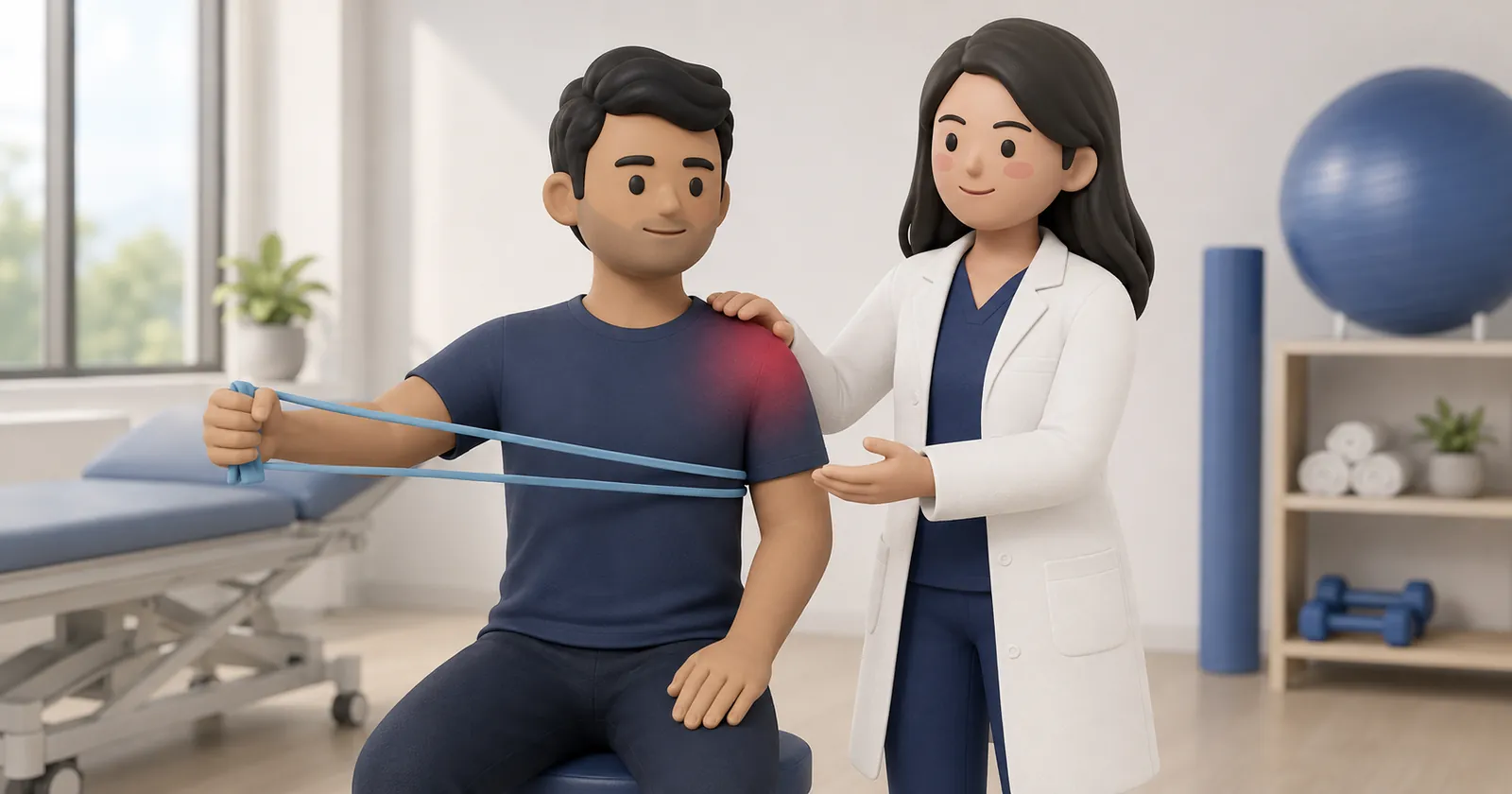
Pickleball and society turf sports have surged across apartment complexes in Bengaluru, Gurgaon, Mumbai, and Pune. Corporate professionals playing on weekends often develop acute lateral epicondylitis (tennis elbow) and rotator cuff tendinopathy from rigid paddle impacts. Learn how to rehabilitate your elbow and play pain-free.
In this guide (4 sections)
Why pickleball causes rapid tendon overload
Pickleball has become the fastest-growing recreational sport in Indian gated communities. Unlike tennis racquets that use flexible strings to absorb impact, pickleball paddles are solid composite or graphite boards. Every off-centre ball strike transmits high-frequency vibrations directly up the forearm into the common extensor tendon origin at the lateral epicondyle of the elbow.
Equipment risk factor: Gripping the paddle with excessive force (the 'death grip') keeps forearm extensor muscles in continuous isometric tension, dramatically increasing micro-tearing where the extensor carpi radialis brevis (ECRB) tendon inserts into the elbow bone.
Common recreational racquet court injuries
Weekend warriors returning to intense sports after sedentary workweeks face specific overload conditions:
| Injury | Common Mechanism | Primary Clinical Symptom | |
|---|---|---|---|
| Lateral Epicondylitis (Tennis Elbow) | Repetitive backhand flicks and hard paddle impact | Sharp pain on the outer bump of the elbow when gripping objects or shaking hands | |
| Rotator Cuff Tendinopathy | Repetitive overhead smashes with poor thoracic spine mobility | Aching pain in the anterolateral shoulder when lifting arm overhead | |
| Patellar Tendinopathy (Jumper's Knee) | Rapid deceleration and lunges on unyielding concrete society courts | Pain just below the kneecap that sharpens during deep bending | |
| Acute Ankle Sprain | Sideways stepping and landing on uneven boundary lines | Sudden lateral ankle inversion with rapid swelling and bruising |
Evidence-backed rehabilitation exercises
Perform these targeted exercises to stimulate tendon remodelling:
Eccentric Wrist Extension (Tyler Twist Protocol)
Objective: Promote collagen remodelling in the extensor carpi radialis brevis tendon.
- 1Hold a flexible rubber exercise bar vertically in your affected hand.
- 2Grasp the top of the bar with your other hand, twisting it firmly.
- 3Bring both arms out in front with wrists extended, maintaining the twist.
- 4Slowly release the twist using only the affected wrist in a controlled downward motion.
Isometric Wrist Extension Hold
Objective: Dampen cortical tendon pain without triggering inflammatory flare-ups.
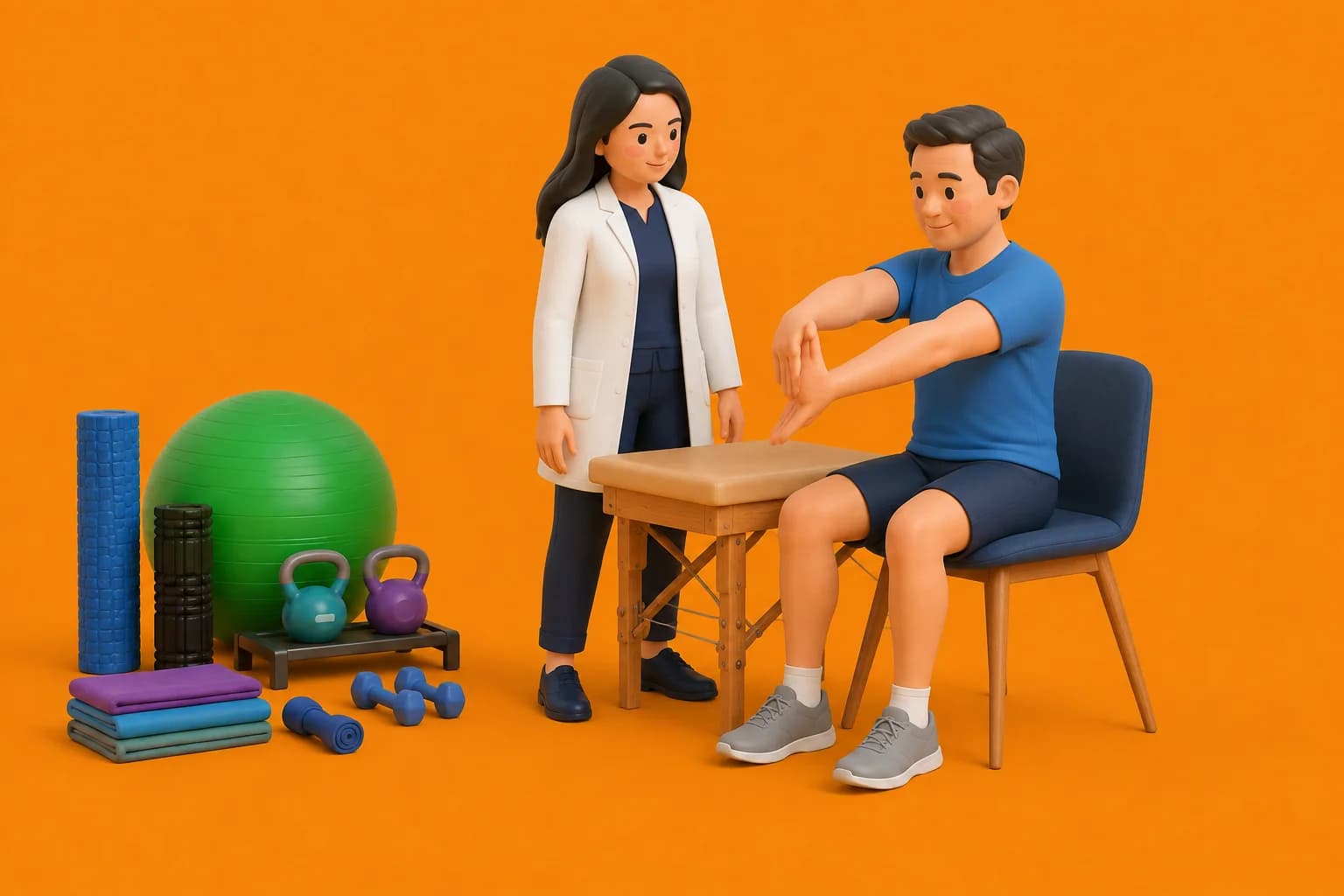
- 1Sit with your forearm resting flat along a table, wrist hanging over the edge.
- 2Hold a 1 to 2 kg dumbbell with your palm facing down.
- 3Lift the wrist into slight extension and hold completely still.
- 4Hold for 30 to 45 seconds while breathing calmly.
Equipment and technique adjustments
Small adjustments prevent repeated tendon reinjury:
- Loosen your paddle grip pressure: Rate your grip on a scale of 1 to 10. During play, keep your grip relaxed around 4 or 5 until the moment of ball contact.
- Calibrate grip circumference: A grip that is too small forces excessive finger squeezing. If your index finger cannot fit comfortably between your fingertips and the heel of your thumb when holding the paddle, add an overgrip tape.
- Hit through the ball using shoulder rotation: Avoid flicking the wrist on backhands. Rotate your torso and drive from the legs and shoulder girdle.
Do I need to stop playing pickleball completely if my elbow hurts?
No. Complete rest often leads to tendon deconditioning. Physiotherapists recommend active rest: reducing playing volume by 50%, avoiding high-velocity smashes, wearing a counter-force tennis elbow strap, and performing eccentric loading daily.
Does applying ice help tennis elbow?
Ice provides temporary numbing relief during the first 48 hours of an acute flare-up. However, chronic tendinopathy is a degenerative tendon change rather than acute inflammation. Progressive eccentric loading and blood flow stimulation are essential for long-term healing.
How does a counter-force forearm strap work?
An elbow strap worn 2 inches below the outer elbow bump compresses the muscle belly, redistributing tensile stress away from the inflamed tendon attachment point.
- British Journal of Sports Medicine: Exercise for lateral elbow tendinopathy: https://bjsm.bmj.com
- American Journal of Sports Medicine: Eccentric loading in tendinopathy: https://journals.sagepub.com/home/ajs
- Indian Association of Physiotherapists: Sports Division Guidelines: https://physiotherapyindia.org
Related condition guides
Related recovery guides & articles
BookPhysio.in Editorial Team
The BookPhysio.in editorial team writes and maintains this content, checking it against reliable clinical sources. Content follows our medical review policy: general information only, and no page claims a clinical review until a named registered physiotherapist has signed it off.
Read our medical review policy