
Sleeping on Floor or Chatai vs Mattress for Back Pain: Biomechanics and Evidence
In short
A widespread traditional Indian belief suggests that sleeping on a rock-hard floor or thin bamboo chatai cures slipped discs and lower back pain. Clinical spine biomechanics paints a very different picture. Discover what research actually says about sleep surfaces and spinal alignment.
In this guide (6 sections)
The Cultural Belief: Floor Sleeping and Spinal Health
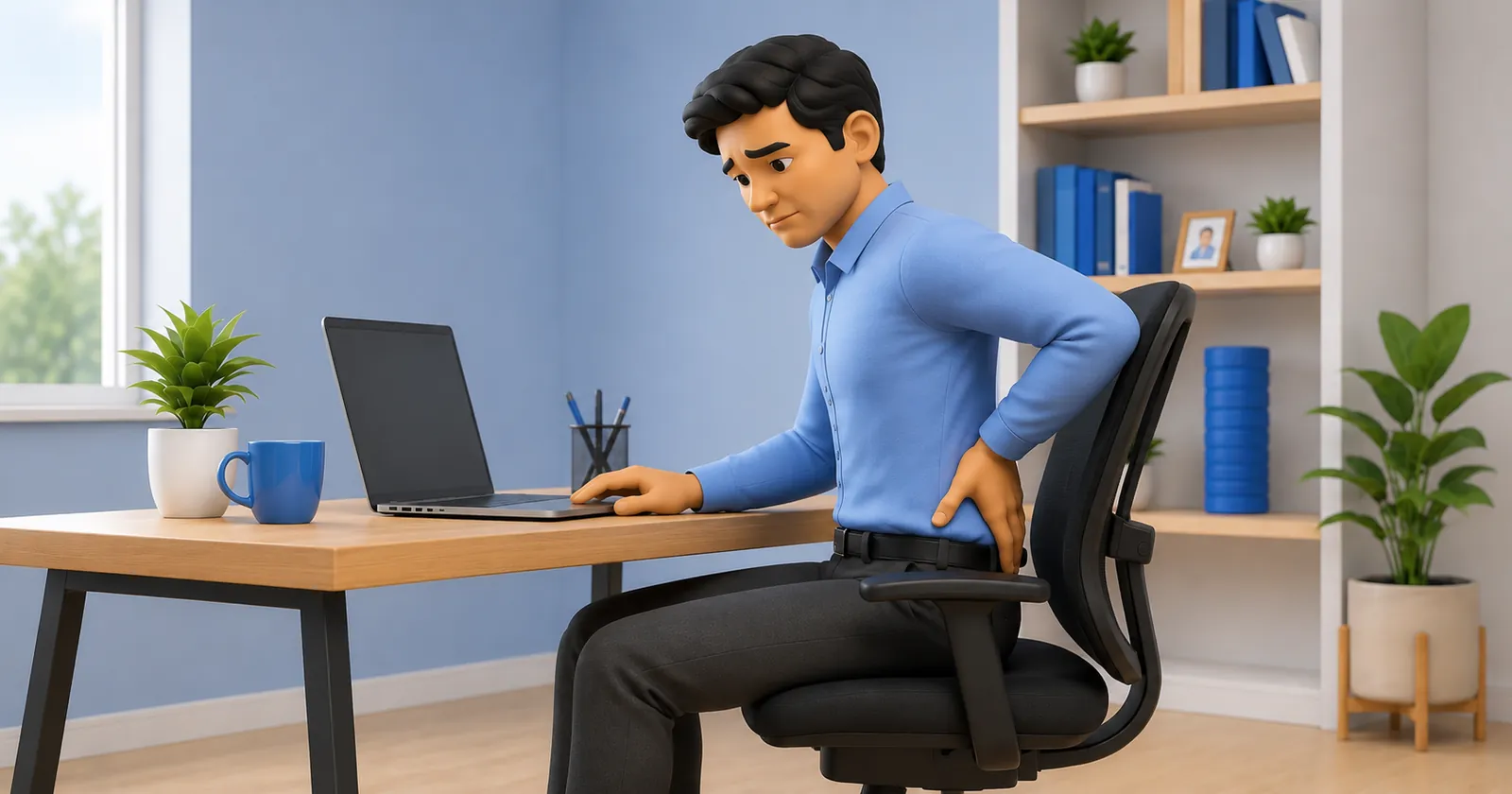
In many Indian households, the moment someone complains of back pain or lumbar disc herniation, family elders recommend discarding the mattress and sleeping directly on the floor with a thin cotton bedsheet or woven bamboo chatai.
The logic appears intuitive: a sagging, soft mattress bends the spine, so an unyielding flat surface must straighten it out. However, modern spinal biomechanics and clinical trials demonstrate that an excessively hard sleeping surface can worsen lumbar spasm and prolong recovery.
Spinal Alignment Biomechanics: Why Floors Flatten Natural Curves
The human spine is not straight; it possesses natural sagittal curves: cervical lordosis, thoracic kyphosis, and lumbar lordosis. These curves act like a suspension spring, distributing axial stress evenly.
When you lie supine (on your back) on a hard floor, only your heels, sacrum, thoracic spine, and back of your head touch the surface. The lumbar spine hangs in mid-air, creating a bridging gap. Without supportive contouring, the paraspinal muscles (erector spinae and quadratus lumborum) must remain contracted throughout the night to stabilize the unsupported bridge, leading to morning stiffness and spasm.
What Clinical Evidence Concludes: The Landmark Kovacs Trial
The gold standard study on sleeping surfaces for lower back pain was published in The Lancet by Kovacs and colleagues. They conducted a randomized, double-blind trial evaluating 313 adults with chronic non-specific lower back pain over 90 days.
| Surface Type | Lumbar Support Profile | Pressure Point Peak | Clinical Outcome at 90 Days | |
|---|---|---|---|---|
| Extra-Firm / Hard Floor | Zero contouring; bridges lumbar curve | Severe pressure at sacrum, trochanter, and heels | High morning stiffness; 32 percent reported worse or unchanged pain | |
| Medium-Firm Mattress | Adapts to lordosis while preventing deep sink | Even pressure distribution across entire body surface | Twice as likely to show significant pain and disability reduction | |
| Ultra-Soft / Sagging Foam | Allows pelvis to sink below spine line (hammocking) | Low superficial pressure but severe shear stress | Spinal flexion strain; increased disc pressure in prone/supine |
How to Sleep Safely if You Prefer Floor Sleeping
If you sleep on the floor for cultural reasons, summer cooling, or space constraints, optimize your mechanics with these physiotherapist recommendations.
- Use a 2 to 3-Inch Cotton Gaddi: Never sleep on bare tile, marble, or thin chatai alone. Place a firm 2 to 3-inch quilted cotton mattress (gaddi) over the floor to provide minimal cushioning over bony prominences.
- Supine Lumbar Support: When sleeping on your back, place a medium pillow under your knees. This relaxes the psoas muscle and allows your lower back to rest comfortably against the floor.
- Side-Sleeping Pillow Setup: If sleeping on your side on the floor, place a firm pillow between your knees and ankles to prevent pelvic rotation and hip adduction. Ensure your head pillow matches the exact width of your shoulder.
- Rising Safely (Log-Roll Technique): Never sit straight up from the floor. Turn onto your side, swing your knees together, push up with both hands, and rise from a kneeling posture.
Selecting the Right Mattress in India
When shopping for a mattress in India, look for medium-firm options. A simple test: when lying on your back, you should be able to slide your flat hand under your lower back with gentle resistance. If your hand slides through freely without touching, the mattress is too hard; if you cannot slide your hand in at all because your pelvis has sunken deep, the mattress is too soft.
Frequently Asked Questions
Why did my back feel better the first night I slept on the floor?
If your previous mattress was old, warped, or sagging like a hammock, switching to a flat floor temporarily eliminates dangerous rotational shear and excessive lumbar flexion. However, over several nights, the lack of lordotic support often triggers secondary muscle spasm.
Is coir mattress good for back pain in India?
Rubberized coir provides good breathability and firmness in hot Indian climates. However, pure coir can be extremely unyielding. A hybrid mattress with a supportive coir core topped with 1 to 2 inches of high-density adaptive foam offers the best balance of spinal support and pressure distribution.
What is the best sleeping position for acute sciatica?
The side-lying fetal position with a pillow between your knees on the non-painful side is usually most comfortable. Alternatively, lie on your back with your lower legs elevated on a sofa or pile of pillows at a 90-degree hip and knee angle (psoas rest position).

Related recovery guides & articles
BookPhysio.in Editorial Team
The BookPhysio.in editorial team writes and maintains this content, checking it against reliable clinical sources. Content follows our medical review policy: general information only, and no page claims a clinical review until a named registered physiotherapist has signed it off.
Read our medical review policy