
Stress Urinary Incontinence (SUI): 'The Knack' Maneuver, Pelvic Floor Timing & Impact Control
In short
Stress urinary incontinence is an involuntary loss of urine during coughing, laughing, or running. Learn how mastering 'The Knack' and pelvic floor motor timing restores urethral closure pressure.
In this guide (5 sections)
Pathophysiology of Stress Urinary Incontinence
Stress urinary incontinence (SUI) occurs when intra-abdominal pressure exceeds maximum urethral closure pressure in the absence of a detrusor contraction. This typically happens during sudden physical exertion such as coughing, sneezing, laughing, jumping, or lifting heavy weights.
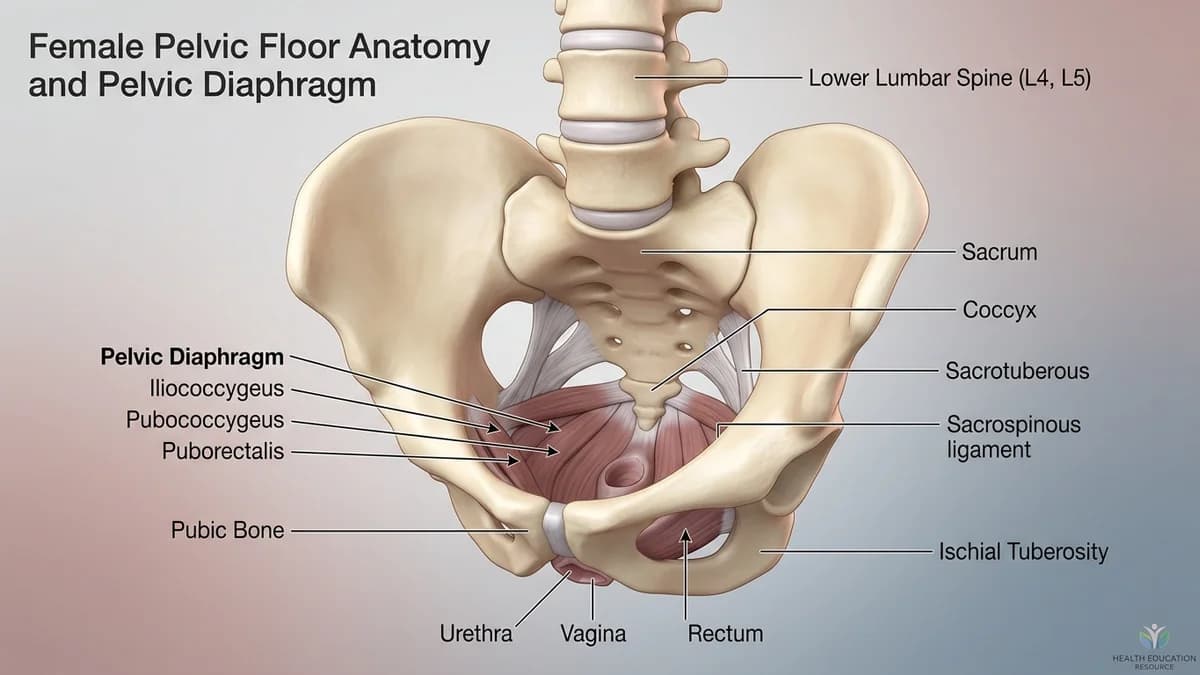
The primary underlying mechanism is either hypermobility of the bladder neck and urethra (due to laxity of the endopelvic fascia and levator ani muscles) or intrinsic sphincter deficiency. Childbirth, chronic coughing, hormonal transitions during menopause, and high-impact athletics are major contributing factors.
'The Knack': Feedforward Motor Timing
Pioneered by Dr. Janis Miller, 'The Knack' is an intentional, pre-programmed contraction of the pelvic floor muscles performed immediately before and during an anticipated rise in intra-abdominal pressure, such as a cough or sneeze.
In continent individuals, the pelvic floor contracts automatically milliseconds before a cough (a feedforward reflex). In women with SUI, this reflex timing is often delayed or absent. Consciously practicing The Knack restores the physical backboard against which the urethra is compressed, preventing leakage.
| Training Component | Mechanism | Frequency & Intensity | Functional Goal | |
|---|---|---|---|---|
| The Knack (Motor Timing) | Feedforward pre-contraction | 1 second prior to every cough/sneeze/lift | Immediate prevention of accidental leakage | |
| Hypertrophy Training | Increases muscle bulk and stiffness | 3 sets of 8 to 12 maximal contractions, 3x/week | Elevates resting baseline bladder neck support | |
| Fast-Twitch Power Drills | Recruits Type II fast motor units | Flick contractions (1 sec hold, 1 sec rest) x 10 | Rapid closure response during sudden unexpected slips |
Step-by-Step Execution of The Knack
To execute the maneuver effectively, the contraction must be directional: inward and upward, rather than bearing down.
Patients are instructed to squeeze the muscles around the anus and vagina as if stopping a flow of urine and holding back gas, lifting the pelvic floor upward toward the chest right before coughing.
- Step 1: Inhale Naturally: Do not take a massive gasp of air, which spikes intra-thoracic pressure.
- Step 2: Pre-Squeeze and Lift: Perform a crisp 50 to 70 percent pelvic floor lift just before the cough or sneeze triggers.
- Step 3: Maintain Lift Through the Expulsion: Hold the upward tension throughout the audible cough, then release fully back to resting baseline.
Progressive Impact Loading in Sports
For female athletes and fitness enthusiasts, rehabilitation must progress from static lying positions to dynamic jumping, skipping, and heavy compound lifts.
A pelvic health physiotherapist guides gradual impact progression using metronome timing, landing mechanics, and breath coordination (exhaling on exertion) to ensure the pelvic floor sustains repeated ground reaction forces without fatiguing.
Frequently Asked Questions
How long does it take for pelvic floor exercises to stop bladder leaks?
Clinical trials show significant symptom reduction within 6 to 12 weeks of structured pelvic floor muscle training when performed with correct technique and progressive overload.
Is it normal to leak urine after having a baby?
Leaking is common after childbirth due to stretching of pelvic tissues, but it is never 'normal' to accept as a permanent condition. It is a highly treatable muscular and fascial dysfunction.
Can doing too many Kegels make incontinence worse?
Yes. If the pelvic floor muscles are hypertonic (overly tight, fatigued, or unable to relax), doing repetitive endurance Kegels can cause muscle fatigue and worsen leaking. A formal physical assessment ensures proper treatment.
Related condition guides


Related recovery guides & articles
BookPhysio.in Editorial Team
The BookPhysio.in editorial team writes and maintains this content, checking it against reliable clinical sources. Content follows our medical review policy: general information only, and no page claims a clinical review until a named registered physiotherapist has signed it off.
Read our medical review policy