
Superior Capsular Reconstruction (SCR): Massive Irreparable Rotator Cuff Rehab
In short
Massive irreparable rotator cuff tears leave young patients without active elevation. Learn Mihata's superior capsular reconstruction, graft healing, and phased rehabilitation.
In this guide (5 sections)
The Challenge of Massive Irreparable Rotator Cuff Tears
Massive rotator cuff tears (> 5 cm, involving complete disruption of both supraspinatus and infraspinatus with Goutallier Stage 3 or 4 fatty degeneration) often cannot be pulled back to their bony footprint.
Without the superior restraining force of the supraspinatus, the powerful deltoid muscle pulls the humeral head directly upward into the acromion (superior migration), creating an uncoupled force vector and loss of active forward elevation, termed 'pseudoparalysis'.
While elderly sedentary patients can receive a Reverse Total Shoulder Arthroplasty (rTSA), young active patients (< 65 years) face high long-term implant loosening risks.
In 2012, Japanese surgeon Teruhisa Mihata introduced Superior Capsular Reconstruction (SCR) as a joint-preserving solution for young patients.
Mihata's Biomechanical Graft Concept
SCR uses a thick biological graft (fascia lata autograft or thick acellular dermal matrix allograft, 3 to 6 mm) anchored medially to the superior glenoid rim and laterally to the greater tuberosity.
The graft acts as a mechanical superior static restraint: it prevents the humeral head from migrating upward during deltoid contraction, restoring the glenohumeral fulcrum so the intact anterior and posterior rotator cuff muscles can lift the arm.
| Graft Option | Tissue Thickness & Origin | Primary Advantage | Donor-Site Morbidity | |
|---|---|---|---|---|
| 1. Fascia Lata Autograft (Mihata) | 6 to 8 mm folded native autologous fascia from lateral thigh | Superior stiffness; zero graft rejection; excellent biological incorporation | Lateral thigh pain, donor site hematoma, temporary limp. | |
| 2. Acellular Dermal Matrix (ADM) | 3 to 4 mm human allograft dermis (ArthroFLEX) | Eliminates donor site morbidity; shorter surgical time | Expensive; requires longer biological revascularization time. |
Phased SCR Rehabilitation Protocol
Because the thick graft relies on biological anchor healing into both the glenoid and tuberosity bone, early protection is paramount.
- Phase 1: Strict Abduction Pillow Sling (Weeks 0 to 6): Wear a 30-degree abduction sling continuously for 6 weeks; only passive range of motion is permitted (passive forward flexion up to 90 degrees, external rotation strictly to neutral); zero active motion.
- Phase 2: Active-Assisted Range of Motion (Weeks 7 to 12): Wean from sling; begin active-assisted supine cane exercises, progressing to active forward elevation in the plane of the scapula by Week 12.
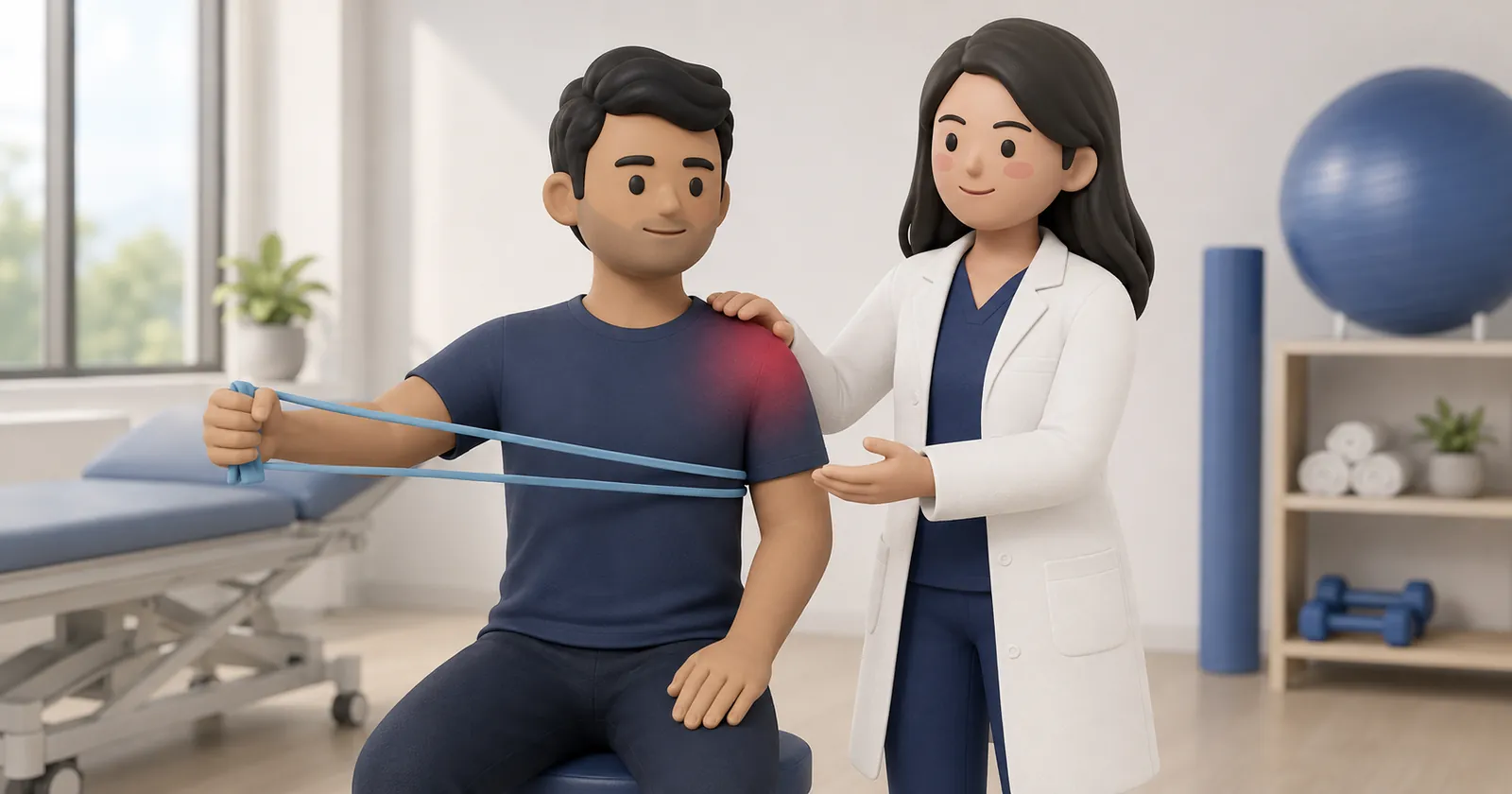
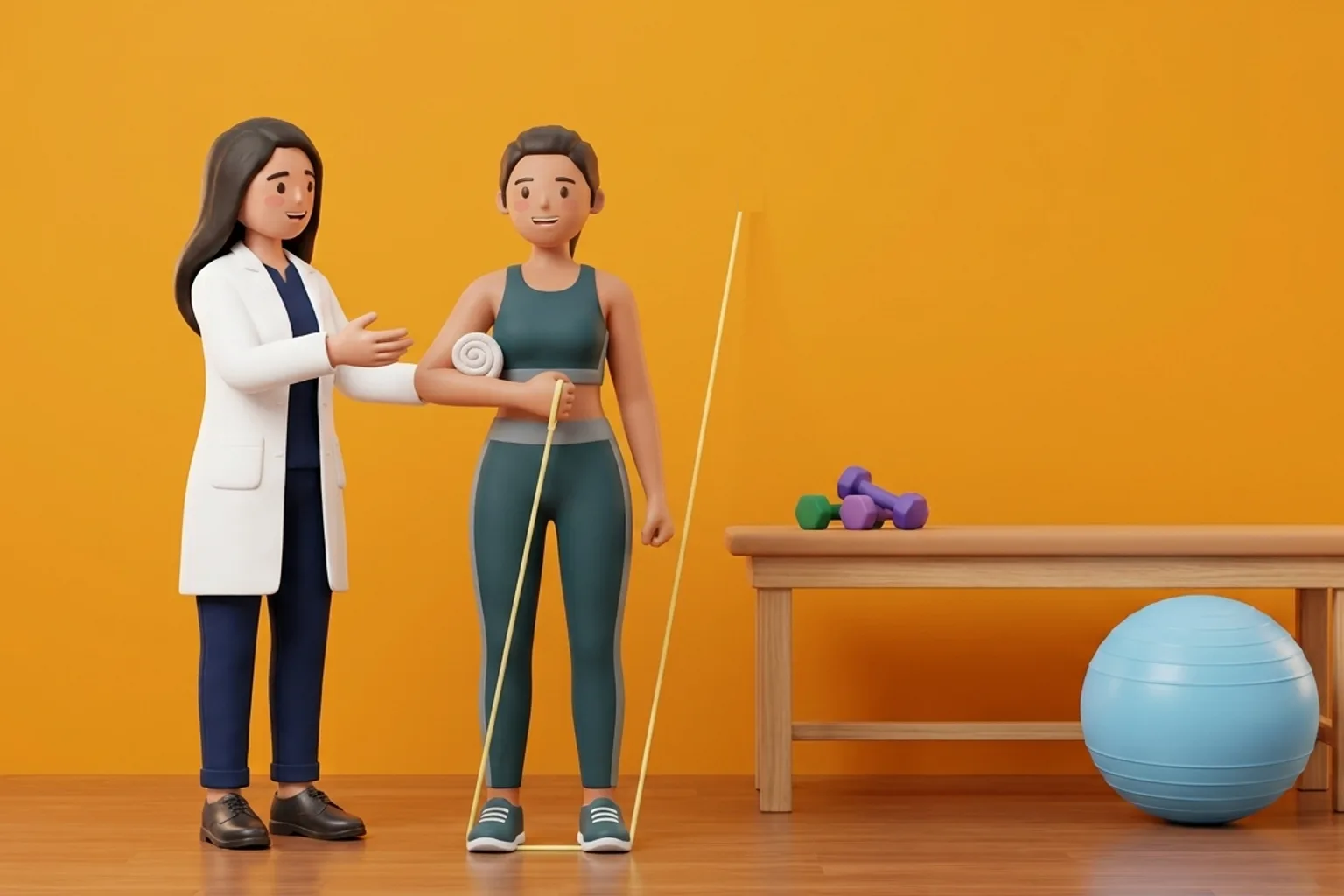
- Phase 3: Deltoid and Periscapular Strengthening (Months 3 to 6): Strengthen intact subscapularis, teres minor, and deltoid muscles with light resistance bands, retraining the dynamic force couple.
- Phase 4: Functional Recovery (Months 6 to 12): Gradual progression to daily household tasks, light recreational sports, and non-heavy manual labor; heavy overhead lifting is permanently restricted.
Expectations and Functional Goals
SCR is designed to relieve pain, eliminate pseudoparalysis, and restore functional active elevation to approximately 130 to 150 degrees.
Physiotherapists counsel patients that SCR is a joint-preservation reconstruction, not a return to competitive heavy weightlifting.
Frequently Asked Questions
How does SCR differ from a standard rotator cuff repair?
Standard repair pulls the patient own torn tendon back to the bone. In SCR, the tendon is too degenerate to repair, so a separate thick tissue graft is anchored across the top of the joint socket to act as a physical roof that holds the arm bone down.
Can an SCR graft tear after surgery?
Yes. Graft failure occurs in approximately 10 to 20 percent of cases, typically from active arm elevation too early or aggressive lifting during the first 3 months. Strict adherence to the 6-week abduction sling is vital.
What happens if an SCR fails?
If an SCR graft fails to heal or tears, the patient can safely be converted to a Reverse Total Shoulder Arthroplasty (rTSA) without compromising bone stock.
Related condition guides

Related recovery guides & articles
BookPhysio.in Editorial Team
The BookPhysio.in editorial team writes and maintains this content, checking it against reliable clinical sources. Content follows our medical review policy: general information only, and no page claims a clinical review until a named registered physiotherapist has signed it off.
Read our medical review policy