
Tai Chi for Geriatric Balance & Fall Prevention: Physiotherapy Guide
In short
Tai Chi provides continuous slow weight shifting, postural trunk rotation, and mindful base-of-support adaptation, cutting geriatric fall rates by up to 50 percent.
In this guide (2 sections)
The Biomechanics of Mindful Movement in Geriatric Fall Prevention
Tai Chi (specifically modified Sun and Yang styles) is one of the most rigorously validated exercise modalities in evidence-based geriatric medicine. Cochrane systematic reviews and the American Geriatrics Society (AGS) endorse Tai Chi as a premier non-pharmacological intervention for reducing falls in community-dwelling older adults, demonstrating fall reductions between 43% and 50%.
Unlike static balance training, Tai Chi is dynamic: it involves continuous, flowing, low-velocity movements performed with a flexed knee stance ('soft knees') and deliberate, slow shifting of the body's center of mass over an ever-changing base of support. This stimulates deep plantar mechanoreceptors, improves ankle proprioception, and enhances vestibular integration.
Key Tai Chi Movements and Their Biomechanical Fall Prevention Value
| Tai Chi Movement Form | Biomechanical Execution Pattern | Target Musculoskeletal Group | Specific Fall Mechanism Prevented | |
|---|---|---|---|---|
| Commencing Form ('Opening the Door') | Gentle knee flexion with synchronous bilateral arm raising and lowering | Quadriceps eccentric control, soleus stabilising | Prevents knee buckling during unexpected foot landings | |
| Waving Hands Like Clouds | Continuous lateral stepping with reciprocal trunk rotation and arm sweeping | Hip abductors (gluteus medius), thoracic rotators | Prevents lateral fall collapse; strengthens recovery side-stepping | |
| Parting the Wild Horse's Mane | Diagonal forward stepping with 70/30 weight transfer and diagonal arm extension | Gastrocnemius, hamstring deceleration, core rotators | Restores forward protective stepping when tripping on ground obstacles | |
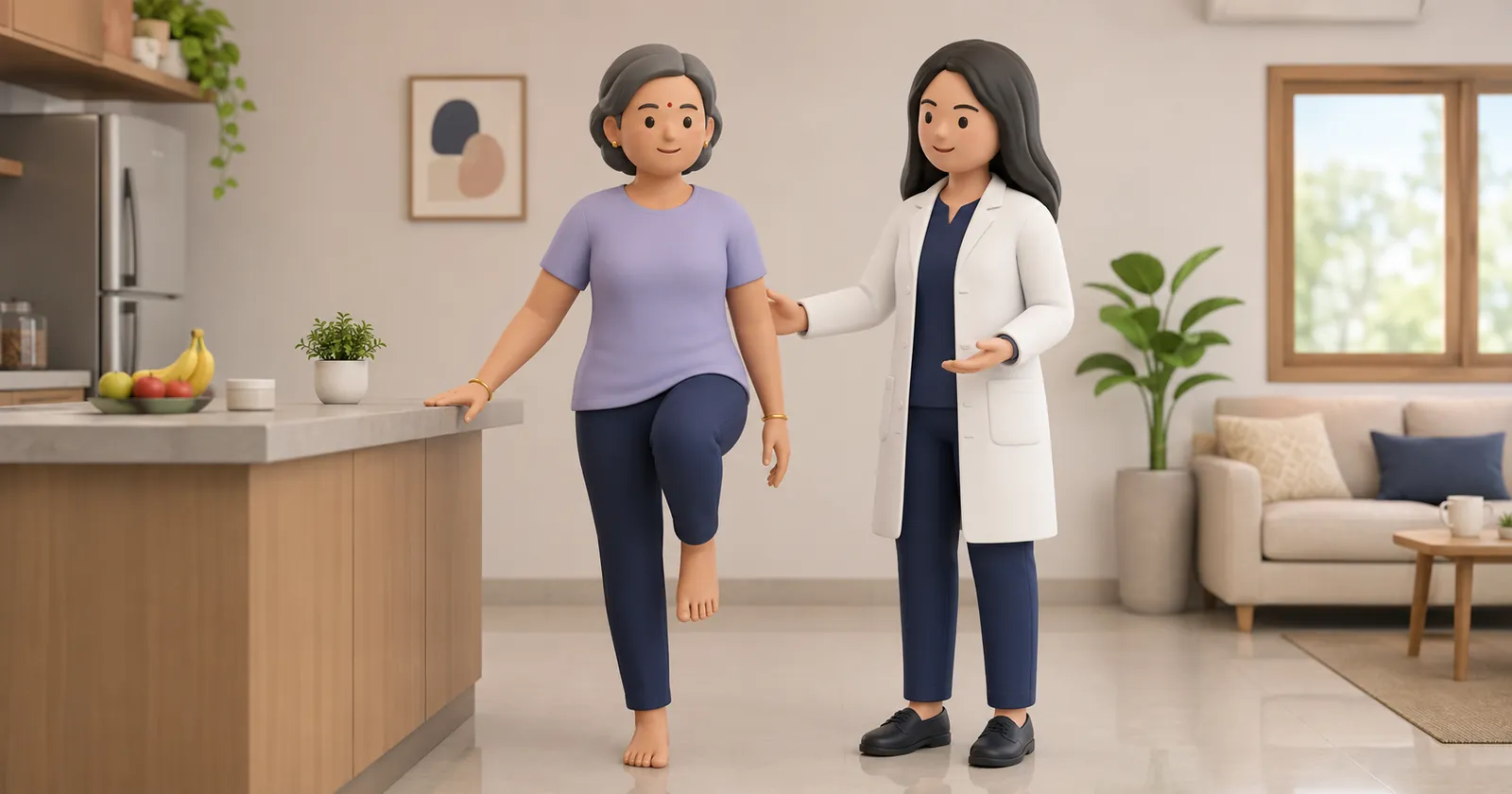
| Golden Rooster Stands on One Leg | Single-limb stance with contralateral knee elevation and arm balance | Single-leg hip abductor endurance, ankle invertor/evertor stability | Enhances foot clearance over rugs, thresholds, and curbs | |
| Brush Knee and Push | Reciprocal forward lunge with hand press and trunk stabilization | Quadriceps, pelvic floor, deep multifidus stabilizers | Provides stability when reaching forward for high or distant domestic objects |
Clinical Adaptations for Frail and Balance-Impaired Seniors
- Seated Tai Chi Progression: For prefrail seniors unable to stand safely for 30 minutes, begin with seated Tai Chi on a sturdy armless chair, focusing on trunk rotation, arm coordination, and conscious weight shifting across the ischial tuberosities.
- Supported Stance with Chair Backs: Practice standing forms with light fingertip contact on the back of a weighted dining chair, providing an immediate safety anchor while allowing continuous ankle swaying.
- Emphasis on 'Empty' and 'Full' Stepping: Train the fundamental Tai Chi discipline of never placing weight onto a stepping foot until the sole has completely made flat contact with the floor, eliminating tripping momentum.
- Diaphragmatic Breathing Synchronization: Coordinate inhalation with rising movements and exhalation with descending postures to down-regulate sympathetic tone and lower resting systolic blood pressure.
- Home Practice Dose: Prescribe 20 to 30 minutes of Tai Chi practice 3 to 4 times per week to achieve measurable neuroplastic rewiring of postural reflexes within 8 to 12 weeks.
Frequently Asked Questions About Tai Chi and Fall Prevention
Can an 80-year-old with poor balance safely practice Tai Chi?
Yes. Modified geriatric Tai Chi programs (such as the Tai Chi for Arthritis and Fall Prevention program) use simplified, upright postures with gentle foot steps and can be performed holding onto a chair or even seated. It is exceptionally safe and gentle on arthritic joints.
Why is Tai Chi more effective for balance than standard gym machines?
Gym machines isolate single muscles in static seated positions. Tai Chi trains the brain, inner ear, eyes, and muscles to work together in continuous motion, developing the dynamic balance reflexes needed to catch yourself when you slip or trip in the real world.
Related condition guides


Related recovery guides & articles
BookPhysio.in Editorial Team
The BookPhysio.in editorial team writes and maintains this content, checking it against reliable clinical sources. Content follows our medical review policy: general information only, and no page claims a clinical review until a named registered physiotherapist has signed it off.
Read our medical review policy