
Temporomandibular Disorders (TMD): Central Sensitization, Sleep Bruxism, and Jaw Recalibration
In short
Chronic TMD frequently transitions into central trigeminal sensitization; combining pterygoid myofascial release, sleep bruxism splinting, and jaw recalibration restores function.
In this guide (4 sections)
Trigeminal Convergence, Nocturnal Bruxism, and Chronic TMD
Temporomandibular Disorders (TMD) encompass a heterogeneous group of musculoskeletal and neuromuscular conditions affecting the temporomandibular joint (TMJ), the masticatory musculature, and associated cranial structures, affecting up to 10% to 15% of adults. While acute TMD may stem from disc displacement with reduction (clicking TMJ) or acute joint capsulitis, the OPPERA (Orofacial Pain: Prospective Evaluation and Risk Assessment) landmark multicenter study proved that chronic TMD is predominantly a centralized pain condition.
Nocturnal sleep bruxism (clenching and grinding mediated by central autonomic micro-arousals during light sleep) subjects the masseter, temporalis, and pterygoid muscles to massive, sustained isometric loads exceeding 100 to 200 pounds of force. Persistent nociceptive input from the mandibular branch of the trigeminal nerve (V3) converges onto the trigeminal subnucleus caudalis (the 'medullary dorsal horn') in the brainstem. Sensitization here causes widespread craniofacial hyperalgesia, temporal summation, chronic tension headaches, and neck pain via trigeminocervical convergence.
The Diagnostic Criteria for TMD (DC/TMD) Matrix
| DC/TMD Subclass | Clinical Physical Examination Finding | Underlying Structural Pathology | Physiotherapy Mandate | |
|---|---|---|---|---|
| Myalgia / Myofascial Pain | Pain on palpation of masseter / temporalis muscles; pain spreads | Sustained muscle contraction knots; ischemia from daytime/nocturnal clenching | Intraoral pterygoid release; moist heat; relaxation biofeedback | |
| Disc Displacement with Reduction | Reciprocal clicking on jaw opening and closing; normal range | Articular disc subluxates anteriorly; pops back onto condyle on opening | Condylar distraction mobilization; avoid hard chewy foods | |
| Disc Displacement without Reduction | Sudden acute jaw locking; maximal opening restricted < 30 mm; deflection | Disc permanently wedged anteriorly; prevents condylar translation (closed lock) | Gentle manual joint mobilization / traction; DO NOT FORCE OPENING | |
| TMJ Arthralgia / Osteoarthritis | Pain with palpation of lateral TMJ pole; coarse crepitus on movement | Capsular inflammation; condylar bone remodeling and cartilage erosion | Gentle TMJ distraction; anti-inflammatory modalities; soft food diet | |
| Central Sensitization Profile | Comorbid chronic neck pain, headaches, fibromyalgia, high CSI score | Trigeminocervical central sensitization; widespread mechanical allodynia | Pain Neuroscience Education; treat cervical spine and sleep together |
Standardized Clinical Rehabilitation Protocols and Jaw Recalibration
- Intraoral Pterygoid and Masseter Myofascial Release: Don sterile nitrile gloves; palpate intraorally along the cheek and maxillary tuberosity to access the lateral and medial pterygoid muscles; apply gentle, sustained ischemic trigger point pressure for 60 seconds; releasing deep masticatory muscle spasms immediately relieves jaw tightness and temple headaches.
- The 'Lips Together, Teeth Apart' Daytime Unclenching Rule: Train daytime jaw rest posture: 'Lips gently closed, teeth slightly apart, tongue resting softly on the roof of the mouth behind front teeth' (the 'N' sound position); resting teeth slightly apart eliminates daytime subconscious clenching that exhausts masticatory muscles.
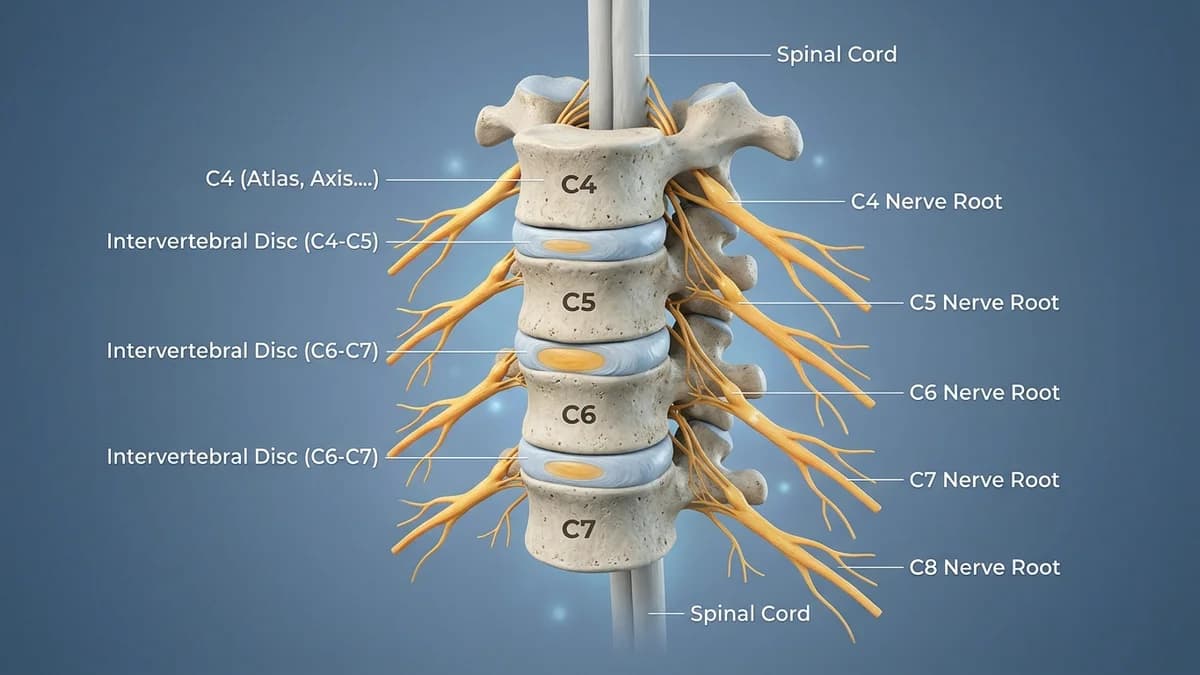
- Cervical Spine Integration and Posture Correction: Treat the upper cervical spine concurrently (C1-C3 mobilization, deep neck flexor strengthening); forward head posture biomechanically pulls the mandible backward into retrognathia via taut suprahyoid muscles, jamming the condyle into the sensitive retrodiscal pad.
Frequently Asked Questions
Why does my jaw pain cause headaches in my temples and neck pain?
The nerves from your jaw, face, and the top bones of your neck all plug into the exact same nerve station in your brainstem (the trigeminocervical nucleus). When you clench your jaw all night, that brainstem relay gets overwhelmed, spreading pain signals into your temples, behind your eyes, and down into your neck.
What is the 'teeth apart' rule for daytime jaw resting?
Your upper and lower teeth should only touch when you are actively chewing food! During the rest of the day, your teeth should stay slightly separated with your tongue resting on the roof of your mouth. Repeating the phrase 'lips together, teeth apart' keeps your jaw muscles relaxed all day.
Can physiotherapy fix jaw clicking and popping?
Clicking happens when the little cartilage cushion inside your jaw joint slips out of place and pops back in when you open. Physiotherapy balances your jaw muscles, restores smooth joint tracking, and relieves joint tension so the click becomes quiet and painless.
Related condition guides

Related recovery guides & articles
BookPhysio.in Editorial Team
The BookPhysio.in editorial team writes and maintains this content, checking it against reliable clinical sources. Content follows our medical review policy: general information only, and no page claims a clinical review until a named registered physiotherapist has signed it off.
Read our medical review policy