
Anterior Pelvic Tilt and Hamstring Overlengthening: Correction Protocols
In short
Understand how anterior pelvic tilt pre-lengthens the hamstring complex at its ischial origin, increasing strain risk, and learn corrective protocols.
In this guide (4 sections)
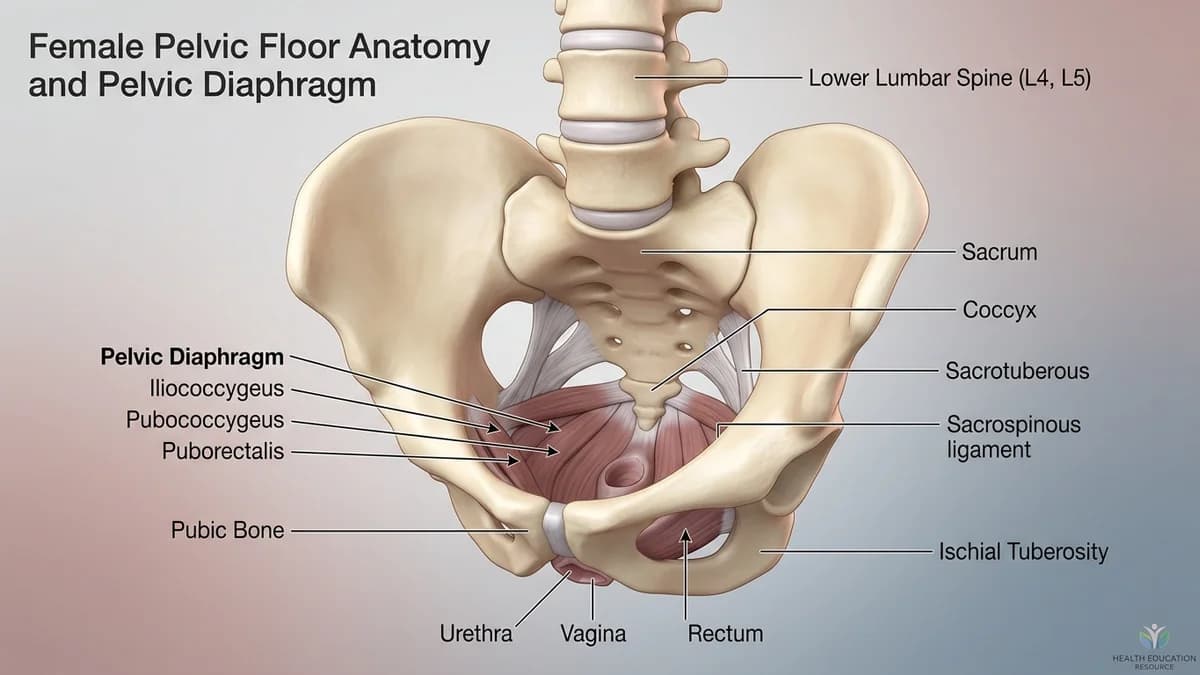
Anterior pelvic tilt (APT) is one of the most prevalent and mechanically detrimental postural adaptations observed in athletic and sedentary populations alike. Defined as a sagittal plane pelvic orientation where the anterior superior iliac spines (ASIS) rotate anteriorly and inferiorly relative to the posterior superior iliac spines (PSIS), APT dramatically alters the resting length-tension relationship of the posterior kinetic chain. Because the hamstring complex originates on the inferolateral facet of the ischial tuberosity, forward rotation of the pelvis displaces the ischium superiorly and posteriorly. This bony displacement effectively pre-lengthens the hamstring muscles at their origin, pulling them toward their mechanical strain limits even before dynamic movement begins.
High-Heeled Footwear, Extended Desk Slumping, and Fast Bowling Run-Ups
In urban Indian workplaces and social settings, multiple lifestyle factors contribute to acquired anterior pelvic tilt. The regular wearing of elevated heel footwear or formal shoes with rigid heel lifts shifts the body centre of mass forward, prompting a compensatory anterior pelvic tilt and increased lumbar lordosis. Prolonged sitting with a forward-arched back on soft sofas or driving low-slung cars tightens the psoas and rectus femoris muscles while weakening the lower abdominals. In sports, Indian cricket fast bowlers frequently adopt an exaggerated anterior pelvic tilt during their run-up in a misguided attempt to generate forward speed, entering their delivery stride with pre-strained hamstrings that are primed for failure.
Loss of Sarcomere Overlap, Reduced Strain Margin, and Sciatic Pre-Tension
When the pelvis tilts anteriorly by just 10 to 15 degrees, the proximal hamstring origin is displaced away from the knee joint by several centimetres. This anatomical shift pulls the muscle sarcomeres onto the descending limb of their active length-tension curve at rest. Consequently, during dynamic activities like high-speed sprinting, when the hamstrings must lengthen further to decelerate the swinging leg during terminal swing, there is virtually zero mechanical reserve remaining. The muscle reaches its ultimate tensile strain threshold prematurely, resulting in catastrophic fascicle tearing. Furthermore, superior displacement of the ischial tuberosity increases mechanical tension along the adjacent sciatic nerve, producing chronic neural irritability.
Corrective Protocols: Reciprocal Inhibition, Posterior Tilt Control, and Core Bracing
Correcting anterior pelvic tilt and relieving chronic hamstring overlengthening requires a balanced, three-pronged therapeutic strategy. First, anterior hip flexor tightness must be addressed through active-isolated stretches of the iliopsoas and rectus femoris to eliminate reciprocal inhibition of the posterior chain. Second, the patient must develop conscious proprioceptive awareness of pelvic positioning, mastering active posterior pelvic tilting in supine, quadruped, and standing postures. Third, dynamic core stability must be built through anti-extension exercises that train the rectus abdominis, external obliques, and transverse abdominis to anchor the anterior pelvis firmly against hip extension forces.
Supine Posterior Pelvic Tilt with Abdominal Wall Flattening
Objective: Retrain active pelvic orientation, activate deep core stabilizers, and slacken pre-lengthened hamstrings
- 1Lie on your back on a firm mat with both knees bent to 90 degrees and your feet flat on the floor, hip-width apart.
- 2Place your fingertips lightly on the front of your pelvic bones (ASIS) to feel the movement of your pelvis.
- 3Exhale gently through pursed lips, engaging your lower abdominal muscles as if pulling your belly button toward your spine.
- 4Flatten your lower back firmly down into the floor by tilting your pelvis backward, feeling your tailbone lift slightly off the surface.
- 5Hold this posterior tilted position for 5 seconds while breathing normally, ensuring your gluteals and hamstrings remain relaxed, then release.
| Anatomical Component | Functional Muscle State | Mechanical Impact on Hamstrings | Targeted Physiotherapy Intervention |
|---|---|---|---|
| Anterior Hip Flexors (Psoas / Rectus Femoris) | Hypertonic, shortened, and neurologically overactive | Pulls anterior pelvis downward, elevating the ischium and pre-stretching hamstrings | Half-kneeling hip flexor mobilizations and active-isolated rectus stretches |
| Abdominal Wall (Rectus / External Obliques) | Elongated, inhibited, and deficient in anti-extension endurance | Fails to anchor anterior pelvis upward against hip extension torques | Dead Bug progressions, RKC planks, and hollow-body isometric holds |
| Gluteus Maximus Complex | Inhibited due to reciprocal inhibition from tight hip flexors | Forces hamstrings into synergistic dominance to drive hip extension | Targeted gluteal bridges, prone hip extensions, and resisted lateral band walks |
| Hamstring Complex (Proximal Origin) | Chronically overlengthened, taut, and operating near strain threshold | Vulnerable to immediate failure during terminal swing sprint deceleration | Isometric holds in neutral pelvis, followed by progressive eccentric strengthening |
The most dangerous clinical error in managing anterior pelvic tilt is diagnosing the patient tight hamstrings as structurally short and prescribing aggressive stretching. Because the hamstrings are already chronically over-stretched by the tilted pelvis, further stretching pulls the tissue closer to failure and worsens pelvic instability. Strengthen the core and glutes, and the hamstring tightness will resolve naturally.
Frequently Asked Questions
How does fixing my pelvic tilt help stop my recurring hamstring strains?
When your pelvis tilts forward, your sitting bones rotate upward and backward, pulling your hamstrings tight like an overstretched rubber band before you even start running. Correcting your pelvic tilt brings your sitting bones back into neutral alignment, giving your hamstrings the physical slack and elasticity they need to absorb high-speed sprinting forces without tearing.
Do I need a doctor referral to rehabilitate a hamstring strain on BookPhysio.in?
BookPhysio.in does not require a doctor referral. Under the National Commission for Allied and Healthcare Professions (NCAHP) Act 2021, patients across India enjoy direct access to autonomous registered physiotherapists. Through BookPhysio.in, you connect directly with verified clinicians and pay per session with transparent fees, completely free from advance package commitments, commission markups, or platform subscription charges.
Related condition guides



Related recovery guides & articles
BookPhysio.in Editorial Team
The BookPhysio.in editorial team writes and maintains this content, checking it against reliable clinical sources. Content follows our medical review policy: general information only, and no page claims a clinical review until a named registered physiotherapist has signed it off.
Read our medical review policy