
Blepharospasm & Oromandibular Dystonia: Facial Movement Coordination
In short
Blepharospasm causes involuntary eyelid clamping leading to functional blindness. Discover specialised facial physiotherapy and sensory trick techniques.
In this guide (6 sections)
Blepharospasm is a focal cranial dystonia characterized by involuntary, repetitive, or sustained contractions of the orbicularis oculi muscles, causing forced bilateral eye closure and functional blindness despite anatomically normal vision. When combined with involuntary spasms of the jaw, tongue, and lower face (oromandibular dystonia), it constitutes Meige syndrome. Patients experience severe distress, photophobia, eye irritation, and difficulty chewing or speaking. Facial physiotherapy provides non-invasive motor control techniques and sensory trick re-education to mitigate these spasms.
Domestic and Cultural Indian Realities
In India, bright sunlight, dusty outdoor environments, and spicy foods frequently trigger severe blepharospasm and jaw dystonic spasms. Patients walking through sunny streets or riding scooters experience sudden eyelid clamping, presenting immense traffic danger. In social and domestic settings, oromandibular jaw clenching or tongue protrusion during meals is often misunderstood as chewing clumsiness or mental distress. Managing bright glare with FL-41 polarized sunglasses, avoiding extremely hot or dry winds, and teaching subtle sensory tricks (such as humming, singing, or touching the temple) preserves community independence.
Clinical Biomechanics and Basal Ganglia Neuroplasticity
Blepharospasm involves impaired trigeminal-facial sensorimotor processing and hyperexcitability of the blink reflex circuits in the brainstem. The R2 component of the blink reflex fails to demonstrate normal prepulse inhibition, reflecting deficient central GABAergic inhibition within basal ganglia-thalamocortical loops. Sensory tricks (geste antagoniste) such as touching the lateral canthus, speaking, or placing a toothpick between the teeth activate trigeminal proprioceptive and cutaneous afferents that transiently damp down motor neuron excitability.
Clinical Assessment of Cranial Dystonias
Assessment utilizes the Jankovic Rating Scale (evaluating spasm frequency and severity from 0 to 4) and the Blepharospasm Disability Index (BSDI). The clinician evaluates spontaneous blink rate, duration of forced eyelid spasms, the presence of apraxia of eyelid opening (inability to voluntarily raise eyelids without orbicularis spasm), jaw range of motion, and speech articulation. Testing includes identifying existing or latent sensory tricks that the patient can consciously utilize.
Targeted High-Amplitude and Balance Protocols
Physiotherapy is scheduled in coordination with neurologist-administered botulinum toxin injections, beginning two weeks post-injection when muscular hypertonicity is reduced. Rehabilitation combines progressive facial relaxation, controlled voluntary eyelid opening drills, jaw midline alignment exercises, and sensory trick conditioning.
Trigeminal Sensory Cueing and Eyelid Relaxation Sequence
Objective: Reduce orbicularis oculi spasm frequency using tactile trigeminal sensory modulation
- 1Sit in a quiet, dimly lit room with your head supported against a high-backed armchair.
- 2Take three slow, deep diaphragmatic breaths, consciously releasing tension from your jaw, tongue, and neck.
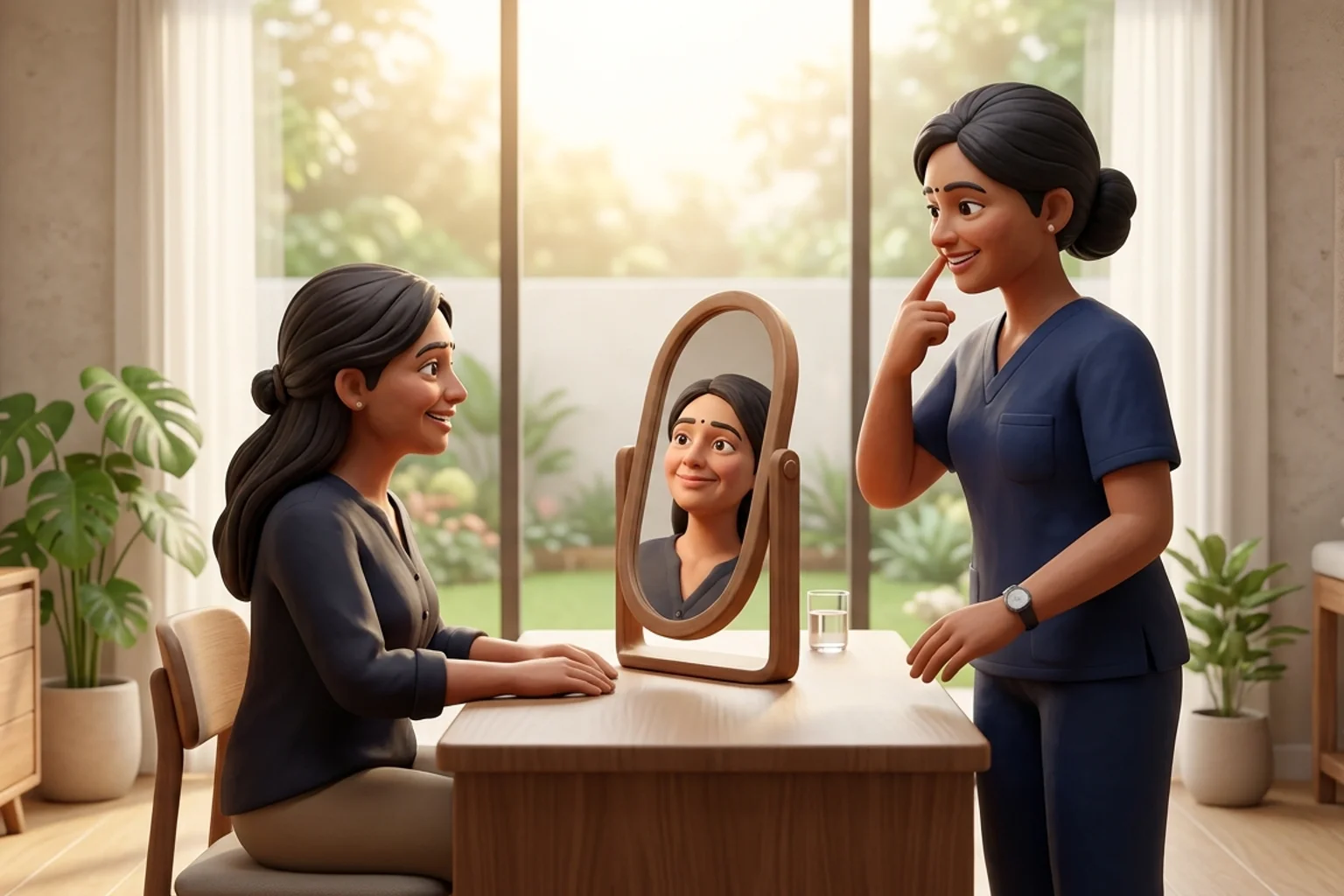
- 3Gently place the tip of your thumb against the temporal bone just beside the eye or lightly touch the bridge of your nose.
- 4Keeping the light touch in place, slowly blink softly without squeezing your eyes shut.
- 5Open your eyes gently and sustain relaxed visual focus on a distant neutral object for 10 seconds while breathing steadily.
| Intervention Strategy | Mechanism of Benefit | Target Condition | Practical Clinical Instruction |
|---|---|---|---|
| FL-41 Tinted Lenses | Blocks 480-520 nm blue-green wavelengths | Photophobia and reflex eyelid spasms | Wear wrap-around sunglasses outdoors and indoors under LED lighting |
| Tactile Trigeminal Tricks | Activates trigeminal inhibitory reflex arcs | Forced eyelid clamping / apraxia of opening | Light touch to lateral brow, chin, or resting a finger on the temple |
| Gentle Jaw Mobilization | Restores controlled pterygoid/masseter glide | Oromandibular jaw clenching / deviation | Controlled small-amplitude jaw opening against light fingertip resistance |
| Vocal and Chewing Substitutions | Engages alternative brainstem motor networks | Jaw closing or tongue dystonia | Lightly humming, chewing non-sugared gum, or singing during walking |
Red Flags and Medical Escalation
Rapid onset of acute cranial dystonia following exposure to neuroleptic, antiemetic, or psychiatric medications indicates an acute dystonic reaction or tardive dystonia requiring emergency medical evaluation. Progressive weakness of the limbs, ptosis that worsens with fatigue throughout the day, or double vision (diplopia) warrants urgent evaluation for myasthenia gravis rather than focal dystonia.
Frequently Asked Questions
Can facial physiotherapy helps manage blepharospasm or Meige syndrome?
Physiotherapy cannot helps manage blepharospasm or cranial dystonias. However, specialised facial neuro physiotherapy helps manage motor fluctuations and improve mobility by reinforcing sensory tricks, reducing facial muscular strain, and extending the functional relief provided by botulinum toxin therapy.
Can I consult a neuro physiotherapist in India without a doctor prescription?
Yes. Under the National Commission for Allied and Healthcare Professions (NCAHP) Act 2021, Indian patients enjoy direct access to licensed physiotherapists. BookPhysio.in enables direct consultation with verified neuro physiotherapists with transparent pay-direct session fees.
Related condition guides


Related recovery guides & articles
BookPhysio.in Editorial Team
The BookPhysio.in editorial team writes and maintains this content, checking it against reliable clinical sources. Content follows our medical review policy: general information only, and no page claims a clinical review until a named registered physiotherapist has signed it off.
Read our medical review policy