
Physiotherapy for Bell's Palsy

Quick answer
Physiotherapy provides essential facial neuromuscular retraining for Bell's palsy. A neurological physiotherapist assesses facial nerve function, teaches gentle isolated facial muscle activation with mirror biofeedback, protects eye closure, and prevents abnormal muscle co-contractions during nerve recovery.
- Sudden weakness on one side of the face
- Affects seventh cranial facial nerve
- Medical care is essential within 72 hours
- Gentle mirror retraining guides nerve recovery
- Avoid aggressive electrical stimulation
What is Bell's palsy?
Bell's palsy is an acute, idiopathic peripheral palsy of the seventh cranial (facial) nerve, leading to sudden unilateral weakness or paralysis of the muscles of facial expression. Patients experience difficulty closing the eye, smiling, chewing, and speaking clearly. Early medical evaluation (ideally within 72 hours for corticosteroids) is crucial. Physiotherapy focuses on gentle, isolated neuromuscular retraining, active-assisted facial exercises in front of a mirror, eye protection strategies, and soft tissue mobilisations. Crucially, aggressive electrical stimulation is avoided in modern practice to prevent aberrant nerve regeneration and synkinesis (unintended muscle co-contractions such as eye squinting while smiling).
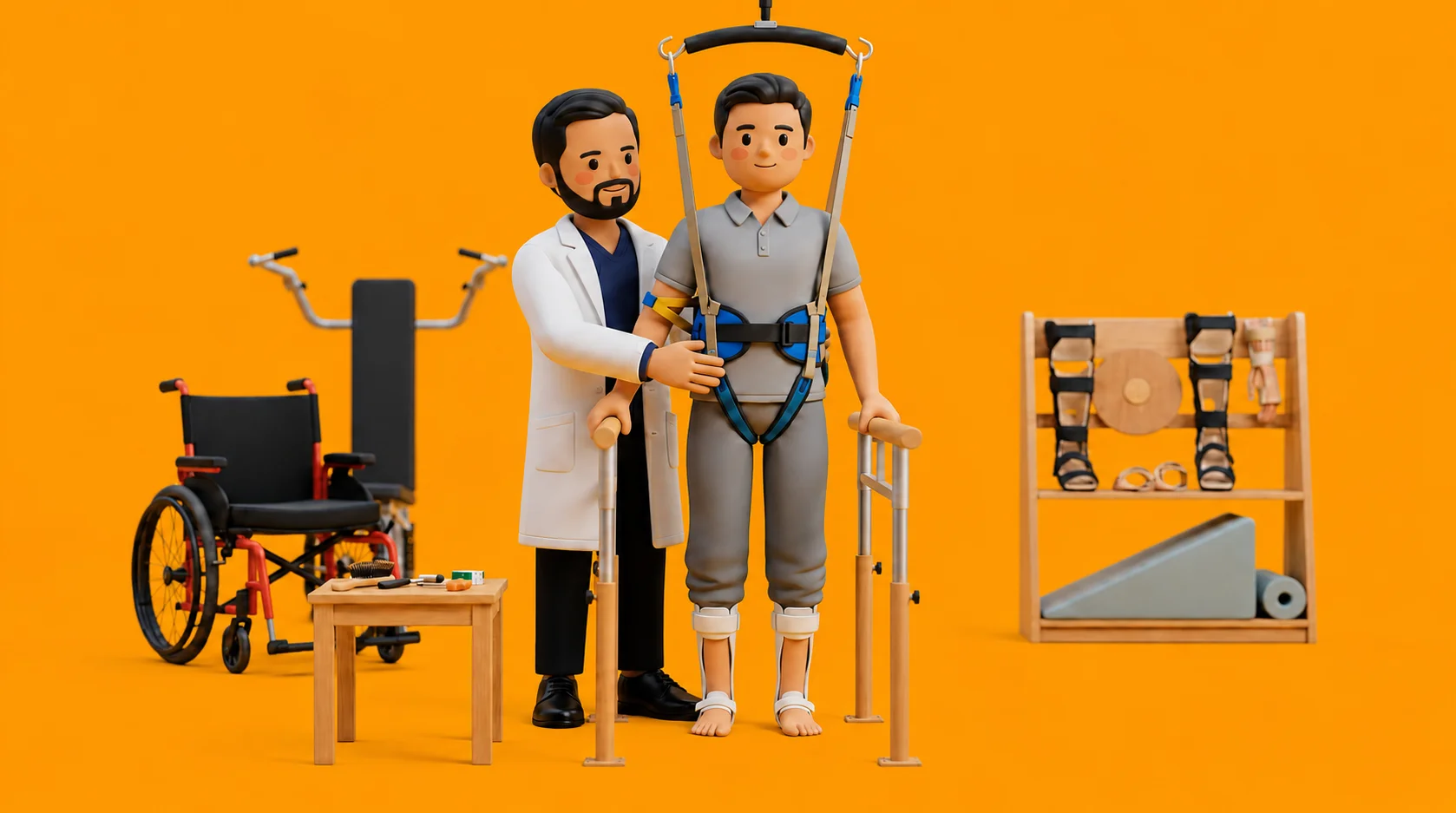
Neurological Physiotherapy
Bell's Palsy is assessed and treated under Neurological physiotherapy (nerves & brain). Stroke recovery, nerve rehabilitation, and neurological movement disorders.
How physiotherapy helps
- Mirror biofeedback for isolated movements
- Gentle active-assisted facial expressions
- Eye closure protection and taping routines
- Gentle facial soft tissue mobilisations
- Synkinesis prevention and coordination drills
Common signs
- Sudden weakness or complete paralysis on one side of the face developing over 24 to 72 hours
- Inability to fully close the eye or blink, leading to dryness, irritation, or tearing on that side
- Drooping at the corner of the mouth, causing difficulty holding fluids or smiling symmetrically
- Loss of forehead wrinkling and inability to raise the eyebrow on the affected side
- Altered taste sensation on the front of the tongue, earache, or sound sensitivity before or during onset
In-clinic vs home visit physiotherapy
| What to compare | In-clinic | Home visit |
|---|---|---|
| Typical fee | ₹300 to ₹1,500 a session. It depends on your city. | ₹400 to ₹2,000 a session. It depends on your city. |
| Exact fee | Set by each physiotherapist and shown on their profile | Set separately for home visits and shown on their profile |
| Best for | Equipment-based rehab and first assessments | Limited mobility, post-surgery, and elderly care |
| Equipment | Full clinic setup | Portable equipment the physiotherapist brings |
| Travel | You travel to the clinic | The physiotherapist comes to you |
| Booking | Pick a clinic slot on search | Filter by home visit on search |
Clinical rehabilitation framework
Evidence-informed clinical progression and starter exercise targets for Bell's palsy.
Clinical progression criteria & key observations
- Grade with House-Brackmann (I normal to VI total paralysis) at baseline and each review to track recovery honestly
- Electrical stimulation is not routinely recommended; evidence favours education, eye care, and tailored facial exercise
Starter exercise targets & evidence-based dosage
When to seek urgent care
Physiotherapy is safe for most people. See a doctor urgently if you have any of these.
- Forehead movement is completely spared while the lower face is weak, which strongly suggests a central stroke
- Any accompanying limb weakness, numbness, slurred speech, confusion, or difficulty walking
- A painful blistering rash around the ear or in the mouth, which suggests Ramsay Hunt syndrome
- Gradual onset over several weeks or facial weakness that fails to show any recovery after three to four months
Seek urgent medical care first. Physiotherapy comes after, when it is safe.
Frequently asked questions
How soon should physiotherapy start after Bell's palsy onset?
Can I get physiotherapy for bell's palsy at home?
Does electrical stimulation help Bell's palsy?
How much does physiotherapy for bell's palsy cost in India?
Related conditions & care



Clinical guides & articles for Bell's palsy
Evidence-informed articles, recovery timelines, and home care advice from our clinical library.
Bell's palsy physiotherapy: recovery timeline, facial exercises, and treatment stages
Bell's palsy causes sudden weakness or paralysis on one side of the face. Learn the clinical recovery timeline, gentle facial retraining exercises using mirror feedback, and why aggressive electrical stimulation should be avoided.
Bell's Palsy: Facial Muscle Physiotherapy, Eye Protection, and Preventing Synkinesis
Sudden unilateral facial paralysis requires urgent eye protection and nuanced neuromuscular re-education. Learn why aggressive electrical stimulation worsens synkinesis and how mirror biofeedback restores facial symmetry.
Bell's palsy physiotherapy: recovery timeline, synkinesis prevention, and active facial neuromuscular retraining
Bell's palsy causes sudden unilateral facial paralysis due to inflammation of the seventh cranial nerve. While 85% of patients achieve spontaneous recovery, improper therapy such as aggressive electrical stimulation can trigger permanent facial synkinesis. Learn the House-Brackmann scale, mirror biofeedback protocols, and gentle facial neuromuscular retraining.
Bell's Palsy: House-Brackmann Staging, Synkinesis Prevention and Mime Therapy
Bell's palsy causes acute unilateral facial paralysis. Learn House-Brackmann staging, why aggressive electrical stimulation is dangerous, and evidence-based mime therapy.
Find physiotherapists for Bell's palsy by city
Verified physiotherapists treat Bell's palsy in these cities. Home visit and in-clinic options vary by physiotherapist.
Find a physiotherapist for Bell's palsy
Compare physiotherapists by fee, experience, and availability. Clinic visits and home visits across India.
This page is for general education and booking guidance. It does not diagnose your condition or replace medical care.
If your symptoms are severe, sudden, or getting worse, seek urgent medical care first. The same applies with fever, chest pain, breathlessness, fainting, new weakness, loss of bladder or bowel control, or unexplained bleeding.
Always consult a qualified physiotherapist or doctor about your condition.