
Caregiver-Assisted Facial Handling for Pediatric Facial Palsy: Gentle Developmental Protocols
In short
Facial nerve palsy in infants and children demands gentle, caregiver-assisted handling that protects feeding and eye health without creating distress. Discover evidence-based pediatric protocols.
In this guide (4 sections)
Pediatric facial nerve palsy is a delicate clinical entity presenting distinct diagnostic and therapeutic challenges compared to adult conditions. Etiologies range from perinatal birth trauma (mechanical compression of the extratemporal facial nerve against the maternal sacral promontory or forceps blades during delivery) to congenital syndromic anomalies (such as Moebius syndrome) and post-infectious acute Bell's palsy. Because young children cannot participate in complex cognitive mirror biofeedback, rehabilitation relies entirely on gentle, caregiver-assisted handling, feeding adaptations, and playful sensory motor facilitation.
Domestic Realities and Environmental Safeguards in India
In Indian families, the birth of an infant with facial asymmetry or the sudden onset of facial weakness in a young child causes overwhelming parental guilt, anxiety, and panic. Grandparents and relatives often suggest that the mother consumed cold foods during pregnancy or did not pray sufficiently, creating intense emotional distress. Well-meaning relatives frequently try to pinch or massage the infant's face vigorously, which can traumatize delicate tissues. Physiotherapists guide parents with compassionate, evidence-based handling techniques that nurture the child and support natural recovery.
Extratemporal Anatomy in Infants and Pediatric Axonal Plasticity
The infant temporal bone lacks a fully formed mastoid process at birth; the stylomastoid foramen lies superficial, immediately beneath the skin and subcutaneous fat. Consequently, the extratemporal facial nerve trunk is vulnerable to direct blunt trauma during difficult labor. However, the pediatric nervous system possesses remarkable neuroplasticity and axonal regenerative capacity compared to adults. In traumatic perinatal palsy (neuropraxia), spontaneous recovery occurs in over 90 percent of infants within the first 1 to 4 months, provided secondary complications like corneal exposure and feeding failure are meticulously prevented.
Caregiver Feeding Adaptations and Play-Based Motor Stimulation
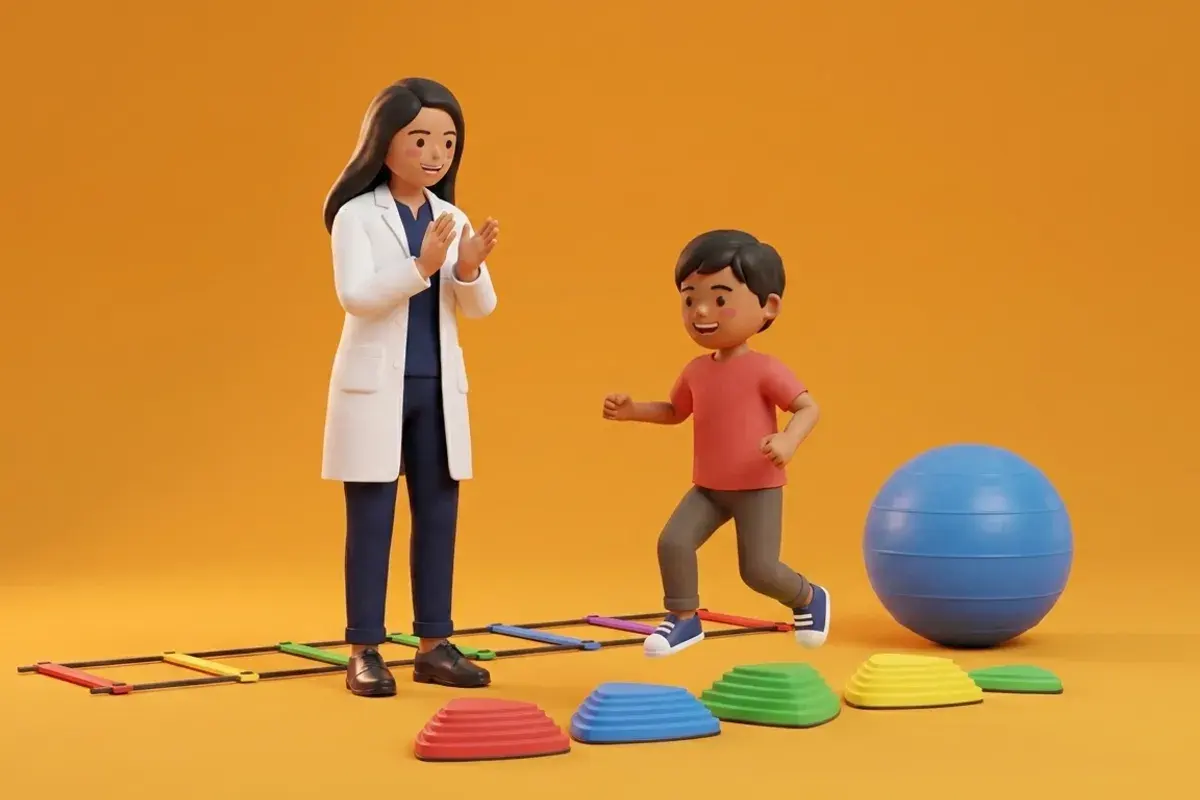
Therapy focuses on three core pillars: eye protection, feeding support, and developmental play. During breastfeeding or bottle feeding, the infant's paralyzed cheek lacks inward suction support; caregivers are taught the gentle "C-chin" support, using the thumb and index finger to support the paretic cheek and seal the infant's lips around the areola or teat. For eye care, preservative-free lubricating drops are instilled with every diaper change, and soft eye shielding is applied during sleep. For toddlers, active motor retraining is disguised as play: blowing soap bubbles, making funny animal sounds, and smiling during peek-a-boo games.
Caregiver Gentle Cheek Support During Feeding Drill
Objective: Provide external buccinator support to facilitate an airtight latch and prevent liquid leakage
- 1Wash your hands thoroughly and sit comfortably with your infant cradled in an upright, supported feeding position.
- 2Form a gentle "C" shape with the thumb and index finger of your non-dominant hand.
- 3Place your index finger lightly along the infant's upper lip and your thumb along the lower lip on the weak side.
- 4Bring the infant to the breast or bottle teat, using your fingers to provide light, inward approximation of the lip corner.
- 5Maintain this soft, supportive latch throughout the feed, wiping away any stray milk gently with a sterile warm cloth.
| Etiological Category | Clinical Presentation and Natural History | Caregiver Handling and Physiotherapy Action Plan |
|---|---|---|
| Perinatal Birth Trauma | Immediate unilateral facial weakness at birth; bruising over mastoid; over 90% spontaneous recovery. | Gentle feeding lip seal support, hourly lubricating eye drops, avoid forceful facial manipulation. |
| Pediatric Bell's Palsy | Sudden onset in children aged 2 to 12; viral prodrome; excellent spontaneous recovery rates (>85%). | Play-based motor games (bubbles, funny faces), corneal lubrication, reassurance and school pacing. |
| Congenital (Moebius) | Bilateral facial and abducens nerve agenesis; mask-like face, inability to smile or look laterally. | Long-term feeding support, oral motor therapy, specialized speech therapy, multidisciplinary care. |
| Acute Otitis Media Palsy | Facial weakness secondary to middle ear bacterial infection; requires immediate pediatric ENT care. | Urgent antibiotic and surgical drainage support, gentle post-infectious facial physiotherapy. |
In pediatric facial weakness, always examine the ears for acute otitis media (red, bulging tympanic membrane) and inspect the palate for submucosal clefts. In bilateral facial weakness or limb anomalies, arrange immediate pediatric neurology evaluation to investigate Moebius syndrome or genetic neuropathies.
Frequently Asked Questions
Should I make my child do repetitive facial exercises in front of a mirror?
No. Demanding that young children perform rigid, repetitive mirror exercises causes anxiety, frustration, and rebellion. Incorporate movement into natural play: blowing feather bubbles, licking yogurt from around the lips, and playing expressive peek-a-boo games. Keep therapy joyful and pressure-free.
Can I consult a specialized pediatric physiotherapist on BookPhysio.in?
Yes. Under the NCAHP Act 2021, registered physiotherapists provide independent, direct-access pediatric neuro-rehabilitation across India. On BookPhysio.in, you schedule directly with verified clinicians experienced in pediatric care, paying transparently per session.
Related condition guides



Related recovery guides & articles
BookPhysio.in Editorial Team
The BookPhysio.in editorial team writes and maintains this content, checking it against reliable clinical sources. Content follows our medical review policy: general information only, and no page claims a clinical review until a named registered physiotherapist has signed it off.
Read our medical review policy