
Central Venous Access in Oncology: Chemoports, PICC Lines, and Arm Movement Safety
In short
Cancer patients with chemoports and PICC lines can exercise safely by adhering to shoulder abduction limits, avoiding catheter traction, and monitoring for DVT.
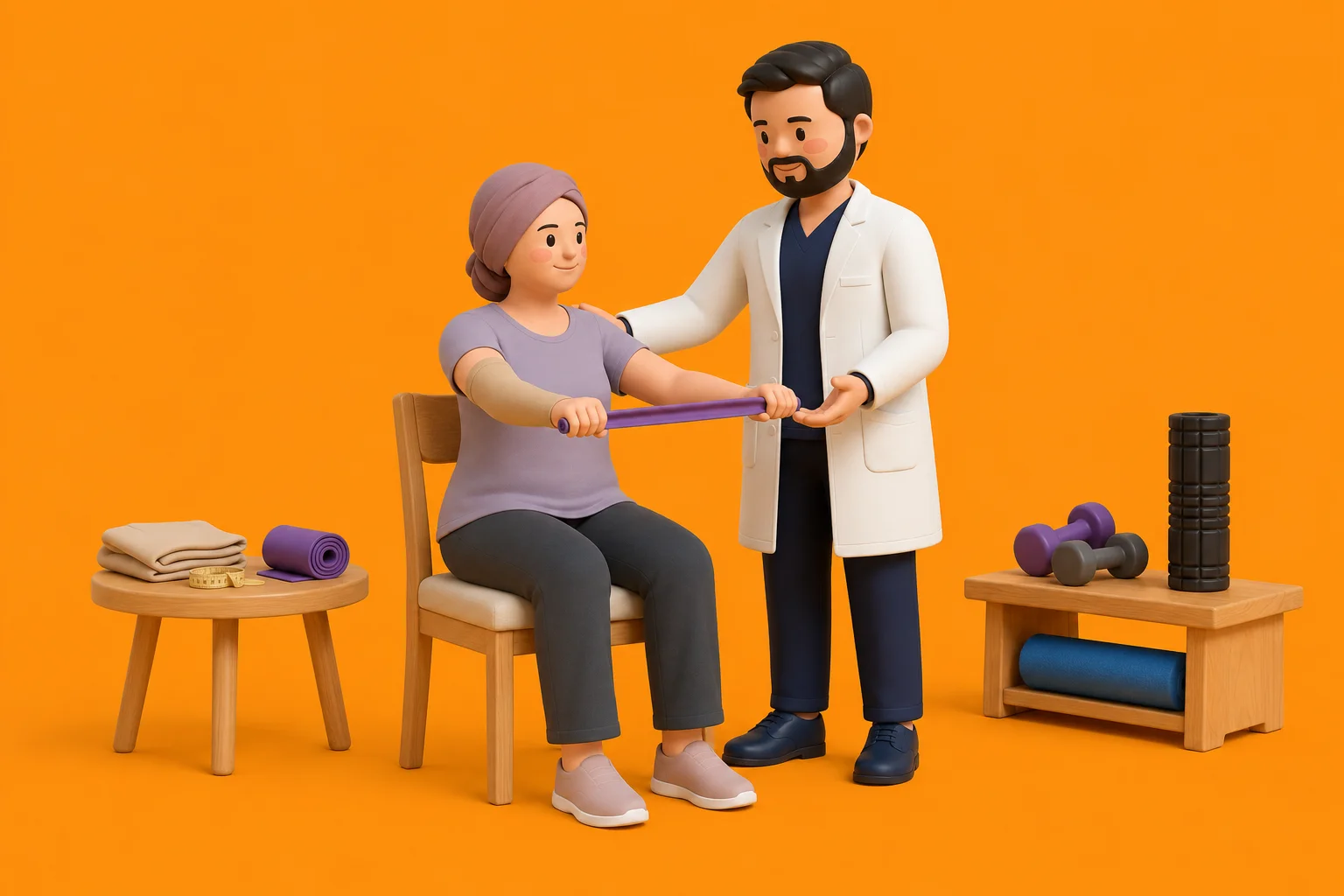
In this guide (4 sections)
Vascular Access Anatomy and Mechanical Catheter Complications
Long-term central venous access devices (CVADs) are vital for administering cytotoxic chemotherapy, targeted biologicals, parenteral nutrition, and blood products in oncology. The two most common devices are Peripherally Inserted Central Catheters (PICCs: inserted via basilic or cephalic veins in the upper arm) and Totally Implantable Venous Access Ports (Chemoports: implanted subcutaneously in the infraclavicular chest wall with a silicon catheter tunneled into the internal jugular or subclavian vein).
While indispensable, CVADs present distinct physiotherapy and biomechanical safety considerations. Improper upper extremity exercise or heavy chest wall loading can trigger catastrophic catheter complications: catheter tip migration out of the superior vena cava, catheter pinch-off syndrome (compression between the first rib and clavicle causing mechanical catheter transection and embolization), accidental dislodgement, and upper extremity deep vein thrombosis (UEDVT) secondary to endothelial irritation and hypercoagulability.
Standardized Clinical Outcome Measures and Catheter Safety Matrix
| Access Device Type | Anatomical Site & Insertion Route | Permitted Upper Extremity Exercise | Strict Clinical Contraindications / Prohibitions | |
|---|---|---|---|---|
| Subcutaneous Chemoport (Port-a-Cath) | Right/left infraclavicular chest; subclavian / IJV entry | Full active shoulder ROM once surgical incision heals (Day 14) | NO CHEST-WALL COLLISION SPORTS; NO BARBELL OVER CHEST; NO AXILLARY STRAPS | |
| PICC Line (Peripherally Inserted) | Medial upper arm; basilic / brachial vein | Light daily activities; elbow flexion/extension; gentle walking | NO REPETITIVE HIGH-LOAD ELBOW FLEXION; NO SWIMMING; NO CRUTCHES WITH AXILLARY PADS | |
| Tunneled Catheter (Hickman / Broviac) | Anterior chest wall exit with external silicon cuffs | Light seated exercises; gentle active arm movement | NO SUBMERSION IN WATER; NO TRACTION ON EXTERNAL LUMENS | |
| Catheter-Related DVT (UEDVT) | Duplex Doppler ultrasound of axillary/subclavian veins | Arm circumference measurement (> 2 cm swelling difference) | IMMEDIATE SUSPENSION OF THERAPY; STAT anticoagulation | |
| Catheter Pinch-Off Syndrome | Upright chest radiograph in neutral and shoulder retraction | Intermittent catheter occlusion on arm movement; clavicular pinch | HALT ALL CHEST PRESSING; urgent fluoroscopic catheter review |
Standardized Clinical Rehabilitation Protocols and Movement Guidelines
- The 90-Degree Shoulder Abduction Rule for Fresh Infraclavicular Ports: Limit ipsilateral shoulder abduction and flexion to 90 degrees for the first 10 to 14 days following surgical chemoport placement; premature overhead reaching pulls on the healing subcutaneous pocket, increasing the risk of wound dehiscence and port pocket hematoma.
- Strict Prohibition of Water Submersion for Externalized Catheters: Strictly prohibit swimming pools, bathtubs, and hot tubs for patients with PICC lines or external Hickman catheters; water submersion introduces Pseudomonas and fungal pathogens directly along the catheter tract, causing life-threatening catheter-related bloodstream infections (CRBSI).
- Monitoring for Upper Extremity DVT Red Flags: Inspect the arm, neck, and shoulder before every session; sudden unilateral arm swelling, skin warmth, blue discoloration (cyanosis), or prominent visible collateral veins across the shoulder indicates acute catheter-induced subclavian thrombosis requiring immediate emergency ultrasound.
Frequently Asked Questions
Can I move my arm normally if I have a chemoport in my chest?
Yes. Once the small surgery cut heals (usually after 10 to 14 days), an implanted chemoport rests securely under your skin. You can move your arm, stretch, and do normal daily activities. You just need to avoid hard impacts to the chest (like contact sports) or heavy straps pressing directly over the port.
Why shouldn't I do heavy bicep curls with a PICC line in my arm?
A PICC line is a thin, flexible tube that sits inside the vein of your upper arm. Heavy bicep lifting or vigorous repetitive bending of the elbow can rub the tube against the vein wall, which can irritate the blood vessel and cause a dangerous blood clot.
What are the warning signs of a blood clot from a PICC line?
If your hand, forearm, or shoulder suddenly looks swollen, feels heavy or warm, turns slightly blue, or if you notice enlarged veins popping out across your collarbone, stop exercising immediately and call your oncology nurse or doctor for an ultrasound scan.
Related condition guides

Related recovery guides & articles
BookPhysio.in Editorial Team
The BookPhysio.in editorial team writes and maintains this content, checking it against reliable clinical sources. Content follows our medical review policy: general information only, and no page claims a clinical review until a named registered physiotherapist has signed it off.
Read our medical review policy