
Post-Thoracotomy Lung Cancer: Pulmonary Rehabilitation, Incentive Spirometry, and Shoulder Recovery
In short
Post-thoracotomy physiotherapy prevents atelectasis and pneumonia through incentive spirometry, active airway clearance, and early ipsilateral shoulder mobilization.
In this guide (4 sections)
Surgical Thoracotomy, Lobectomy, and Postoperative Restrictive Impairment
Surgical resection (lobectomy, bilobectomy, or pneumonectomy) performed via posterolateral thoracotomy or Video-Assisted Thoracoscopic Surgery (VATS) remains the cornerstone of curative-intent treatment for early-stage Non-Small Cell Lung Cancer (NSCLC). Open posterolateral thoracotomy involves extensive division of the latissimus dorsi, serratus anterior, and intercostal musculature, accompanied by mechanical rib spreading and intercostal nerve compression.
This surgical trauma results in severe postoperative restrictive ventilatory impairment: vital capacity (VC) and functional residual capacity (FRC) drop by 40% to 50% in the immediate postoperative days. Combined with severe post-thoracotomy incisional pain and altered chest wall compliance, patients adopt shallow, rapid breathing, causing basal alveolar collapse (micro-atelectasis), retention of viscous secretions, ventilation-perfusion mismatch, and a high risk of postoperative pneumonia and acute respiratory failure.
Standardized Clinical Outcome Measures and Pulmonary Monitoring
| Clinical Assessment Battery | Standard Measurement Method | Target Postoperative Milestone | Critical Decompensation / Warning Marker | |
|---|---|---|---|---|
| Incentive Spirometry Volume | Volume-oriented spirometer measuring sustained maximal inspiration | Achievement of >= 70% of preoperative baseline volume by Day 3 | Volume < 1,000 mL signals high risk of basal lobar atelectasis | |
| Shoulder Abduction Goniometry | Active-assisted goniometry of ipsilateral shoulder in scapular plane | Active shoulder abduction >= 120 degrees by hospital discharge | Persistent frozen shoulder secondary to latissimus division & pain | |
| Post-Thoracotomy Pain Scale | Visual Analogue Scale (0 to 10) during coughing and deep inspiration | Target pain score <= 3/10 with multimodal analgesia / epidural | Pain score >= 6/10 suppresses effective coughing and deep inspiration | |
| Chest Radiograph (CXR) | Portable erect AP chest radiograph on Postoperative Days 1 and 3 | Complete expansion of remaining lung tissue; minimal pleural fluid | Opacification / mediastinal shift indicates lobar collapse or hemothorax | |
| Intercostal Chest Tube Air Leak | Visual inspection of underwater seal chamber during forced cough | Zero bubbling in water seal chamber during deep cough | Continuous air bubbling indicates persistent broncho-pleural fistula |
Standardized Clinical Rehabilitation Protocols and Airway Clearance
- The Active Cycle of Breathing Techniques (ACBT) with Splinted Coughing: Perform ACBT hourly while awake: combine gentle diaphragmatic breathing with 3 to 4 thoracic expansions, followed by a supported huff (forced expiration technique); the patient or therapist firmly presses a firm folded pillow against the surgical incision during coughing to dampen wound tension and ensure deep clearance.
- Hourly Sustained Maximal Inspiration via Incentive Spirometry: Execute 10 slow, deep inhalations every hour using a volume-oriented spirometer, holding breath for 3 seconds at full lung inflation; slow laminar inspiratory airflow opens collateral ventilation channels (pores of Kohn and canals of Lambert), re-inflating collapsed alveoli.
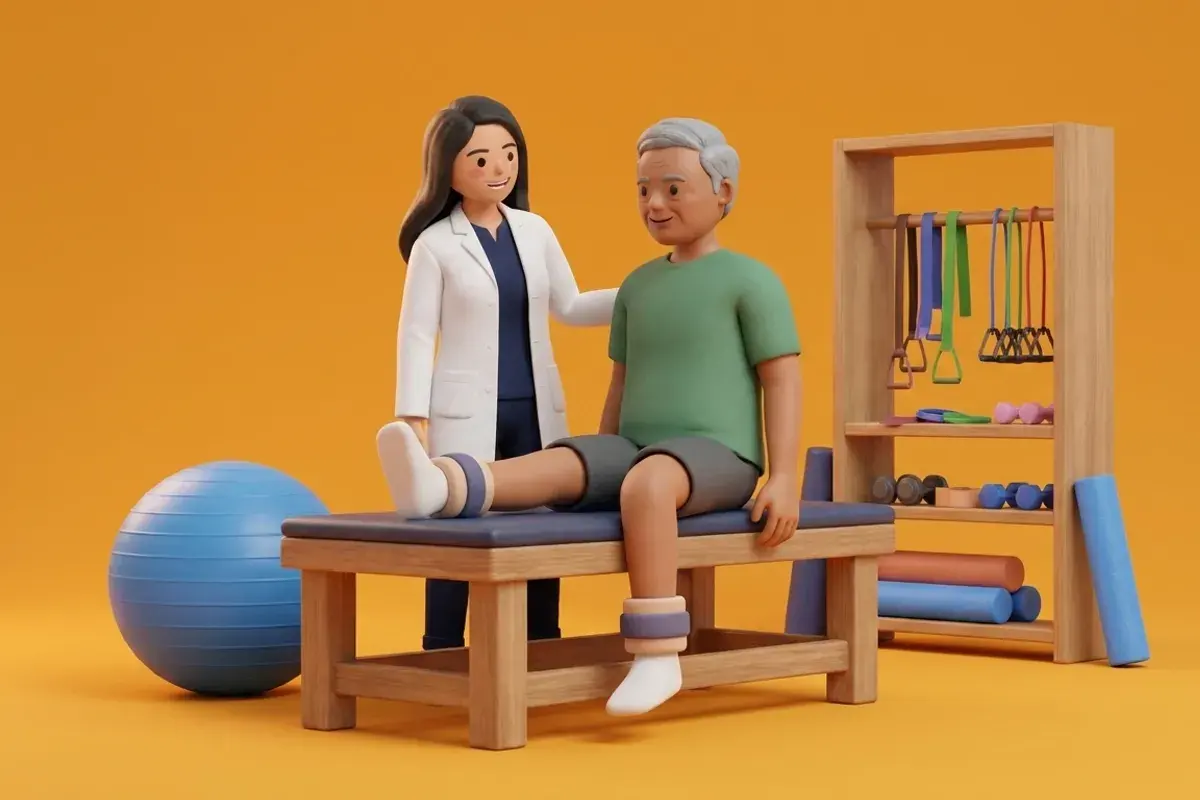
- Early Day-1 Ipsilateral Shoulder and Thoracic Mobilization: Initiate gentle active-assisted shoulder flexion, abduction, and scapular retraction on Postoperative Day 1; early mobilization prevents permanent frozen shoulder contractures resulting from latissimus dorsi and serratus anterior surgical transection.
Frequently Asked Questions
Why does coughing hurt so much after lung cancer surgery and how can I cough safely?
During surgery, muscles between your ribs were cut and stretched, making coughing feel like your chest is tearing. Hugging a firm pillow tightly against your incision (called a splinted cough) supports the wound and stops the edges from pulling, allowing you to cough up phlegm with much less pain.
How does an incentive spirometer help my remaining lung?
An incentive spirometer trains you to take slow, deep breaths like a deep yawn. Taking deep breaths pops open millions of tiny air sacs that naturally collapse when you lie in bed after surgery, preventing lung infections and pneumonia.
Why is moving my shoulder so important after chest surgery?
Because the chest cut goes through large shoulder muscles, people naturally guard their arm and keep it glued to their side. If you do not gently raise and stretch your arm starting the very next day, your shoulder joint will rapidly freeze into a stiff, painful frozen shoulder.
Related condition guides

Related recovery guides & articles
BookPhysio.in Editorial Team
The BookPhysio.in editorial team writes and maintains this content, checking it against reliable clinical sources. Content follows our medical review policy: general information only, and no page claims a clinical review until a named registered physiotherapist has signed it off.
Read our medical review policy