
Coping Strategies for Refractory Neuropathic Pain in Thoracic Outlet Syndrome
In short
Learn evidence-based neuroplasticity and pain science strategies to overcome chronic burning, allodynia, and nerve irritation in refractory TOS.
In this guide (4 sections)
Chronic neurogenic thoracic outlet syndrome is frequently complicated by refractory neuropathic pain that persists long after initial mechanical triggers have been addressed. When the lower trunk of the brachial plexus remains compressed or tethered over months, secondary neurophysiological alterations develop, including peripheral nerve hyperexcitability, ectopic nerve firing, and central sensitization within the spinal cord and brain. Patients experience distressing symptoms such as deep, burning aches, electric shooting shocks, crawling sensations, and cutaneous hypersensitivity where even light touch provokes discomfort. Navigating refractory neuropathic pain requires moving beyond purely structural mechanics to incorporate modern pain neuroscience education, graded sensory re-education, sleep hygiene, and pacing frameworks that retrain an overprotective nervous system and restore physical freedom. When nerve trunks endure persistent mechanical compression, chronic nociceptive input alters central processing circuits, amplifying discomfort.
Emotional Toll, Sleep Loss, and Daily Frustration in Indian Homes
Living with persistent, invisible nerve pain places an enormous emotional and domestic burden on patients across India. In Indian joint families and bustling community environments, individuals with chronic arm pain frequently struggle with feelings of guilt or misunderstanding when they cannot lift heavy grocery buckets, chop vegetables, or assist with festival preparations. The pain often intensifies during quiet nighttime hours, causing profound sleep fragmentation that leads to daytime exhaustion, cognitive brain fog, and heightened emotional anxiety. Well-meaning family members often advise complete immobility or suggest visiting unverified alternative practitioners who promise instant cures through aggressive joint adjustments. Patients must be reassured that chronic nerve pain does not mean their arm is suffering permanent damage; rather, it reflects a sensitized alarm system that can be recalibrated through patient, evidence-based physiotherapy. In addition, family elders, colleagues, and athletic peers across Indian domestic and work environments regularly share practical tips, while adjusting daily household expectations to support steady, patient recovery.
Central Sensitization, Neuroimmune Signaling, and Wind-Up
The pathophysiology of refractory neuropathic pain in TOS involves both peripheral and central nervous system mechanisms. At the peripheral nerve level, persistent mechanical entrapment leads to localized intraneural ischemia, demyelination of sensory fibers, and an upregulation of voltage-gated sodium channels along the nerve sheath. This creates ectopic impulse generation, where nerve fibers fire spontaneous pain signals without any external movement. Over time, constant nociceptive barrage onto the dorsal horn of the spinal cord triggers central sensitization. Microglial cells release pro-inflammatory cytokines, synaptic transmission is amplified through NMDA receptor activation, and descending pain-inhibitory pathways become depleted. Consequently, the brain interprets non-harmful everyday arm movements as severe threats, generating widespread aching, allodynia, and hyperalgesia that outlasts the original anatomical injury. Furthermore, histopathological studies confirm that continuous mechanical strain stimulates intracellular signaling cascades, encouraging robust tenocyte activity, collagen fascicle reorganization, and long-term biological resilience across the entire tendon matrix. Neuroplastic alterations in dorsal horn interneurons lower pain thresholds, necessitating structured multidisciplinary desensitization strategies.
Multimodal Calming Protocol: Pacing, Graded Exposure, and Down-Regulation
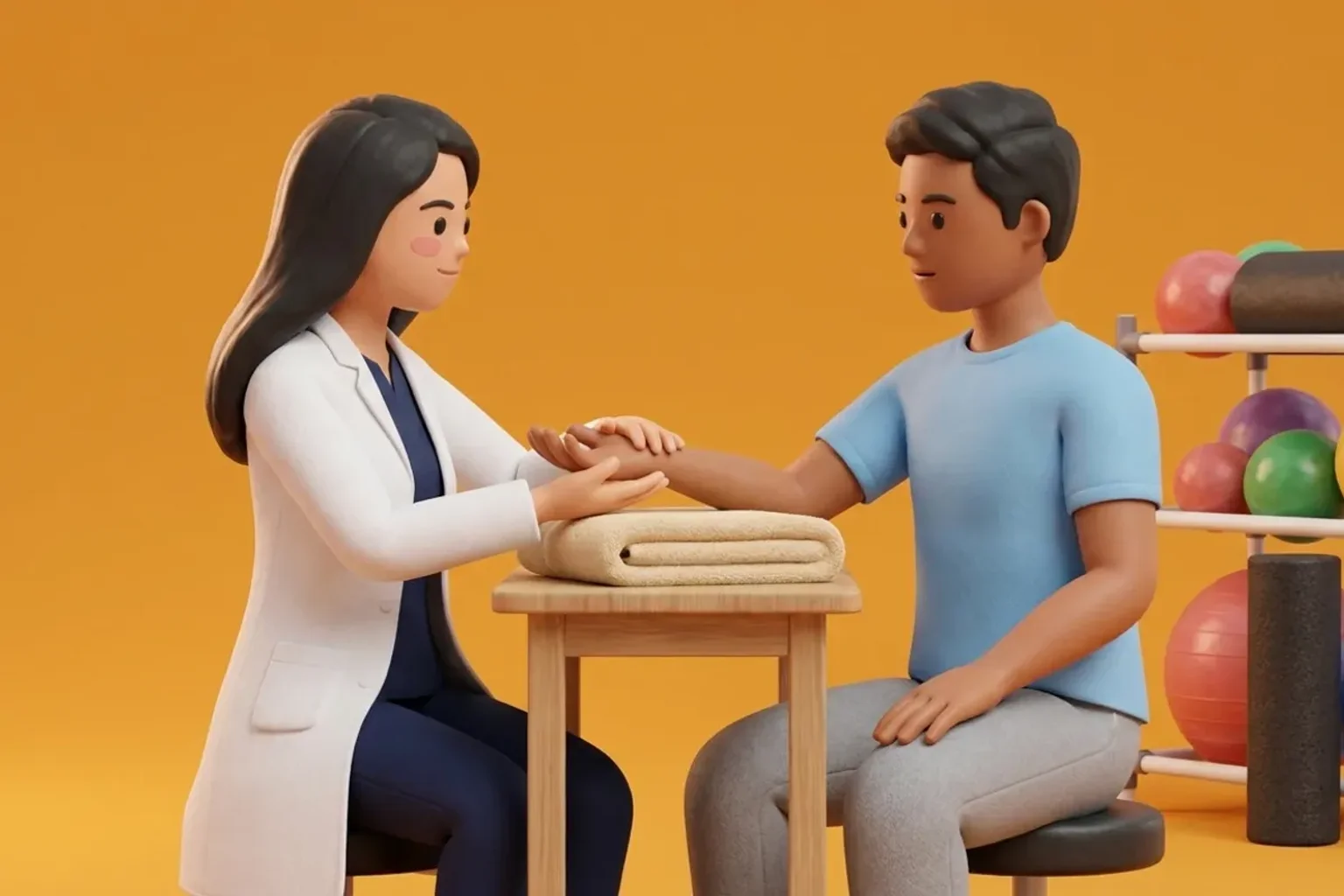
Managing refractory neuropathic pain requires a compassionate, multimodal approach that calms the central nervous system while maintaining safe functional activity. Clinicians introduce Pain Neuroscience Education (PNE) to demystify symptoms, reassuring patients that pain is a protective alarm rather than an indicator of ongoing tissue harm. Pacing strategies replace destructive boom-and-bust cycles with steady, manageable activity blocks. Active rehabilitation utilizes low-threshold neurodynamic sliders, which gently floss the brachial plexus through its anatomical tunnels without tensioning sensitive nerve fibers. Sensory desensitization techniques, such as gently brushing different textile textures across the forearm, help recalibrate tactile sensory maps in the brain. When combined with parasympathetic diaphragmatic breathing and gentle aerobic walking, this systematic approach dampens neural sensitivity, decreases reliance on neuropathic medications, and rebuilds daily physical independence. Clinicians emphasize that gradual resistance titration, consistent adherence to home exercise protocols, and structured objective benchmarks ensure that patients regain full functional capacity, athletic performance, and lasting confidence in their daily movements.
Gentle Median and Ulnar Nerve Flossing Sequence
Objective: Gently glide the brachial plexus nerves through the thoracic outlet without provoking electrical symptoms
- 1Sit comfortably upright in a sturdy chair with your shoulders relaxed and your arms resting naturally at your sides.
- 2Slowly extend your symptomatic arm out to the side at waist level (approximately 45 degrees of abduction), keeping your wrist relaxed.
- 3As you gently bend your wrist backward, simultaneously tilt your head toward your symptomatic shoulder to relieve nerve tension.
- 4Then, as you tilt your head away toward your opposite shoulder, relax your wrist back into a neutral, forward-facing position.
- 5Coordinate these two movements into a continuous, smooth, wave-like glide, moving slowly without bouncing or stretching.
- 6Perform 8 to 10 gentle repetitions, ensuring that you feel zero sharp pain, tingling, or electric sensations during the movement.
| Intervention Domain | Therapeutic Mechanism | Practical Daily Application | Expected Long-Term Outcome |
|---|---|---|---|
| Pain Neuroscience Education | Reframes pain as an overprotective neural alarm | Study educational guides; eliminate fear of movement | Reduces kinesiophobia and catastrophizing |
| Low-Threshold Nerve Flossing | Restores intraneural microcirculation without stretch | Perform smooth sliders paired with neck tilts (2x daily) | Improves nerve sheath mobility and reduces hypersensitivity |
| Diaphragmatic Down-Regulation | Activates vagal parasympathetic nerve tone | Practice 10 minutes of deep belly breathing before sleep | Suppresses systemic sympathetic fight-or-flight arousal |
Peripheral nerves heal and calm down at a gradual pace of roughly one millimeter per day. Overcoming chronic neuropathic arm pain requires steady, patient consistency with gentle exercises and lifestyle pacing rather than aggressive treatments. Trust in your body's remarkable capacity for neuroplastic recovery. Always prioritize comprehensive clinical evaluation by an autonomous registered physiotherapist to protect your tendon health.
Frequently Asked Questions
Can medications like gabapentin or pregabalin cure my thoracic outlet syndrome?
Medications such as gabapentin, pregabalin, and duloxetine do not cure the underlying mechanical compression of the thoracic outlet. Instead, they work within the central nervous system to dampen hyperactive nerve signaling, providing temporary relief from burning and tingling. When prescribed by a specialist physician, these medications can create a comfortable window that allows you to participate more effectively in active physiotherapy and nerve flossing. Consistently consulting your registered physiotherapist ensures that your exercise parameters are tailored precisely to your tissue capacity.
Do I need a doctor referral to treat thoracic outlet syndrome on BookPhysio.in?
BookPhysio.in does not require a doctor referral. Under the National Commission for Allied and Healthcare Professions (NCAHP) Act 2021, patients across India enjoy direct access to autonomous registered physiotherapists. Through BookPhysio.in, you connect directly with verified clinicians and pay per session with transparent fees, completely free from advance package commitments, commission markups, or platform subscription charges.
Related condition guides



Related recovery guides & articles
BookPhysio.in Editorial Team
The BookPhysio.in editorial team writes and maintains this content, checking it against reliable clinical sources. Content follows our medical review policy: general information only, and no page claims a clinical review until a named registered physiotherapist has signed it off.
Read our medical review policy