
Micro-Expressions and Emotional Mirroring: Restoring Social Communication in Facial Palsy
In short
Facial paralysis blunts subtle, rapid micro-expressions essential for social empathy and human connection. Discover evidence-based strategies to restore communicative confidence.
In this guide (4 sections)
Human social interaction relies heavily on micro-expressions: involuntary, subtle facial muscle movements lasting between 1/25th and 1/5th of a second that convey underlying emotional authenticity, empathy, and intent. In peripheral facial palsy, motor denervation blunts these rapid expressive markers, while fear of synkinetic grimacing leads many patients to adopt an emotionally flat, rigid facial posture. Restoring communicative confidence requires structured rehabilitation that re-integrates subtle facial expressions with rich multi-channel non-verbal communication.
Domestic Realities and Environmental Safeguards in India
In Indian joint families and community networks, emotional warmth is communicated through subtle eye crinkles, gentle head tilts, and responsive facial mirroring. When a patient with facial palsy interacts with family elders, children, or colleagues, the lack of spontaneous facial movement is often misperceived as coldness, disinterest, or anger. Patients feel deeply misunderstood and exhausted from constantly trying to explain that their face does not reflect their feelings. Specialized neuro-physiotherapy guides patients in re-establishing natural, warm interpersonal communication.
Limbic Versus Cortical Pathways and Emotional Facial Feedback
Facial motor expression is governed by two anatomically distinct neural systems: the pyramidal corticobulbar tract (mediating voluntary, intentional movements like posing for a photograph) and the extrapyramidal limbic system originating in the amygdala, basal ganglia, and cingulate cortex (mediating spontaneous, genuine emotional displays). Furthermore, according to the facial feedback hypothesis, afferent sensory signals from contracting facial muscles send feedback to the limbic system, modulating emotional experience. Facial paralysis dampens this feedback loop, producing a documented sense of emotional blunting.
Communicative Pacing and Multi-Channel Expression Retraining
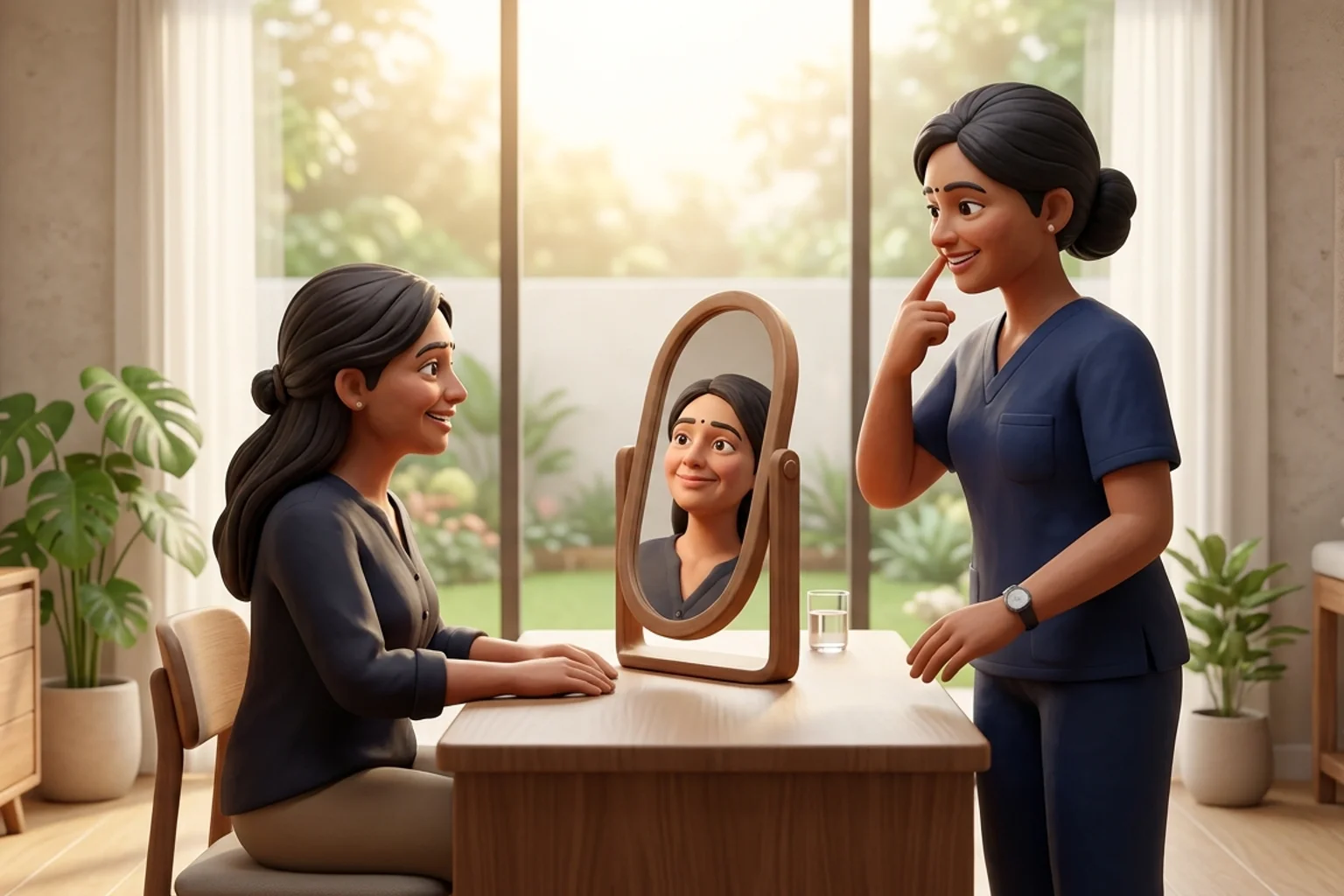
Physiotherapy addresses communicative recovery through multi-channel non-verbal retraining. Patients are trained to coordinate subtle, submaximal facial expressions (which do not trigger synkinesis) with expressive head tilting, open hand gestures, focused eye contact, and melodic vocal inflection. In front of a mirror, the patient practices expressing distinct emotional states (warmth, agreement, active listening, gentle surprise) using small, relaxed facial movements, gradually eliminating the habit of defensive facial masking.
Gentle Empathetic Listening and Head-Tilt Coordination
Objective: Communicate social warmth and engagement through subtle facial cues and postural alignment
- 1Sit comfortably in front of a mirror, imagining you are listening to a close friend sharing good news.
- 2Gently tilt your head 10 degrees to one side, maintaining a soft, engaged gaze in the mirror.
- 3Slowly initiate a very subtle 15 percent smile, keeping both eyes soft, open, and completely unhurried.
- 4Hold the gentle, warm listening expression for 4 seconds, feeling complete relaxation in your neck and brow.
- 5Release smoothly, taking a calm diaphragmatic breath before practicing an expression of thoughtful agreement.
| Communication Channel | Impact of Facial Paralysis | Compensatory Multi-Channel Physiotherapy Solution |
|---|---|---|
| Spontaneous Smile | Blunted or asymmetric excursion; fear of synkinetic eye squinting causes social withdrawal. | Submaximal 20% smile training; relaxed eyes; combining smile with soft vocal greeting. |
| Eyebrow Non-Verbal Cues | Loss of unilateral brow raise during inquiry, greeting, or thoughtful surprise. | Gentle bilateral eye widening; head tilt; responsive vocal pitch modulation. |
| Active Listening Signals | Flat, masked facial demeanor misperceived by conversational partners as disinterest. | Warm, rhythmic head nodding; open hand gestures; attentive posture and eye contact. |
| Conversational Confidence | Severe anxiety during group discussions, meetings, and family social gatherings. | Scripted conversational openers; pre-social facial relaxation; supportive pacing protocols. |
Never attempt to compensate for facial weakness by speaking with exaggerated, high-velocity grimaces or wide jaw thrusts. Over-animation accelerates synkinesis, induces severe facial fatigue, and creates an unnatural appearance. Calm, low-effort expressions convey far greater authenticity and poise.
Frequently Asked Questions
How can I stop feeling anxious when meeting new people with facial palsy?
Practice adopting an open, relaxed posture before entering social settings. Remember that genuine warmth is communicated through your eyes, tone of voice, and attentive listening. If needed, a brief, matter-of-fact sentence acknowledging your recovering nerve puts others at ease and removes communicative tension.
How do BookPhysio.in physiotherapists assist with social and communicative recovery?
Under the NCAHP Act 2021, registered physiotherapists provide comprehensive facial rehabilitation encompassing both motor control and functional communication. On BookPhysio.in, you connect directly with verified clinicians, paying transparently per session with zero platform subscriptions.
Related condition guides


Related recovery guides & articles
BookPhysio.in Editorial Team
The BookPhysio.in editorial team writes and maintains this content, checking it against reliable clinical sources. Content follows our medical review policy: general information only, and no page claims a clinical review until a named registered physiotherapist has signed it off.
Read our medical review policy